ADSS cable and OPGW cable are two options for building reliable fiber optic communication along power lines. ADSS means All-Dielectric Self-Supporting cable, which requires no metal components and functions superbly in high voltage wires. OPGW refers to Optical Ground Wire, which integrates optical fibers with a grounding wire to shield and transmit data simultaneously. Both cables withstand harsh weather and long spans, but each suits various needs and configurations. Most power companies consider cost, installation convenience, and network requirements when deciding between them. The following sections contrast the practical functioning of ADSS and OPGW cables to provide a sense of their practical applications and key advantages.
ADSS cables provide you with the flexibility to install in various locations and are optimal for projects that don’t require electrical grounding.
OPGW cables integrate optical communication with electrical grounding, offering enhanced protection and dependability in high-voltage power line environments.
The composition and design of ADSS versus OPGW cables affect factors beyond just durability and environmental resistance, such as servicing requirements and installation difficulty.
Both cables contain their own strategies for minimizing electrical interference and signal loss, which is a key factor in keeping networks fast and data secure.
Budgeting for initial investment, installation, and long-term maintenance costs is important as each cable type has a different economic impact.
Whether you should use ADSS cables or OPGW cables depends on the requirements of new or existing infrastructure, future-proofing objectives, and the reliability and safety of communications in your project.
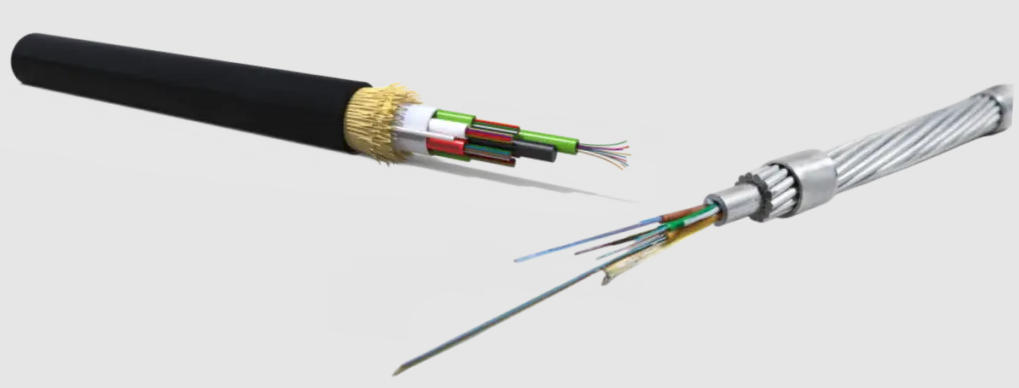
ADSS vs. OPGW Cable Comparison
ADSS and OPGW cables both occupy their own niche in fiber optic networks, particularly in high voltage transmission lines. Both provide options for data transmission and power grid communication, but their design, material selection, and primary purpose differentiate them. Here’s a quick table comparison highlighting the key features to help distinguish them.
Feature | ADSS Cable | OPGW Cable |
|---|---|---|
Installation Method | Strung on poles/towers, no grounding needed | Installed atop power lines, serves as ground |
Electrical Performance | No metal, immune to EMI | Metal core, excellent grounding capability |
Environmental Resistance | Good UV, moisture resistance | Strong corrosion and lightning resistance |
1. Core Function
ADSS fiber optic cables can carry data via fiber optics without the need for grounding, as they are all-dielectric and contain no metal components. This feature makes them an excellent choice in areas prone to electrical storms or high-voltage transmission lines. In contrast, OPGW optical cables serve a dual purpose by facilitating fast data transmission while also providing power system grounding due to their metallic structure. These fundamental distinctions significantly influence where each cable type is deployed.
ADSS fiber cable excels in telecommunications networks, especially where easy installation and EMI resistance are crucial. OPGW is ideal for high-voltage environments, ensuring reliable communication and system grounding at transmission towers, which ultimately enhances network uptime and operational safety.
2. Structural Design
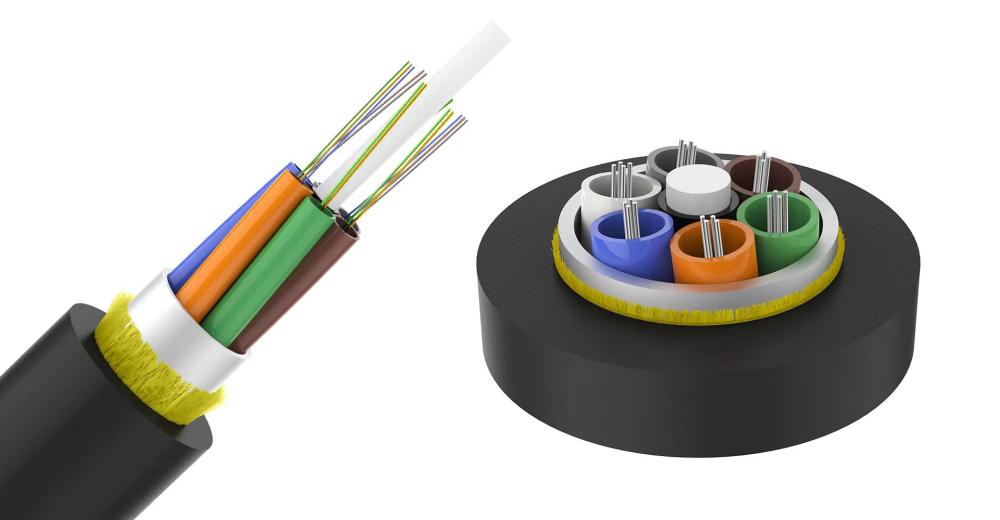
ADSS is all-dielectric and light, often one-third the weight of a typical optical cable. The cable bends and routes easily during installation, making it a popular choice for complicated urban or rural routes. OPGW, constructed from metals, is heavier and stiffer. Its composition provides protection from corrosion and lightning, enduring more than 30 years in severe environments.
Lighter ADSS cables require less support, which in turn decreases long-term maintenance. Thanks to its rugged OPGW design, there are fewer cable swaps on towers exposed to weather or animals.
3. Material Composition
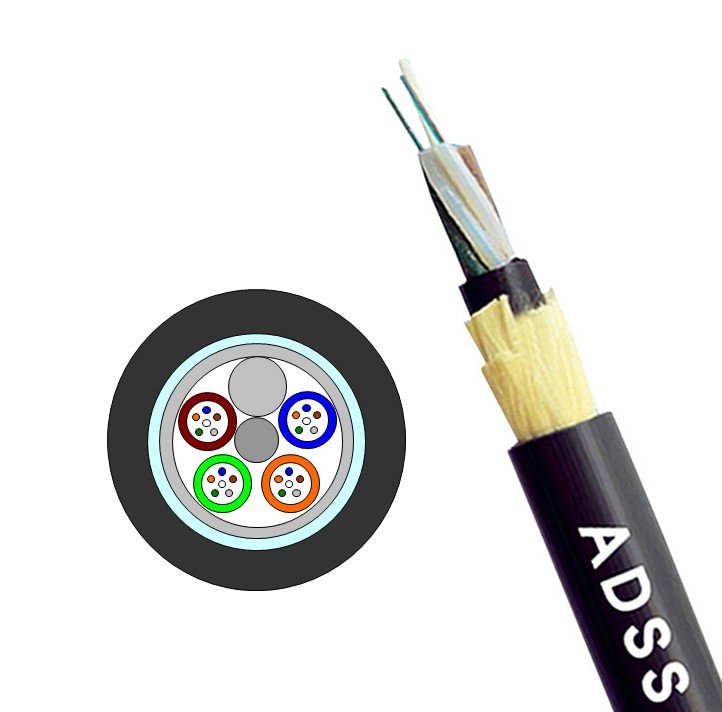
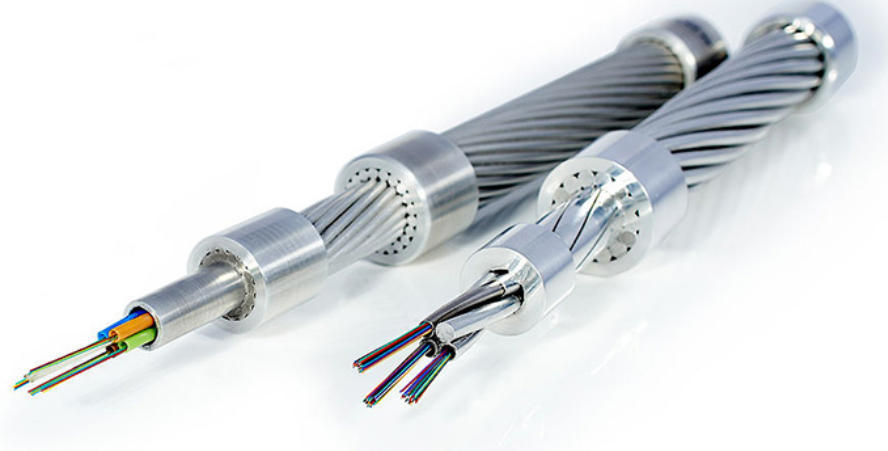
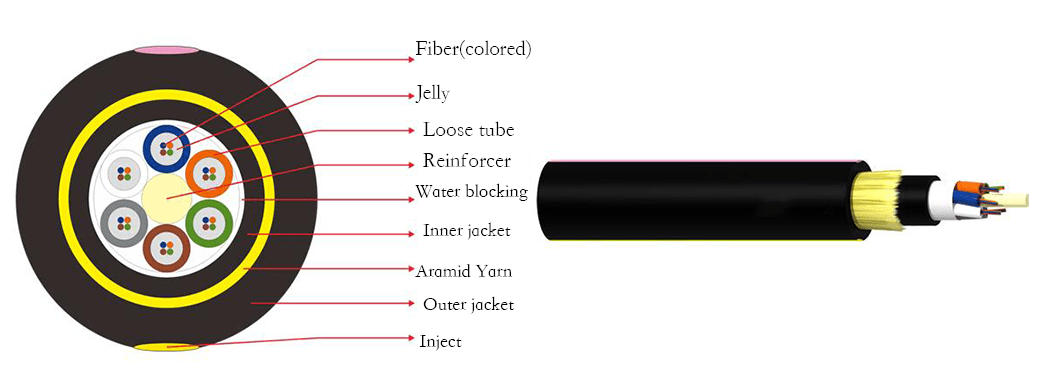
ADSS uses aramid fibers, which are strong but light. This makes it perfect for quick overhead pulls. There is no metal, so it stays safe by power lines. OPGW combines steel and aluminum for strength and conductivity. Therefore, it grounds electricity and resists rust.
ADSS can be installed by hand, while OPGW requires additional equipment. Materials respond to sun, wind, and water. ADSS withstands UV and moisture, and OPGW deflects lightning and brine.
4. Electrical Properties
ADSS cables transmit high-speed data without conducting current, so they don’t pose additional hazard on live power lines. OPGW, with its metal core, grounds and withstands surges. OPGW’s voltage rating makes it best for high-voltage lines, whereas ADSS suits lower-voltage or interference-prone locations.
Both maintain signal integrity. OPGW protects the power grid from stray surges or faults.
5. Mechanical Strength
ADSS resists the forces of nature, standing up to wind, ice, and storms. It flexes instead of snaps. It shakes off electrical static from adjacent lines. ADSS vs. OPGW Cable Comparison – OPGW’s metals mean it absorbs heavier weights and strains, which is ideal for longer spans across rivers or valleys.
It requires less tension at installation than ADSS. OPGW can withstand much greater pulls but may require additional inspections for sag or corrosion. They both count for hanging lines, but OPGW’s strength means less concern on big towers.
Advantages of ADSS:
Lightweight and easy to install
Immune to electromagnetic interference
Flexible in routing, with smaller bends
No grounding needed
Disadvantages of ADSS:
Not suited to highest-voltage lines
Can be damaged by gunfire or wildlife
Advantages of OPGW:
Strong grounding and shielding
High mechanical strength
Long lifespan (30+ years)
Excellent corrosion resistance
Disadvantages of OPGW:
Heavier, harder to install
Needs grounding; not suited for every pole
Common Applications:
ADSS: Urban telecom, rural broadband, power lines with EMI risk
OPGW: High-voltage transmission, exposed lines, and areas with frequent storms
If you need custom fiber optic cables, oufu (https://oufu-fiber.com/) offers tailored solutions that fit specific telecom and power grid needs.
Performance Under Duress
ADSS and OPGW cables, including ADSS fiber optic cables, operate in challenging conditions. Their resilience to weather, electrical fields, and mechanical tension determines their long-term performance, especially in high voltage transmission lines. Understanding how each optical cable performs under such duress allows teams to select the right fit for their power or communication lines.
Weather Resilience
ADSS fiber optic cables are designed to withstand extreme weather conditions, ranging from -40°C to +85°C. Their streamlined dimensions (10–15 mm diameter, 100–200g/m) reduce the surface area for ice and wind accumulation. These cables are UV, ice, and corrosion tested, ensuring durability for over 25 years. Even with ice buildup of up to 10 mm, ADSS can maintain operations, though their span may decrease by roughly 20%. Meanwhile, OPGW optical cables are also resilient against high winds and heavy rain due to their metallic armor, but they are heavier and may sag more under load.
The weather resistance of these cables significantly impacts their longevity. The ADSS optical cable’s resistance to UV, wind, and ice leads to fewer failures and reduced downtime, making it ideal for ice-prone areas, while OPGW is preferred in drier zones.
Electrical Interference
ADSS fiber optic cables contain no metal, which allows them to shrug off electromagnetic interference (EMI) effectively. This ensures that their data transmission remains crystal clear, even when placed near bustling high voltage power lines. In contrast, OPGW optical cables, due to their metal core, may catch stray electrical fields that can occasionally garble their signals. Proper adss cable installation away from strong electric fields is crucial for reducing interference, ensuring robust and consistent data communication.
Tension Management
ADSS cables, known for their durability and flexibility, withstand tension with maximum loads ranging from 10 to 40 kN. These fiber optic cables bend with the breeze and deflect less, 5.4 to 21.5 feet less over longer spans than many alternatives. OPGW cables are rugged but less flexible, thus requiring precise tensioning, particularly on high towers or with fluctuating weather conditions, ensuring safe data transmission and longevity.
Installation Realities
ADSS cables are easy to install because they’re so light. They mount on lots of different types of poles and towers, even with vintage lines. OPGW cables are trickier to install, particularly when employed with live wires. Teams require additional equipment and training. Both require hard hats and rugged equipment, but ADSS tasks tend to wrap up sooner. Project time varies according to crew skill, the length of the span, and weather.
Installation Realities
Installation Realities – ADSS and OPGW cables both present their own set of challenges and advantages in terms of installation. Their design directs how, where, and what is required for safe and efficient installation, particularly when building on live lines where the lights have to stay on.
Live-Line Work
Live-line work refers to installing ADSS fiber optic cables while the power lines remain energized. For OPGW, this is crucial in order to keep the grid up with zero downtime. It demands rigid safety protocols. Workers require insulating gloves, safety harnesses, and must adhere to explicit procedures to prevent electrical contact. ADSS cable installation has its own set of risks, largely concerning cable sag and tension. If not set just right, the cable will sag or break. Teams use live-line sticks, insulated ladders, and sometimes drones to keep people away from the energized lines. For both ADSS and OPGW, periodic rescue drills and current checklists are a must. Training never ends. Only certified techs with real-world experience get on a job because errors can shut down or hurt someone.
Required Equipment
ADSS cable installs require tensioners, sag plates and splicing kits. These cables are light, about 100 to 200 grams per meter and only 10 to 15 millimeters thick, so they don’t require heavy cranes. OPGW jobs are a different animal; you’ll witness grounding clamps, aerial lifts and hydraulic presses to deal with the more difficult metallic center.
Tool choices determine how quick and secure the work proceeds. You can mess up the cable if you use the wrong tensioner with ADSS. If the aerial lift isn’t rated for the OPGW’s weight, you may drop the cable. With the proper equipment, time errors are reduced and the flow is kept smooth. Good tools mean that the cables work better and last longer.
Project Timeline
ADSS installs are swift. Crews can complete planning and stringing in less than half of OPGW. There is no power to shut down and no extra ground to install. Installation realities include weather, tower access, and cable handling that could all extend the schedule.
ADSS excels in remote locations where transporting large equipment is difficult. OPGW is better suited to locations where additional lightning protection is needed. Both can be installed on existing towers, so no waiting for right-of-way permits. Realistic project timelines help teams plan resources, so jobs don’t drag on or blow up budgets.
Cost Considerations
ADSS cable begins less expensive. Installation Realities of BE Building System, its real human, practical benefits. For starters, OPGW is more expensive due to its metal construction and additional equipment. OPGW provides robust lightning protection, which can translate to less maintenance down the road. It has reduced total land use and site work by as much as 50% over traditional aerial fiber.
In the long run, ADSS requires less maintenance and has to be inspected for sag and tension. OPGW requires rust inspections, particularly in adverse climate. Choosing the right cable influences not only upfront invoices but what you will invest in repairs and upgrades down the road.
Economic Considerations
Economics underlies every major decision in telecom infrastructure. When choosing between ADSS fiber optic cables and OPGW optical cables, project planners must balance up-front costs, future expenses, and the devil-in-the-details of adss cable installation. These fiber optic cables provide distinct advantages and disadvantages, each affecting budgets in its own way.
Initial Investment
ADSS cables are generally less expensive to install, as they weigh around 20% less than OPGW cables, leading to lower shipping and handling costs. Their adaptable construction means that crews require less cumbersome equipment for adss cable installation. For a typical project, ADSS optical cables cost roughly $150,000, while OPGW cables can be as high as $300,000. The premium on OPGW is due to the cable itself and the need for trained labor, as these cables frequently require grounding systems, which raises the overall cost. ADSS cables bypass the need for grounding gear, saving both time and money. Overall installation costs vary widely based on project size, local climate, and power line configuration, allowing for significant savings in congested or complex regions.
Installation Costs
ADSS fiber optic cables slide into position with less stress, making them an excellent choice for projects involving high voltage transmission lines. They require less labor and lighter equipment, which suits remote or congested locations. Because they weigh so little, teams can move quicker, saving on labor and rental dollars. In contrast, OPGW optical cable types, engineered for durability, require additional hands and specialized equipment, making setup more time-consuming, especially in areas with high-voltage lines. Both cable types prevent trenches and road work, slashing expenses by as much as 50% compared to conventional fiber optic cables.
Long-Term Maintenance
ADSS fiber optic cables have a lifespan of 20 to 25 years, requiring inspections for weather or avian damage, yet repairs are easy and inexpensive. OPGW optical cable types can extend to 35 years and withstand severe weather. Their dual function as ground wire and data transmission link means any repair involves power line work, which can be costly. Over a cable’s life, ADSS generally incurs less annual maintenance, particularly in moderate climates. OPGW has its advantages in harsher environments but leads to increased regular expenses. These decisions impact the annual operating budget, compelling planners to balance current expenses with future costs.
Signal Integrity
Signal integrity refers to stable communications, especially with ADSS fiber optic cables and OPGW, which maintain powerful signals if configured properly. ADSS operates optimally in environments where power surges or weather changes are infrequent, while OPGW, protected in its metal sheath, excels at noise blocking in high-interference areas. Problems can arise from poor installations or severe weather. Regular inspection and rapid repair are essential for maintaining clean signals, ensuring robust signal health keeps networks humming and users satisfied.
The Hidden Factor: Signal Integrity
Signal integrity is crucial for the capacity of ADSS fiber optic cables and OPGW optical cable to maintain reliable, distortion-free data transmission. Attenuation, which indicates how much a signal fades as it travels through optical fiber communication, can determine if a network screams or crawls. Understanding how each cable type addresses this challenge allows consumers to select the appropriate cable type that truly suits their needs.
Attenuation Risk
ADSS fiber optic cables are resilient to attenuation due to their non-metallic construction, which prevents them from conducting or accumulating stray electric fields. This means that EMI can’t affect them, allowing them to maintain attenuation under 0.2 dB per kilometer, even near high-voltage transmission lines. This capability is crucial for areas plagued by EMI, such as crowded urban grids or industrial locations. They also stand strong against fierce weather, ensuring signal integrity during storms without experiencing blackouts or added induced currents.
In contrast, OPGW optical cables use metal, which can pose some danger. While they are effective for long-range communication, metal behaves like an antenna and can capture interference, resulting in increased attenuation potential. This is particularly concerning in electromagnetically noisy environments. Although OPGW cables are reliable workhorses for long hauls, they require special attention to prevent signal fade and maintain optimal performance.
To reduce attenuation, careful installation of both ADSS and OPGW cables is essential. For ADSS cable installation, ensuring proper tension and sag keeps the fibers stress-free. In the case of OPGW, effective grounding and jointing help control signal loss, which is vital for maintaining high-speed data transmission.
Signal loss equals slow speeds or dropped signals. For businesses or services that require real-time data, this can be more than inconvenient. It can cost money or trust.
Data Security
No electric path, no convenient way for a thief to slide in and swipe data. OPGW’s metal design can leave vulnerable points, particularly at splices. They both use tough outer layers to keep out tampering.
Cutting-edge telecom demands cables that protect information around every corner. Any weak link threatens both privacy and performance.
Network Reliability
ADSS cables play nicely through heat, cold, wind, and even high-voltage areas. They maintain robust signals at temperatures ranging from -40 to +85°C, so they’re dependable in extreme environments.
OPGW cables hold up as well. Their metal shield can earth these stray currents, which serves to protect both the cable and connected gear.
In either case, good setup is key. The right tension, clean splices, and proper support assure signals stay solid for years.
Making the Right Choice
Projects must pair the appropriate cable type to the task at hand. New builds can benefit from using OPGW optical cable for longer runs and built-in grounding, while retrofits often prefer ADSS fiber optic cables to bypass power shutdowns. Future needs also play a crucial role; some installations may outgrow their fiber optic cables if planners don’t anticipate growth.
Professional guidance is worth it. When in doubt, ask an old pro.
Making the Right Choice
Deciding on ADSS or OPGW cable is more than just selecting from specifications on a sheet. It’s really about what the project requires, how the ecosystem acts, and what the future holds. Both cables have their own characteristics, and each one is more appropriate in specific situations. Here’s how these points play out for new builds, upgrades, and long-term planning.
New Infrastructure
ADSS fiber optic cables excel in new construction projects due to their versatility and easy installation. They can light up without power down, making them useful for quick-turnaround or off-site projects. Being lightweight, they perform well in conditions where wind or snow packs heavy, making them a tough selection for telecommunication networks in remote or extreme locations. Their non-metallic construction means they don’t pick up electromagnetic noise, ensuring clean signal transmission.
OPGW optical cables are a reliable choice when new power lines must accommodate both power and data transmission. They provide robust mechanical support and protect against lightning, which is crucial for high voltage transmission lines. The metal rods assist in grounding the system and safeguarding equipment. However, installing them often requires closing the line, which can slow down the process.
ADSS cable installation is usually more advantageous for projects where crews can’t afford any downtime or are operating in challenging weather. OPGW cables are ideal wherever lines are strung to carry high voltage or where there is a strong drive for tight power-data convergence.
Existing Power Lines
ADSS cables can be more easily retrofitted to live lines, reducing installation time and ensuring power stays on. They won’t disrupt service, so they’re great for upgrades on crowded grids. Their light weight means less strain on ancient towers. In high electrical risk areas, its use requires consideration.
Retrofitting with OPGW cables can be harsh. The metal portion requires crews to turn power off to install them, which isn’t always feasible. They do offer superior lightning protection and accommodate high-voltage systems with a need for deep grounding.
When ancient lines require some quality data links, either cable type can serve. This includes considerations of safety, line voltage, and how much downtime a utility can tolerate.
Future-Proofing
Future-proofing means selecting cables that will manage new technology and increasing demand. ADSS cables bend with change. Their non-metallic components protect them from EMI. Expansions are easy because they’re lightweight and easy to lay. They’re deployed in smart grids, railways, and monitoring environments where the future is constantly in flux.
OPGW cables have lifetimes of over 30 years and transmit high-speed data perfectly. As grids get smarter, OPGW cables can serve as a backbone for both power and data. Modifying or enhancing them later can be expensive and complicated.
To keep the edge, it’s crucial to consider how each cable aligns with future requirements. Examine sag, tension, EMI and whether the lines will require increased data speed. Both can do well, but only if aligned with the appropriate infrastructure and strategy.
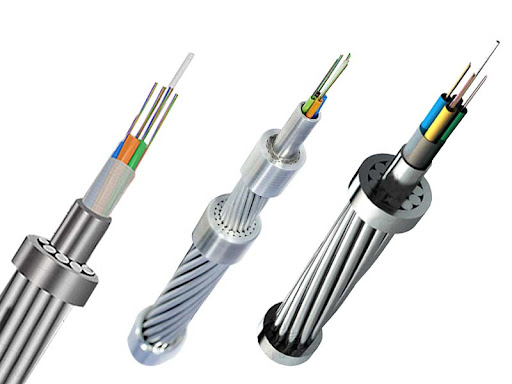
Conclusion
To choose between ADSS and OPGW cables, consider what’s most important to you. ADSS stands strong where poles and towers stretch endless lines and scoffs at storms. OPGW provides robust protection for fiber optic lines and integrates seamlessly with electrical infrastructure. They both have an important role in today’s high-speed, rugged networks. Crews say ADSS is quicker to hang and OPGW eliminates extra steps where ground wires already exist. In practice, both can survive for years when properly installed. Those who know their stuff tend to look at the job site, the load, and the budget before selection. Want to go deeper? Consult makers’ guides and experts to pair the appropriate cable to your project.
Frequently Asked Questions
What is the main difference between ADSS and OPGW cables?
ADSS fiber optic cables are self-supporting and require no grounding for installation, while OPGW optical cables, used on power lines, also serve as a ground wire.
Which cable is better for harsh weather conditions?
OPGW optical cables work better in severe weather as they are tougher and earthed, while ADSS fiber optic cables can suffer from tracking in high voltage, particularly in storms.
Is installation easier for ADSS or OPGW cables?
ADSS fiber optic cables can be installed easier and faster since the power line does not have to be de-energized, unlike OPGW optical cable, which often requires a temporary outage.
Which cable is more cost-effective?
ADSS fiber optic cables usually cost less to install because they don’t require power shutdowns, making them an efficient choice for data transmission in telecommunication networks.
How do ADSS and OPGW cables impact signal integrity?
Both adss fiber optic cables and opgw optical cables offer dependable communication.
Can ADSS and OPGW cables be used together?
Yes, adss fiber optic cables and conventional fiber optic cables can coexist in the same network, depending on system and environmental considerations. Proper planning ensures they are compatible and perform optimally.
Which cable should I choose for my project?
Select ADSS fiber optic cables for fast, economical installation without power outages. Choose OPGW optical cable for high-voltage settings where grounding and robustness are essential. Evaluate your project requirements and consult professionals about the appropriate cable type.