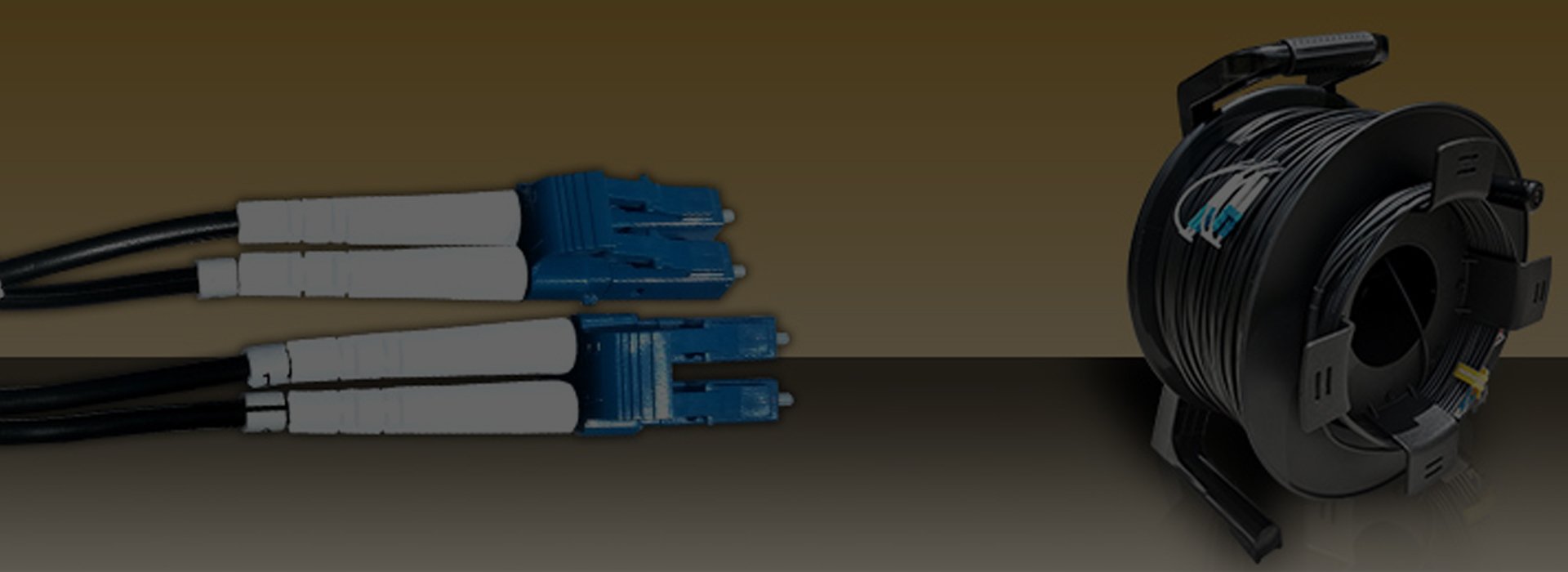
The advantages of OUFU Tactical Fiber Optic Cable
- Ultra-rugged TPU outer jacket for abrasion & crush resistance
- Full Kevlar strength for high tensile strength
- -40℃ to +85℃ wide temperature working range
- Lightweight & flexible for fast single-person deployment
- IP67 waterproof connectors available
- Reusable for hundreds of times
- Anti-EMI/RFI, lightning proof & corrosion resistant
- 2-24 cores, SM/MM optional with various connectors
Military Grade Tactical Fiber Optic Cable
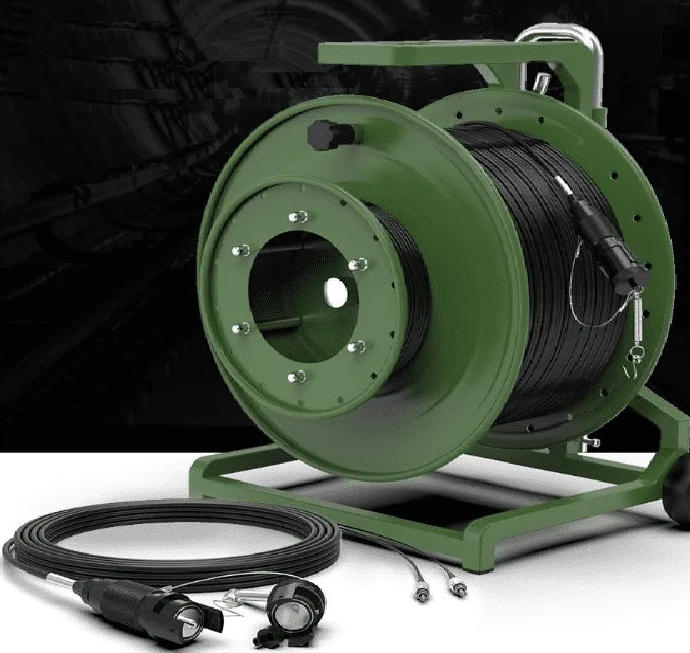
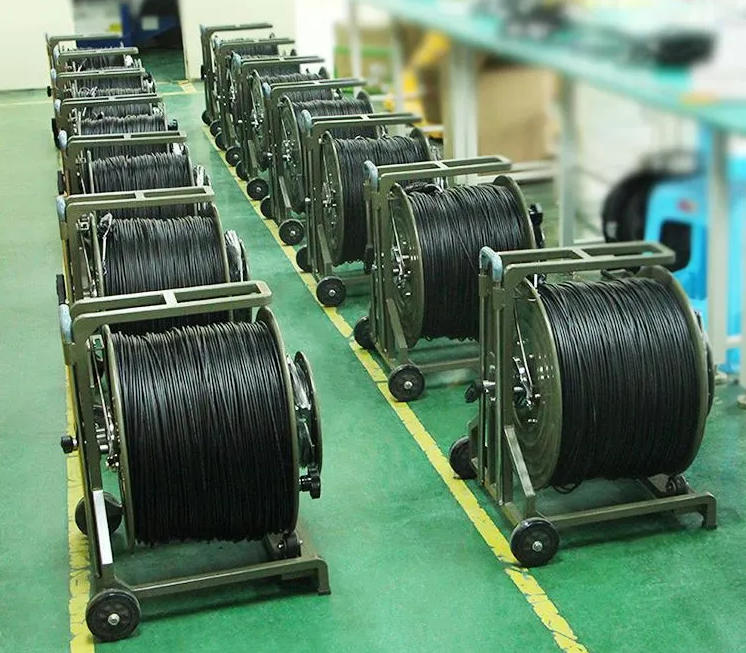
Our military grade tactical fiber optic cable is engineered to meet the rigorous demands of battlefield communication, tactical command, field operations and emergency response scenarios. Constructed with high-tenacity aramid (Kevlar) strength members and heavy-duty TPU jacket, this cable delivers superior tensile strength, crush resistance, abrasion resistance and anti-tear performance to withstand rough handling, vehicle transit and extreme field conditions.
Strength Tactical Fiber Optic Cable Manufacturer in China
Tactical fiber optic cables are made of materials such as aramid fibers to provide sufficient tensile strength; the outer sheath is made of wear-resistant and weather-resistant materials. Some tactical fiber optic cables also add metal armor layers or spiral metal tubes to enhance their resistance to mechanical damage and to prevent rat bites.
OUFU implements a complete process quality control system. High-quality optical fibers and sheath materials are selected as raw materials. During production, real-time online detection is carried out. Tactical fiber optic cables undergo multiple rigorous tests, including optical power, tensile strength, compressive strength, and resistance to high and low temperatures, with a pass rate of over 99.9%.
Welcome to visit our factory. Feel free to contact us at any time!
Hot-Selling Tactical Fiber Optic Cable
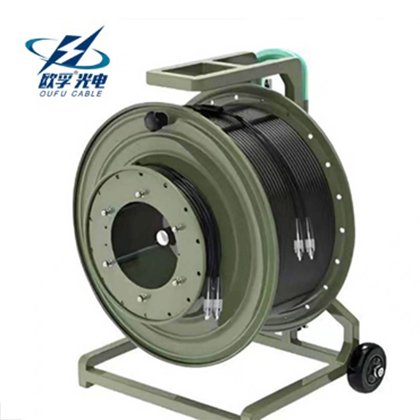
Ultra-lightweight and small diameter design for easy carrying and fast deployment.
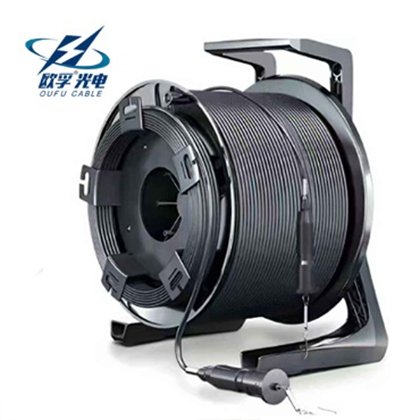
Pre-terminated connectors for plug-and-play, no on-site splicing required.
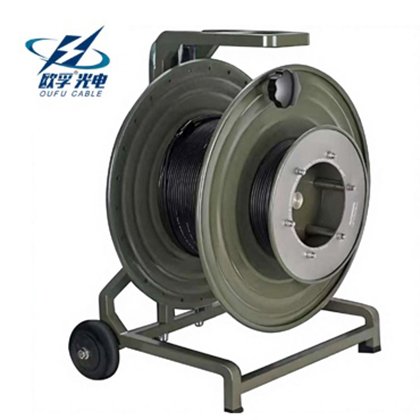
TPU/PUR outer jacket, abrasion resistant, oil resistant, tear resistant.
Portable
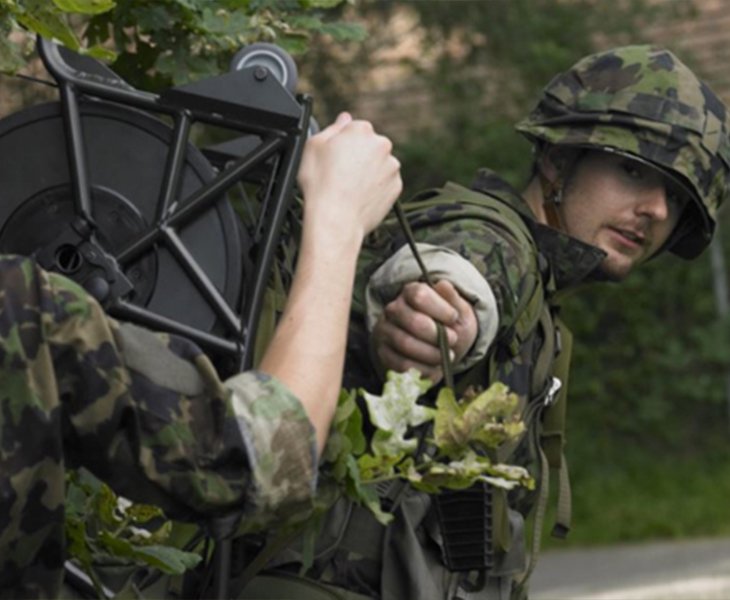
Tactical fiber optic cable adopts a tightly-coated fiber structure, with the outer diameter usually less than 10mm. The weight of a 1km length is only 1/3 – 1/2 that of ordinary armored optical cables. Thus, you can carry a hundred-meter-long optical cable and move quickly.
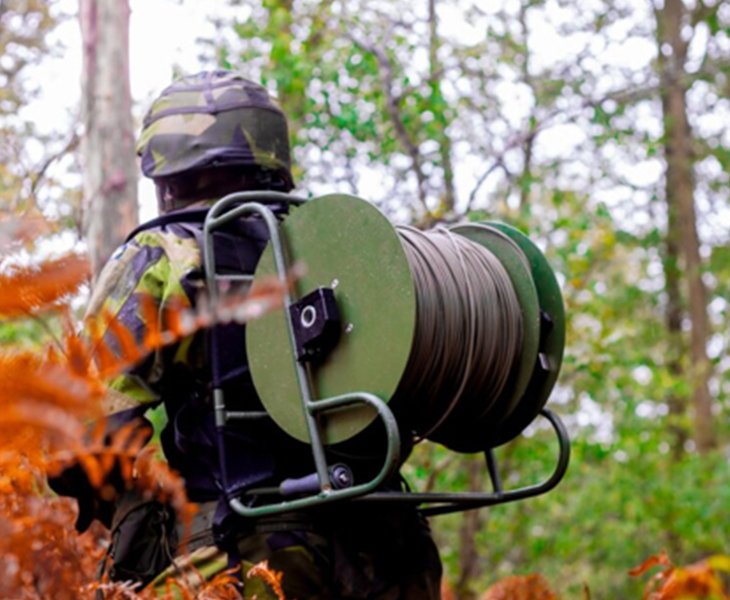
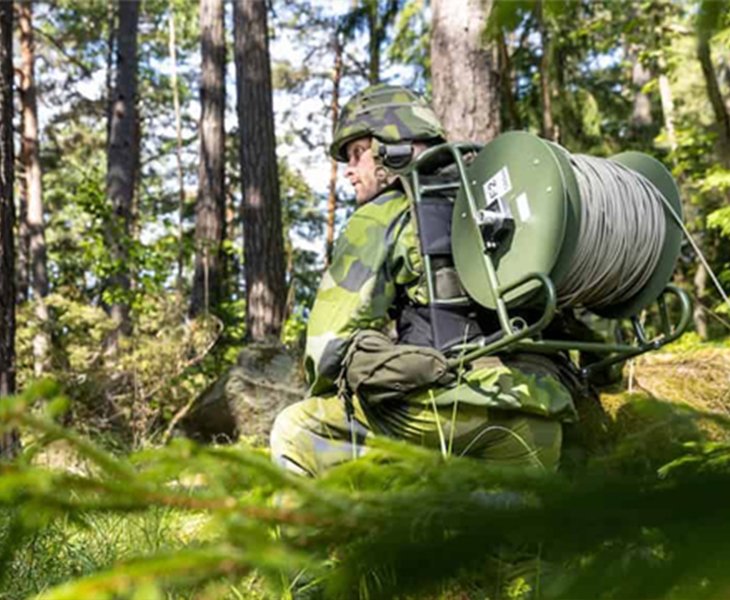
Flexible Laying Method
The minimum static bending radius of the deployed tactical fiber optic cable is≥20mm, and the dynamic bending radius is≥10D (D is the outer diameter of the optical cable). You can freely bend, suspend, bury, or move with the equipment, making it suitable for rapid wiring in complex terrains.
Plug Play
Tactical fiber optic cable is pre-installed with military-standard quick connectors (such as TFOCA, Mini TAC) or commercial LC/SC connectors. The connection can be completed within 10 seconds, with an insertion loss
≤0.3 dB and return loss≥50 dB. You don’t need professional fusion splicing equipment to meet the timeliness requirements of emergency communication.
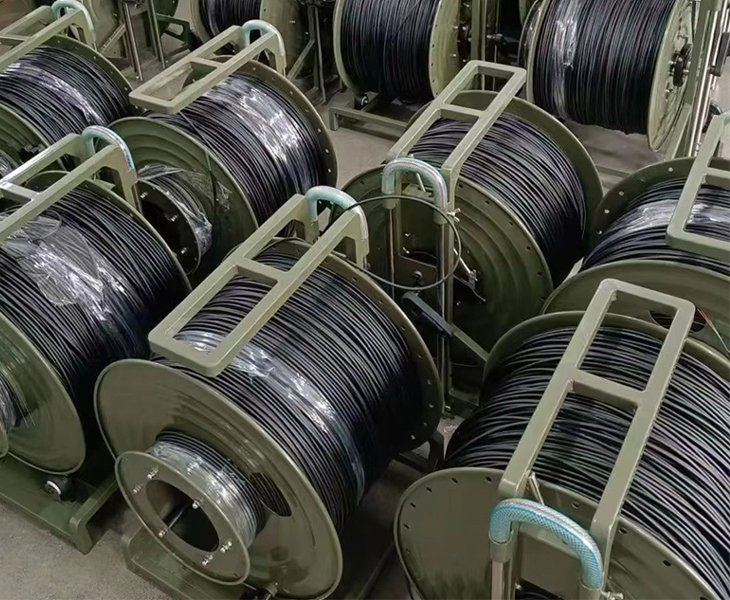
OUFU Leading Tactical Fiber Optic Cable Manufacturer
The self-production and self-sale model of OUFU eliminates the channel markup for tactical fiber optic cables, making the price more competitive under the same quality standards. At the same time, We offers bulk purchase discounts and long-term cooperation price concessions for you.
Conventional tactical fiber optic cables use aramid fiber reinforcement cores. Their short-term tensile strength can reach 1500-3000N/100mm, capable of withstanding external forces such as vehicle and human dragging; military standard models (such as TFOCA-2) have higher tensile strength and can meet the strict requirements of the battlefield.
Military standard connectors: TFOCA-1, TFOCA-2, MiniTAC, with IP67 protection level, resistant to vibration, waterproof, and dustproof, suitable for military equipment.
Commercial connectors: LC, SC, ST, easy to plug and unplug, suitable for civilian emergency and field exploration scenarios, insertion loss≤0.3dB, return loss≥50dB.
Static bending radius (after installation and fixation):≥20mm
Dynamic bending radius (during installation/movement):≥10D (D is the outer diameter of the fiber optic cable)
The flexibility of this cable far exceeds that of ordinary optical cables, allowing for flexible bending to adapt to complex terrains.
Avoid excessive bending: Do not bend beyond the minimum radius to prevent the optical fiber from breaking.
Keep away from sharp objects: Although the armored type is resistant to cutting, sharp objects such as rocks and tools still need to be avoided.
When laying overhead, Reserve sag to prevent damage to the optical cable caused by wind pull.
Check the connectors: Remove dust and stains from the connector ends by unplugging and cleaning to reduce excessive insertion loss.
Examine the laying path: Check for excessive bending or external force compression.
Test the optical fiber link: Use an OTDR (Optical Time Domain Reflectometer) to locate the attenuation point and perform repair or replacement.