
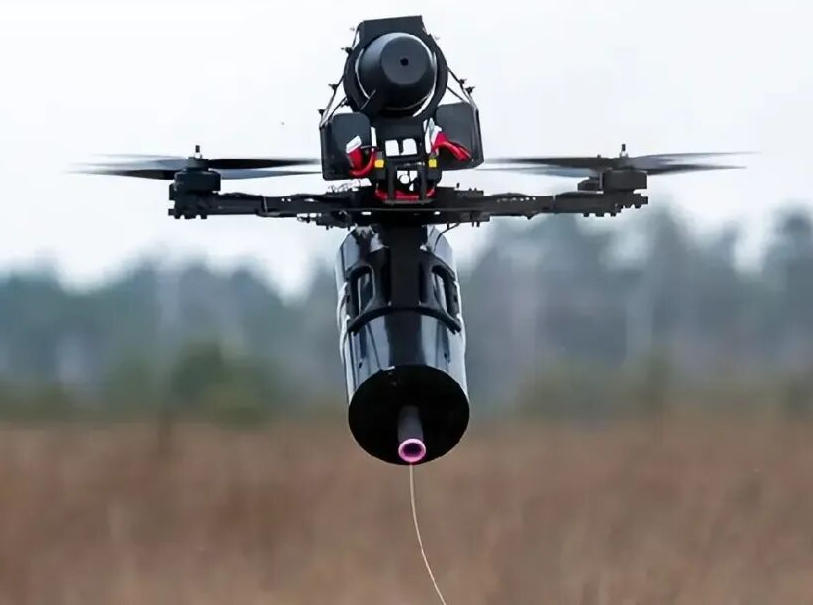
Drone Optical Fiber Features
- Ultra-light & high strength drone optical fiber
- Zero electromagnetic interference, high security
- High bandwidth & low latency for real-time HD transmission
- Tensile resistant, smooth payout, no breakage
- Weatherproof for harsh outdoor environments
Your Leading Optical Fiber Manufacturer in China
Our G.657A2 bend-insensitive single-mode optical fiber is designed for high-performance FTTH, 5G, and broadband access networks. Featuring excellent bending resistance and full-spectrum low-water-peak design, it ensures stable transmission even in tight cabling scenarios while maintaining full compatibility with G.652D fibers and equipment.
Key advantages include ultra-low macro-bending loss at a 7.5 mm minimum bend radius, extremely low attenuation across O, E, S, C, and L bands, and low PMD for stable 10G/40G/100G high-speed transmission. The fiber delivers outstanding resistance to micro-bending, mechanical stress, and temperature variations, making it highly reliable for indoor and outdoor deployment.
Fully compliant with ITU-T G.657A2 standards, our G.657A2 fiber supports flexible routing, easy installation, and high-density cabling in residential buildings, corridors, ducts, and base stations. It is widely used in fiber-to-the-home (FTTH), 5G backhaul, CATV, security monitoring, data center interconnection, and smart city networks.
With stable quality, long service life, and cost-effective performance, it is the ideal choice for modern optical communication construction and network upgrading.
Welcome to visit our factory. Feel free to contact us at any time!
Various Types of Optical Fiber
The classification methods of optical fibers are diverse. Different types of optical fibers have significant differences in terms of performance, cost and applicable scenarios.
Strong anti-dispersion, no signal distortion over long distances
Large capacity transmission system with core division multiplexing technology
Why Choose Our Drone Optical Fiber?
Our drone optical fiber is specially designed for unmanned aerial vehicles, featuring ultra-light weight, small diameter, high tensile strength and stable signal transmission. It provides a reliable wired communication link for drones in complex environments.

No electromagnetic radiation, immune to jamming and signal interception.
Specially reinforced structure ensures stable flight and reliable data link.
Minimizes payload while maximizing durability for long-endurance drones.
Supports high-definition video, telemetry and control data with minimal delay.
Ideal for reconnaissance, inspection, surveillance and special mission drones.
Perfect for power line inspection, emergency communication, border patrol and industrial monitoring.
Ultra-High Transmission Speed & Bandwidth
Optical Fiber far higher than copper cables; supports 1G/10G/40G/100G/400G/800G networks, meeting large-capacity data, 5G, cloud computing, and HD video transmission.
Extremely Low Signal Loss
Optical Fiber signal attenuation is much lower than copper, enabling long-distance transmission (dozens to hundreds of kilometers) without frequent relay amplification.
Immunity to Electromagnetic Interference
Optical Fiber transmits light signals instead of electricity, so it is not affected by power lines, industrial equipment, lightning, or radio interference, ensuring stable transmission.
Frequently Asked Questions
Optical fiber is a flexible, transparent fiber made by drawing glass (silica) or plastic to a diameter slightly thicker than that of a human hair. It transmits data signals in the form of light pulses over long distances with high speed and low loss.
- Single-mode fiber (SMF): Small core (9μm), for long-distance transmission (telecom, backbone networks).
- Multi-mode fiber (MMF): Larger core (50/62.5μm), for short distances (LAN, data centers, indoor cabling).
| Item | Single-mode | Multi-mode |
|---|---|---|
| Core size | 9 μm | 50 / 62.5 μm |
| Transmission distance | Long (km level) | Short (hundreds of meters) |
| Bandwidth | High | Relatively low |
| Light source | Laser | LED / VCSEL |
| Application | Long-haul telecom, 5G, backbone | LAN, data center, enterprise |
Attenuation is the loss of optical power as light travels along the fiber, mainly caused by absorption, scattering, and bending. It is measured in dB/km. Lower attenuation means better transmission performance.
- SC, LC, FC, ST, MPO/MTP
- LC and MPO are widely used in data centers for high-density cabling.
- Fusion splicing: Permanent connection by melting fiber ends, low loss, stable.
- Mechanical splicing: Temporary or quick connection using alignment components, higher loss.
Fusion splicer, OTDR, optical power meter, visual fault locator (VFL), fiber cleaver, stripping tool.