A drone fiber optic cable is a lightweight, flexible cable made to connect drones with ground stations for fast data transfer and real-time control. These cables employ ultra-thin glass or plastic fibers that transmit signals at lightning-fast speeds, enabling the drones to transmit large files or video with minimal latency. Drone fiber optic cable is suitable for places with complicated signals or hard security; they maintain the connection. Many sectors rely on these cables for mapping, inspection, and live broadcasts. Its lightweight and robustness allow drones to fly extensive distances without sacrificing signal integrity. For teams who require reliable connections and rapid relays of information, drone fiber optic cables provide a convenient solution. The following sections explain how these cables function and why consumers choose them.
As fiber optic cables are to the internet, so too are drone fiber optic cables to drone communications: lightweight, flexible, and light-speed fast.
Fiber optic cable allows for fast communication without interference and can include live video and secure channels for emergency or industrial operations.
These cables can provide continuous power to drones, thereby facilitating longer flight times and dependable functionality over extended or intensive missions.
Fiber optic tethers offer robust advantages, but they can constrain drone movement and add physical points of failure, thus requiring strategic deployment and safeguarding to ensure mission success.
As fiber optic technology advances, drones only get better, paving the way for data-driven applications, smart infrastructure, and emergency response worldwide.
Training and expert human oversight are still essential, making fiber optic drone systems safe, effective, and innovative in industries ranging from agriculture to infrastructure management.
What Are Drone Fiber Optic Cables?
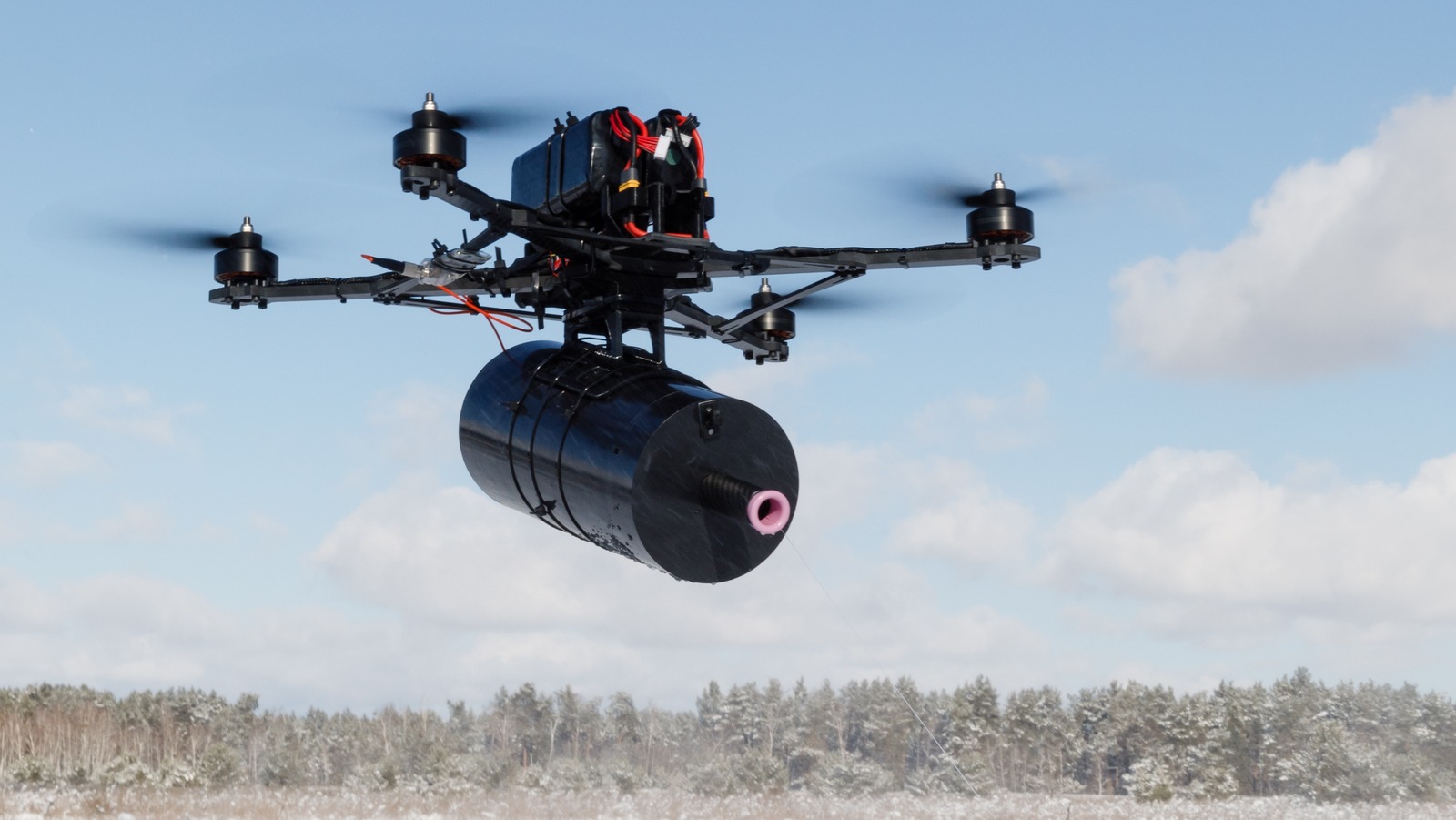
Drone fiber optic cables are slender, adaptable strands designed for rapid data exchange between drones and ground stations, particularly in modern warfare. These cables utilize strands of glass or plastic to transmit light signals, allowing optic drones to transfer data without the hassle of bulky cables. They are so light that they don’t slow the drone down, with some weighing only 60 grams for a 5-kilometer length. In challenging environments like war zones, fiber optic tethers maintain robust signals despite widespread radio jamming, making them essential tools for UAV operations. Certain types extend as far as 50 kilometers, while most fall in the 5 to 20 kilometer range.
1. The Core Concept
Fiber optics use light instead of electric currents to transmit data, significantly enhancing the capabilities of optical drones. When connected to a drone, this technology allows information to move swiftly and cleanly, even in densely crowded radio environments. Light signals bounce down the cable, avoiding the headaches of old-school wires, like interference and huge losses over distance. Using fiber instead of copper gives drones a big boost: they can send real-time video, stay hidden from jammers, and work in environments packed with electronic noise. Think of drones lasting 12 hours in harsh EMI zones, making drone warfare like mapping, rescue, and surveillance a lot smoother and safer.
2. System Components
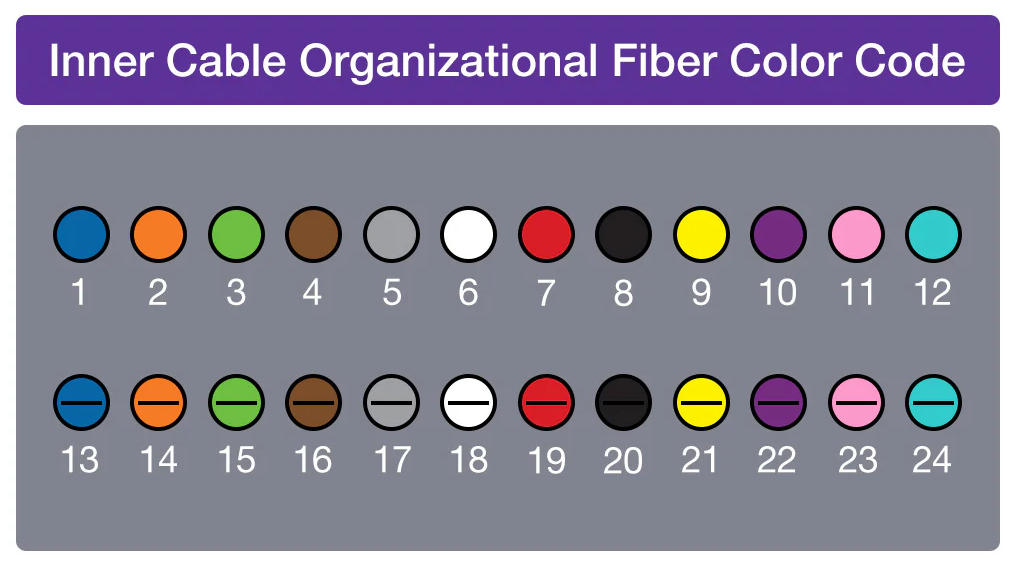
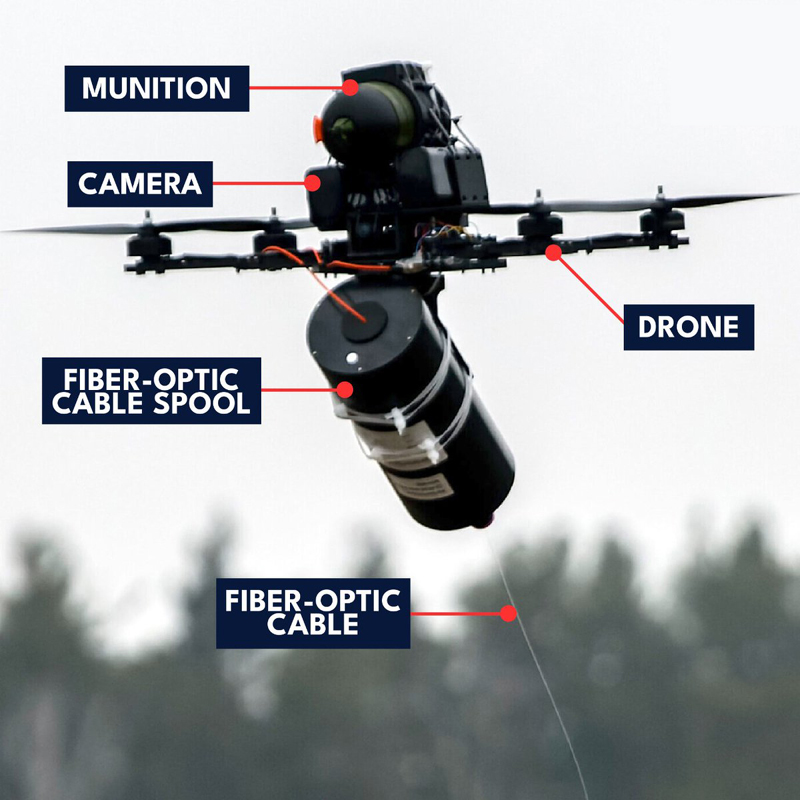
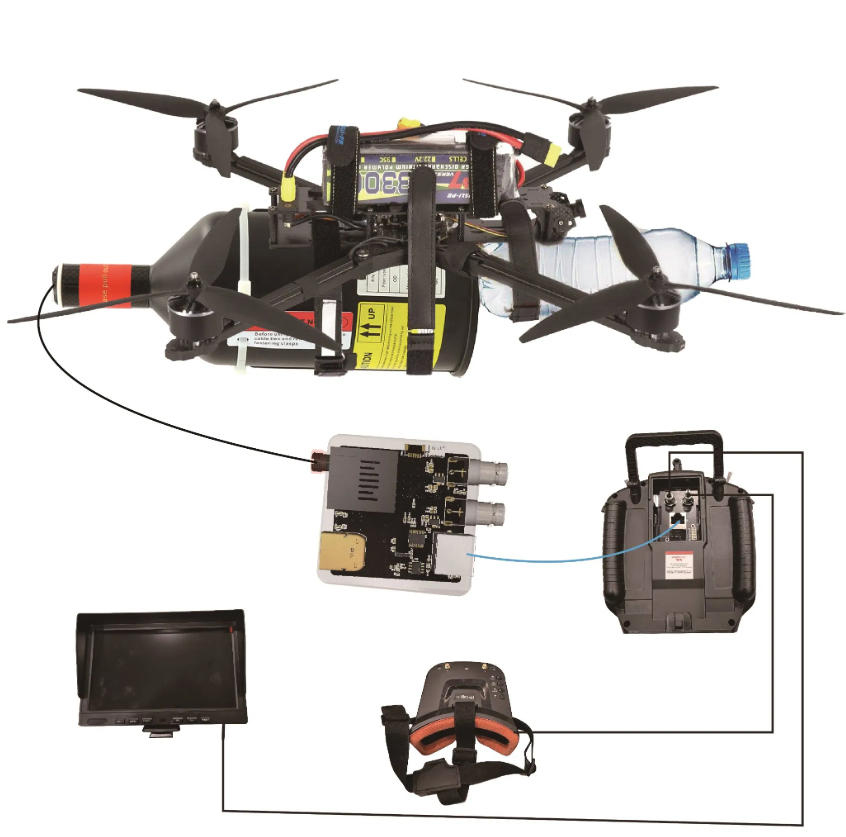
A drone fiber optic system, crucial for modern drone warfare, has three main parts: the optical fiber itself, connectors, and transceivers. The fiber is the core, transmitting the light pulses essential for communication in challenging environments like eastern Ukraine. Connectors attach the cable to the drone and ground station, ensuring the light path remains clear. Transceivers convert electrical signals into light and vice versa, enhancing the capability of optic drones. Good cable management is key; any sharp bend or twist can break the fiber. New builds utilize carbon nanotube composites, reducing weight to only 0.1 kilograms per 100 meters.
3. Data Transmission
Fiber optic cables enable optic drones to transmit real-time video and sensor information with near-zero latency, which is crucial in modern warfare. This low latency provides operators a critical edge, particularly in military applications like reconnaissance. Unlike radio, which can get crowded and messy among other airwaves, fiber keeps signals clean, ensuring no dropped feeds or fuzzy images, even amidst electronic warfare.
4. Power Delivery
Certain drone fiber optic cables, especially those used in modern warfare, go beyond just sharing data; they can also send power, keeping cameras and tools on board operational. This integration of power and data in a single cable reduces weight and tangles, enhancing the maneuverability of fpv drones and allowing them to carry more payload.
5. Operational Principle
Fiber optic cables convert electrical signals into light, beaming that light down ultra-thin fibers used in optic drones, which can jam, dodge, and go farther while remaining connected for hours. In modern drone warfare, protecting these fibers from kinks and breaks is crucial, as the reliability of the optic link directly impacts the drone’s capability and effectiveness.
The Unseen Advantages
Drone fiber optic cables are redefining the way operators connect, control, and secure fpv drones. Unlike conventional radio controls, these cables employ light to communicate, providing drones an advantage in both civil and military roles. With the ability to fly missions using fiber optic drone technology, operators experience more robust data links and less risk of jamming, tracking, or hacking. The benefits add up in concrete ways, impacting everything from drones’ data management to flight time.
Feature | Fiber Optics | Conventional Wiring | Drone Operation Impact |
|---|---|---|---|
Signal Quality | High, low loss | Lower, more prone to noise | Clear, reliable commands |
Security | Hard to intercept | Easier to tap | Safe from hacking/jamming |
Weight | Lightweight, ultra-thin | Heavier, bulkier | Longer flight, less drag |
Durability | Flexible, durable, high strength | Often stiff, less tough | Better in rough conditions |
Bandwidth | High (supports HD video/data) | Limited | Real-time, rich data streams |
Unjammable Link
Immune to electronic jamming or interference
Maintains a steady connection even in hostile electronic environments
Not detectable by most standard sensors
Keeps mission control in direct, real-time contact
When the electronic war heats up, radio signals drown in the noise. Fiber optic drone links keep UAVs immune to these attacks, ensuring operators maintain control and missions reach their objectives. This resilience is a bona fide game changer for modern warfare and mission success.
High Bandwidth
Fiber optics provide drones with the power to transmit massive data payloads at once. It’s a huge advantage for live HD video streams, sensor information, and even advanced control signals. Operators can make crisper decisions because they observe more and observe it as it occurs.
With high bandwidth, drones could collaborate in teams, share maps and synchronize moves. This collaboration increases coverage and work gets completed more quickly. It plays a role in everything from search and rescue to tracking major events.
Enhanced Security
Fiber optic cables are hard to bug. Since signals travel as light within a protected cable, snooping is nearly impossible. Top military teams rely on fiber optics to keep their moves under wrap.
Encrypted data on fiber just makes it that much safer. Even if someone locates the cable, the data within remains encrypted. Sensitive missions, such as rescue, recon, or disaster response, remain protected from prying eyes. This protection allows drones to operate in dangerous areas without exposing their position or objective.
Persistent Power
Fiber optic cables might deliver constant power from ground to drone. This sustains drones in flight beyond what batteries alone permit. Longer missions, such as mapping or monitoring borders, rely on consistent energy.
Your new drone tech, such as high-end sensors or long-range cameras, requires more power. Persistent power allows drones to transport these enhancements without concern. The result is drones that don’t just fly longer, but do more every minute they’re up.
Navigating The Limitations
Fiber optic drones effectively address huge issues with electronic interference, making them a perfect match for military and surveillance applications, especially in modern warfare. Utilizing ultra-thin fiber cables that extend up to 20 kilometers, they ensure consistent command and transparent video even when radio links drop. However, these advantages also present challenges related to the drone’s maneuverability, durability, and stealth.
Restricted Mobility
A fiber-optic cable chains a drone to its pilot, reducing its range and speed. Not soaring here and there like the usual drone, these have to remain within the cable’s length. The longer the cable, the heavier and more cumbersome it becomes. Ukrainian engineers strive to lighten them up, yet there is always a compromise. Operators receive near-lagless video and control, even in rough city blocks or thick woods, but they can’t simply dispatch the drone wherever they please. Missions that require sudden shifts in direction or distance, such as pursuing moving targets, take the biggest hit.
There are success stories of drones operating effectively along fixed paths above forests or congested urban areas. If the cable catches or runs out of slack, the drone can’t make in-flight adjustments. It’s a perpetual balancing act, finding the sweet spot between a firm, dependable tether and enough flexibility to get the work done.
Physical Vulnerability
Fiber opt cables, particularly in war, are sitting ducks. One hard edge, stray bullet, or even rough landing can snap the line, severing control in an instant. Drones constructed on lightweight FPV frames assist with velocity and agility, but don’t do a lot to defend the cable itself. Additional armor or ingenious launchers may assist, but they tend to be heavy or bog down delivery.
While certain teams implement guides or reels to keep cables from touching the ground, these alternatives aren’t flawless. If the cable snaps, then it’s mission over. There is no video, no control, just a stranded drone and a wasted shot.
Stealth Compromise
Fiber optic drones are glowing at night, the cable can betray them. In the daytime or bright lights, the tether becomes visible, rendering spy or military operations more dangerous. Enemies could locate and track the cable to its operator or just aim at the line and shoot the drone.
A few operators attempt to conceal the cable by flying close to the ground or along the cover of trees or cliffs. This restricts the drone’s flight area. Thinner cables or darker colors assist, but do not completely address the issue. Ultimately, all of the solutions are a compromise between remaining anonymous and maintaining a robust data connection.
Real-World Applications
From reinventing military and civilian drone deployments in applications ranging from secure data transmission to persistent aerial coverage, fiber optic drones have transformed modern warfare, showcasing their reliability and capability on the battlefields.
Application | Significance of Fiber Optics |
|---|---|
Military | Secure, stable communication; stealth; hours-long missions |
Civilian | Real-time video; infrastructure monitoring; safe emergency response |
Military Operations
In military camps, drones attached to fiber optic cables provide real-time, secure communication. Signals carried over fiber have no electromagnetic leakage, so they are far more difficult to snoop on. This renders them perfect for covert observation and protected operations.
The Russo-Ukraine war reveals how fiber optic drones transformed the battlefield. They began as eyes in the sky. Today, they’re essential for around-the-clock monitoring, accurate targeting, and constant communication. Military teams can keep drones airborne for hours, even days, without concern about connection drops or battery life.
Fiber optics enable drones to operate in hostile environments. Because fiber tethers can’t be jammed, they continue transmitting clean signals even when electronic warfare cannons attempt to silence them. In contemporary combat, it implies that a force can observe and strike while remaining concealed.
Civilian Uses
Fiber optic drones are no longer just on the battlefield; they now play a crucial role in modern warfare, assisting with live sports, news, and disaster response. At stadiums, these drones provide high-definition, steady overhead shots with no latency. In an emergency, they rapidly deploy temporary 5G or LTE coverage, connecting rescue personnel and survivors when cell towers are knocked out. The ability of fiber optic drones to operate in challenging conditions showcases their reliability and versatility.
Infrastructure checks have improved significantly thanks to the use of fiber optic drone technology. Drones can scan bridges, power lines, or large buildings and transmit crisp, real-time video even in adverse weather conditions. Environmental teams employ these drones to monitor forests, rivers, and coastlines for environmental shifts or disasters, demonstrating their capability in reconnaissance tasks.
Public safety has increased as police and fire crews deploy fiber optic drones for search-and-rescue, crowd control, and rapid scene mapping. The range of a fiber optic drone is determined by the cable’s length, typically 5 to 10 kilometers, catering to the majority of urban and suburban requirements. This technology enhances situational awareness and aids in effective response strategies.
The Tethered Drone’s Evolution
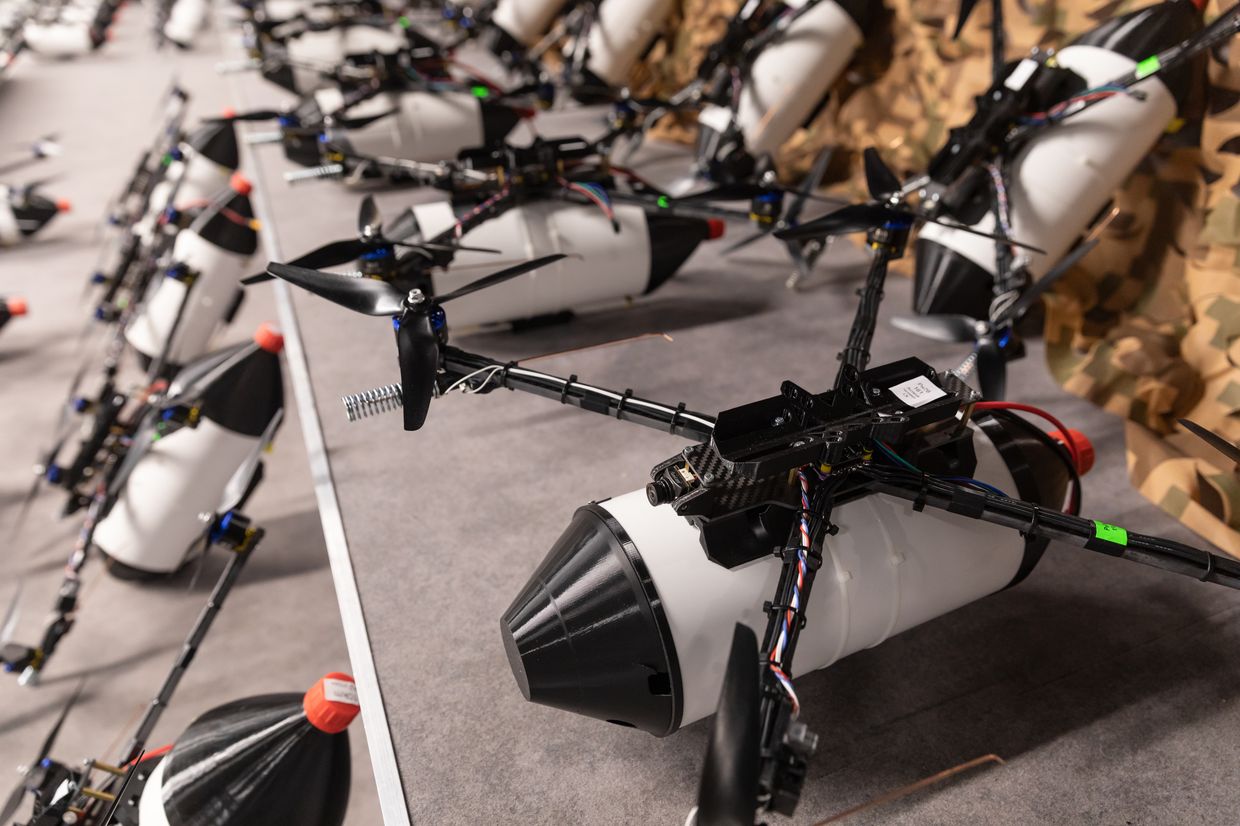
Tethered drones equipped with fiber optic cables have come a long way since their inception, providing an intense, unblinking eye in the sky for countless applications. These advancements in fiber optic drone technology enable capabilities that older, wireless drones simply cannot achieve.
Early Development
For one, tethered drones were once lumbering beasts deployed largely for basic aerial surveillance. Early incarnations were limited by relatively short tether length and heavy cable that was bulky and difficult to transport and visually conspicuous.
Fiber optics wasn’t easy at the start. Cables would break, signals could be lost, and it was challenging to keep the drones stable while transmitting information across great distances. It’s been difficult to source cables that were both lightweight and rugged.
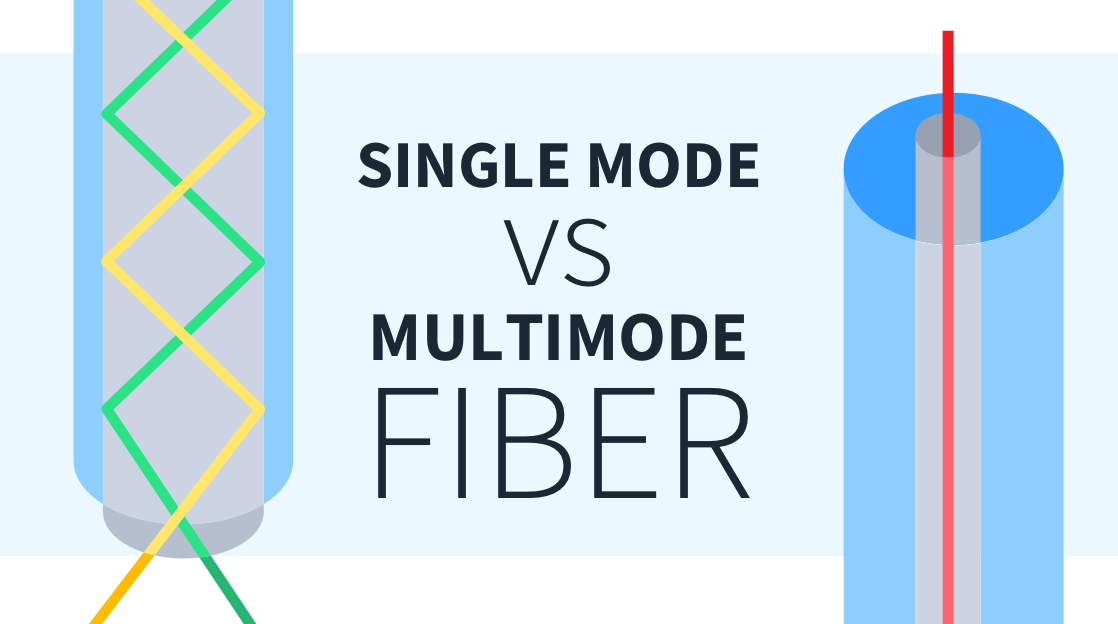
A big leap was taken with the introduction of single-mode optical fiber. This fiber could transmit large quantities of data over much greater distances, as far as 20 kilometers in some instances. Coating them in materials such as Kevlar reduced the chances that the tethers might snap or get severed.
These initial advancements ensured drones got higher, loitered longer, and transmitted crisp images in real time. The foundation of these changes is why tethered drones are used for both military and civilian work today.
Future Trajectory
The future of the tethered drone is promising, especially with the advent of fiber optic drones. Engineers are developing cables that are even more slender and featherweight, capable of transmitting data more rapidly. They are discussing smart fibers that can detect damage or modulate signal transmission, which may lead to drones that can fly farther and longer without losing a connection.
One new trend is the use of tethered drones in areas of frequent signal jamming, typical of modern warfare. Fiber-optic tethers can evade radio-based detection and jammers, making them an attractive choice for militaries, particularly in the context of the Russia-Ukraine war, where both sides are investing in superior drone systems. This shift highlights the increasing reliance on drone warfare tactics.
Drones are permeating non-military sectors. Police, security squads, and rescue parties now employ tethered drones for extended surveillance. The tether length, typically 2 to 20 kilometers, continues to restrict how distant these drones can venture. As fibers become higher quality and more durable, so too will drone range and safety.
Beyond The Obvious: A New Perspective
Fiber optic cables are revolutionizing drones, particularly optic drones, in ways that go beyond what meets the eye. Their integration with drone systems is not just a hardware update; it is a transformation that connects with modern warfare technology and slices through sectors. Thinking about drones merely as flying gizmos overlooks how fiber optics silently define the future of drone warfare, protection, and urban security.
The Data Ecosystem
Fiber optic cables provide drones with a robust infrastructure for data transmission, particularly in modern drone warfare. These compression cables transmit vast quantities of data quickly and with minimal signal degradation, enhancing the capabilities of drones in challenging environments like Ukraine. For drone pilots, this translates into improved live video and crystal-clear maps, even in tricky locations where radio signals falter. In theatres like Ukraine, fiber optic drones avoid jamming attacks by maintaining their cable link, making them a significant asset against counter-drone technology.
It’s not just about managing all this data; it’s about clever culling, select snatching, and immediate decision-making. Fiber optics assist drones in connecting to other data feeds, such as satellite images or ground sensors, providing crews with a comprehensive picture of the situation. This combination enhances the effectiveness of drones in reconnaissance missions, detecting hazards, locating damage, or directing assistance during disasters.
With robust data pipelines, decisions are made more quickly and with more information available. On the battlefield or in urban security, this advantage can preserve lives and assets. For instance, optic FPV drones monitor logistics routes and help detect hazards before they escalate, as defensive nets are raised to prevent drone threats from becoming critical issues.
The Human Element
Humans still sit at the center of fiber optic drone networks. These drones require pilots who are trained crews that know how to fly, repair, and navigate them, especially with fiber lines extending up to 40 kilometers. Training counts, too—wrestling with a hose capable of spraying 300 PSI isn’t easy. Setup or flight mistakes can lead to lost drones or snapped cables, so the skills ramp up with each new tech leap.
Humans guide when and how to employ these drones. In battle, rapid decisions can determine the fate of a mission. In cities such as Kramatorsk, local figures have to balance caution, occasionally urging residents to remain at home or evacuate in the presence of drones overhead. The cocktail of tech and human decision-making is constantly evolving, with both sides developing fresh methods to outwit the other.
Conclusion
Drone fiber optic cables are now a significant part of our above-world vision. These cables provide crisp signal and complete control of the drone in difficult locations such as remote forests or open, windy fields. Crews utilize them for live news, rescue and big events. The tech changes quickly and each year introduces a new way to fly, watch, and talk. From bustling urban rooftops to isolated shorelines, people rely on these cables for crisp scenes and fast flying. To stay ahead, watch new trends and converse with other practitioners. Even share your own tales or advice. Innovations and experiments light up the next jump in drone flights.
Frequently Asked Questions
What is a drone fiber optic cable?
Drone fiber optic cable, a lightweight and ultra-thin tool, connects an optic drone to the ground station, enhancing its ability to transmit information and energy for safer, longer flights.
How does a fiber optic tether benefit drone operations?
The fiber optic tether provides stable, high-speed data backhaul and continuous power, enhancing the reliability of modern warfare with optic drones for real-time video and control.
Are tethered drones with fiber optic cables safe?
Yes, tethered drones, such as those used in modern warfare, tend to be safer. The cable constrains the drone’s range, minimizing flyaways and dropouts while ensuring more reliable operation even in challenging environments.
What are the main limitations of drone fiber optic cables?
The primary constraints of fiber optic drones are limited flight range and maneuverability due to the cable, which can be compromised by environmental obstructions.
In which industries are fiber optic tethered drones used?
Public safety, live event broadcasting, and infrastructure inspection are some applications where optic drones excel. With their steady connectivity and extended battery life, they are ideal for persistent data gathering.
How have tethered drones evolved with fiber optic technology?
Today’s tethered drones, equipped with advanced fiber optic technology, utilize cutting-edge fiber optic cable for enhanced data capacity, enabling longer flights and higher quality video, crucial for modern drone warfare applications.
Can drone fiber optic cables support high-definition video streaming?
Yup, fiber optic cables provide high bandwidth and low signal loss, making them ideal for streaming real-time HD video from optic drones to ground stations.