
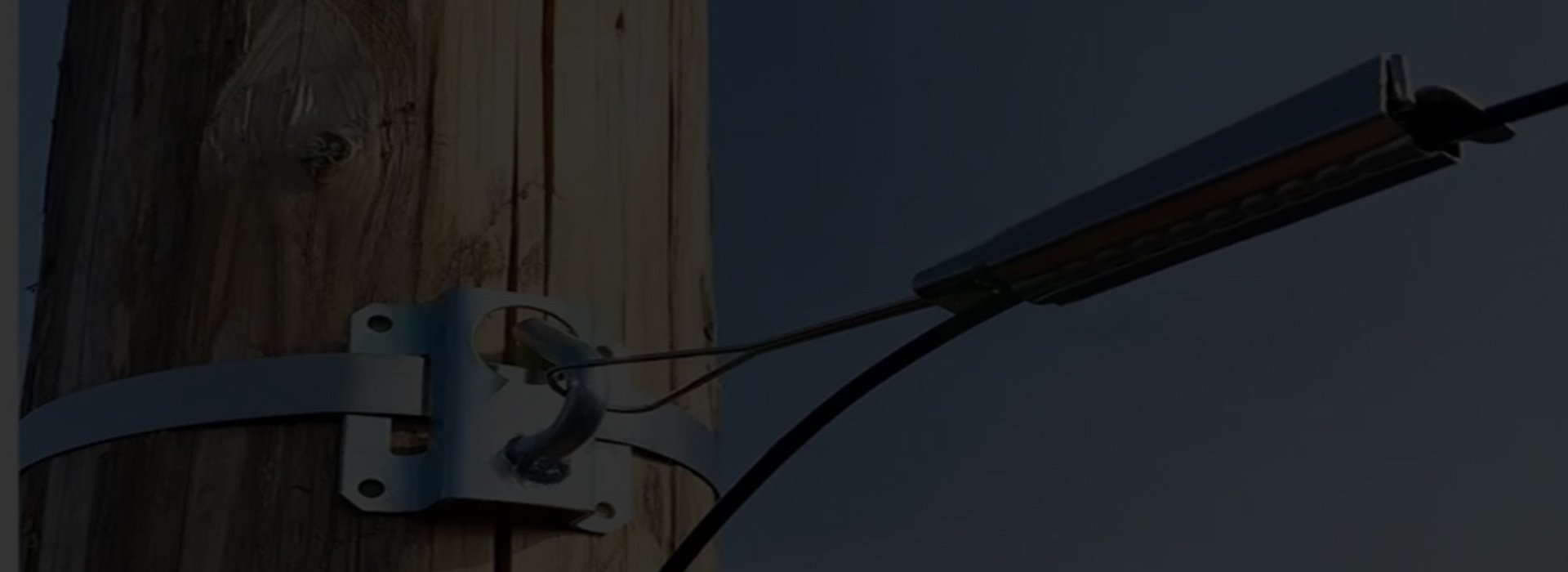
Professional Fiber Optic Cable Clamps Manufacturer in China
Fiber optic cable clamps adopt slots, pre-wound wires, or wedge structures that are compatible with the outer diameter of the optical cable. Can achieve uniform force clamping, avoiding the occurrence of local stress concentration that leads to the rupture of the optical cable sheath or the breakage of the optical fibers.
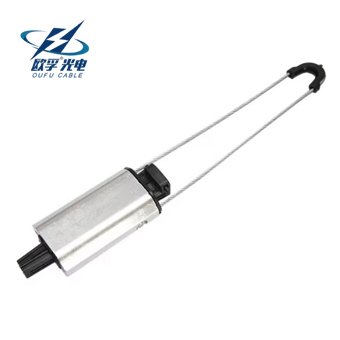
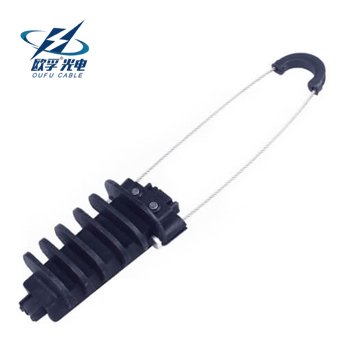
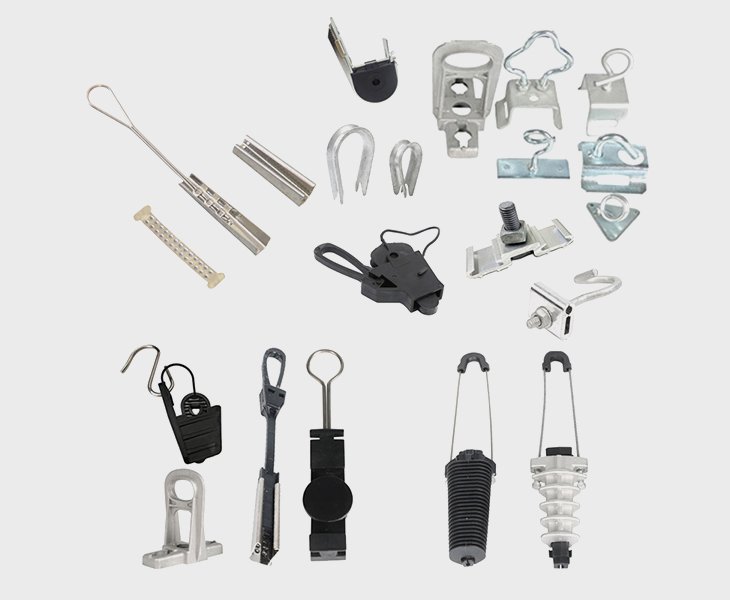
OUFU fiber optic cable clamping product line includes suspension clamps, tension clamps, drop clamps, S-type clamps, pre-twisted clamps, etc., suitable for all scenarios such as ADSS, OPGW, and FTTH.
Multiple specifications are produced in parallel, supporting adaptation for fiber optic cables with diameters ranging from a few millimeters to several tens of millimeters, meeting your batch and customized orders.
Welcome to visit our factory. Feel free to contact us at any time!
Best Selling Fiber Optic Cable Clamp
The fiber optic cable clamp of OUFU comes in various types, which can meet all your requirements.
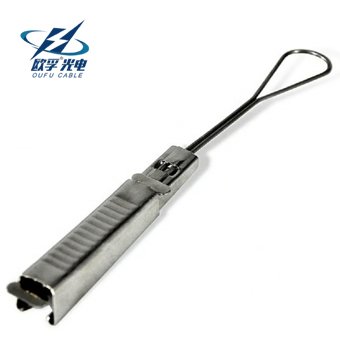
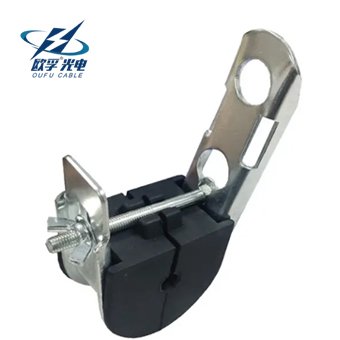
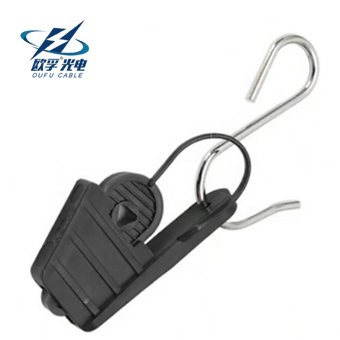
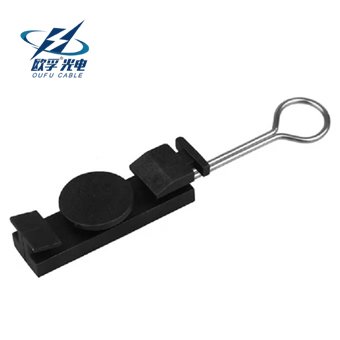
Easy Installation
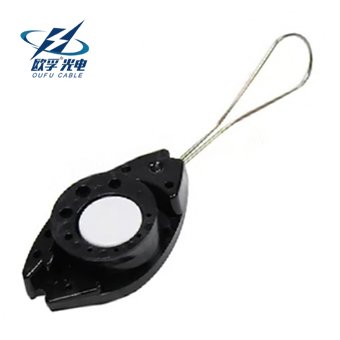
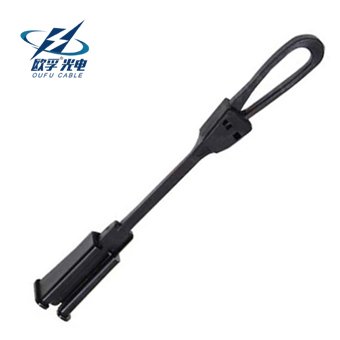
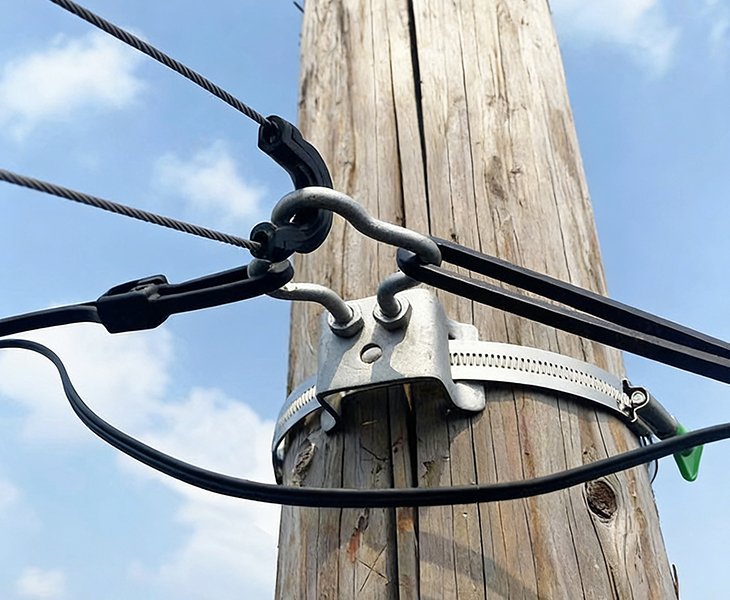
Fiber optic cable clamps (such as S-shaped clamps) support manual installation or operation with simple tools, without the need for complex professional equipment, significantly reducing the construction time; some clamps adopt snap-in and spiral designs, making disassembly and adjustment during later maintenance very convenient, thereby reducing your labor costs for construction and operation.
Corrosion Resistant
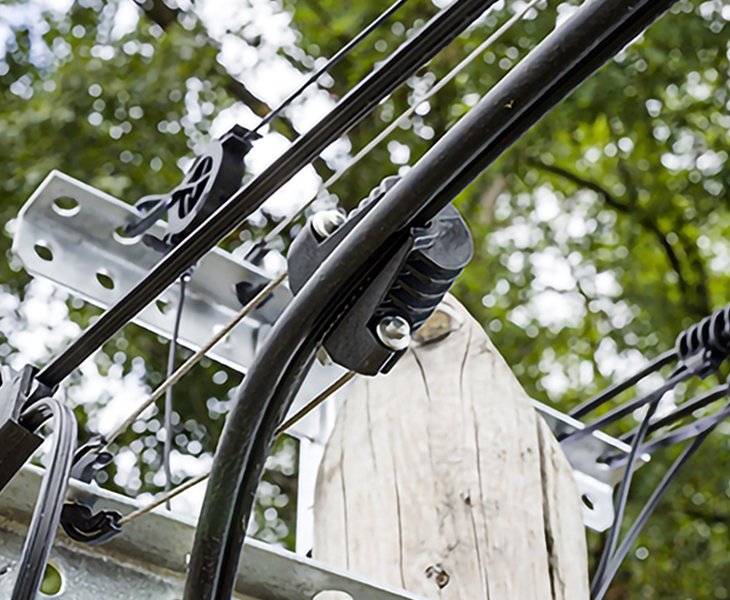
The main body of the fiber optic cable clamps is mostly made of aluminum alloy, stainless steel, hot-dip galvanized steel or high-strength engineering plastics. Has the characteristics of resisting ultraviolet rays, acid and alkali corrosion, and high-temperature and low-temperature resistance. Even in outdoor environments such as dampness, salt fog, high temperatures, and extreme cold, Can still work stably for a long time.
Operating Stability
Fiber optic cable clamp can effectively limit the swing amplitude of the fiber optic cable, resist wind vibration, lightning strikes, external force collisions, etc., reduce the probability of faults such as joint loosening and increased fiber attenuation caused by fatigue swinging of the optical cable, and ensure your the continuity and stability of the communication link.
Why Choose OUFU Fiber Optic Cable Clamp
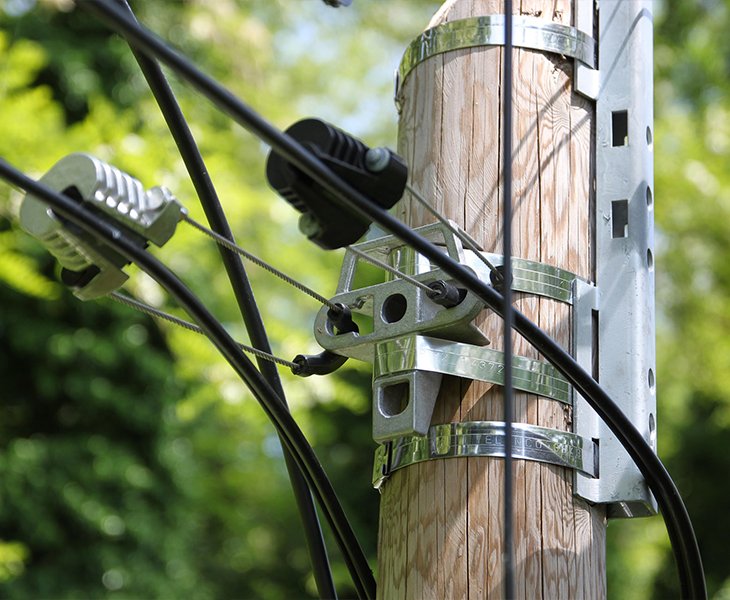
OUFU offers you “high-quality, fast delivery, customizable” fiber optic cable clamp solutions, helping you achieve efficient implementation and stable operation of projects in the fields of communication and power. We offer installation videos and drawings; Also provide online training on fixture installation and maintenance to enhance construction efficiency and safety.
The core function of fiber optic cable clamps is to fix, support, and protect the fiber optic cable. By evenly distributing the force, they prevent stress concentration of the optical cable, wear of the sheath, and breakage of the optical fiber. At the same time, they limit the displacement and oscillation of the fiber optic cable, resist the influence of wind vibration and external force collisions, and ensure the long-term stable operation of the communication link.
The mainstream types are classified according to application scenarios, including suspension clamps (for fiber optical cable suspension on straight towers), tension-bearing clamps (for terminal / tension-bearing towers), drop clamps (for fiber optical cable drop fixation on iron towers), pre-twisted clamps (for stress dispersion and vibration protection), and S-shaped clamps (for FTTH fiber optic cable fixation). They can be adapted to various types of fiber optic cables, such as ADSS, OPGW, and ordinary stranded cables.
The clamp model does not match the diameter of the fiber optic cable, and the clamping gap is too large; during installation, the operation specifications were not followed for locking (such as the pre-wound type clamp not being wound in place, or the bolts not being tightened to the specified torque); due to long-term wind vibration, the connection components have loosened, and regular inspections and reinforcement are required.
Most clamps (such as S-shaped clamps, snap-type drop clamps) can be installed by hand; for pre-wound clamps, a dedicated tensioning tool is required to ensure a tight wrap; for tension clamps, a torque wrench may be needed to control the locking force of the bolts to avoid damaging the fiber optic cable.
Regularly inspect whether the clamps are loose, rusted or deformed. If any problems are found, replace them immediately; check if the protective sheath at the fiber optic cable clamping position is worn; if so, install a wear-resistant padding layer. After severe weather (typhoon, heavy snow), focus on checking the suspension/tension line clamps on the pole to prevent the optical cable from falling off.
Material: The main material should be free from deformation and rust; the inner lining layer should be wear-resistant and slip-resistant.
Performance: Pass the tensile test (grip force should be no less than 95% of the fiber optic cable’s rated tensile strength), salt spray test (≥1000 hours without corrosion), and high-low temperature test (-40℃~70℃ normal operation);
Certification: Possess ISO 9001 quality certification, test reports, and other authoritative qualifications.