Learn the differences between single mode and multimode fiber to select the best fiber optic option for your network distance, bandwidth, and application requirements.
Single mode fibers dominate long distance and high speed applications thanks to their small core size and consequently lesser signal dispersion. Multimode fibers can be more economical for shorter distances and high bandwidth data center connections.
Because modal dispersion and attenuation play such an important role in fiber optics, the choice of the appropriate type directly influences signal integrity and network efficiency.
Core diameter, light source type, and connector quality all play important roles in installation, compatibility, and ongoing fiber optic system performance.
Thinking through both initial and long-term costs from transceiver electronics to installation labor prevents surprises down the road and guarantees a network design that really is cost-effective.
By making scalability, eco-consciousness, and industry standards primary considerations as you future-proof your infrastructure, you’ll be supporting technology that isn’t just growing but network growth that’s sustainable.
Single mode and multimode fiber are the two main types of optical fiber used for data transfer in networks. Single mode fiber utilizes a very narrow core, approximately 9 micrometers in diameter, transmitting data through a single light path, enabling signals to travel large distances with minimal attenuation. Multimode fiber has a larger core, typically 50 or 62.5 microns, and allows multiple light rays to propagate simultaneously, which is ideal for short-distance connections within buildings or across a campus. Both have their applications, price points and limitations. Understanding the key characteristics of each type aids in selecting the appropriate fiber for your networking endeavors. The main body dissects their major points and assists readers in making a selection that best suits their needs.
The Physics of Light Transmission
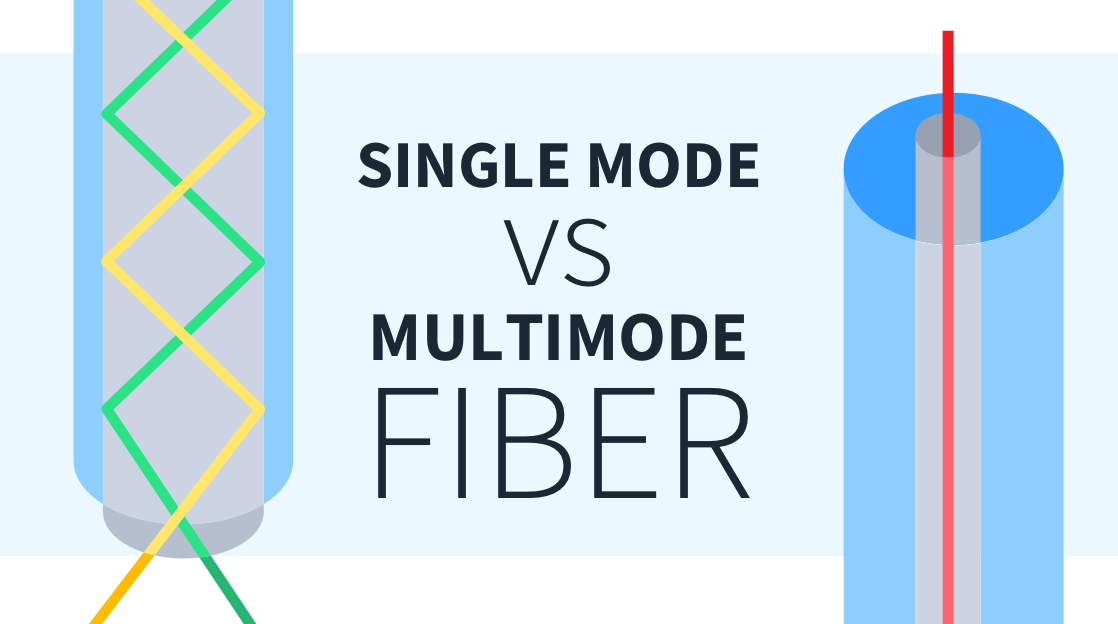
Fiber optics works by a clever trick, total internal reflection. Each fiber consists of a glass core wrapped by cladding, both with different refractive indexes. When light enters at a particular angle, it reflects along the core without escaping, transporting information from one end to the other. The wavelength of the light, in nanometers, influences how the signal travels. Common wavelengths are 850 nanometers for multimode fiber optic cables, 1310 nanometers, and 1550 nanometers for single-mode. The multimode fiber core diameter is important. Multimode cores are larger, so they are easier to join and less expensive to source light for, but they disperse light in multiple directions. Single-mode cores are slimmer and contain light in one path, assisting signals to remain pure across extended distances.
The Light Path
Light pulses begin at one end of the fiber and propagate down the core, reflecting at shallow angles. In order for data to come through in one piece, the route has to be unblocked and even. Any dust, bend, or flaw can weaken the light or send it astray. A clear, direct route keeps the signal crisp.
Core diameter: Bigger cores (multimode) let light enter at more angles, leading to more paths and higher signal spread.
Refractive index of core and cladding sets the minimum angle for total internal reflection.
Light source type: Lasers make tighter, straighter beams than LEDs.
Bends and imperfections: Sharper bends or flaws scatter light and cut signal strength.
A bigger core indeed allows more light to enter and provides more opportunities for the light to bounce in strange ways, which can blur the signal.
Modal Dispersion
Modal dispersion occurs when various modes of light require varying time to arrive at the destination. For multimode fibers, this implies the pulses spread out and may overlap, becoming illegible after a certain distance. Single mode fibers have virtually none of this because light travels along only one route.
Chromatic dispersion is another matter. Now, even a single color of light can spread because not all wavelengths travel at the same speed, especially in single-mode fibers. Both effects restrict how far and how fast information can travel.
Modal dispersion is exacerbated by a larger core and longer fiber. It limits the maximum bandwidth of multimode fibers to approximately 1 gigahertz, while single mode can go up to 100,000 gigahertz.
Attenuation Factors
Attenuation is simply signal loss. Every meter, a little energy is lost to heat, scattering, or absorption. Single mode fibers lose less, about 0.36 dB per kilometer at 1310 nanometers. Multimode fibers lose more, as much as 3.0 dB per kilometer at 850 nanometers.
Signal loss results from flaws, micro-fractures, or dust. Bending the cable too much leaks light, too. Wavelength plays a role, as there is less loss at longer wavelengths. This is why single-mode uses 1310nm or 1550nm.
Each fiber type copes with loss in its own way. Single-mode is for long hauls, multimode is for short links and cheap lights. Connecting the wrong connector or splicing multimode to single-mode directly results in high coupling loss, which media converters help to address.
Single Mode vs Multimode Fiber
Single mode and multimode fiber optic cables are different. They’re distinct in their construction, operation, and ideal applications. Choosing the right multi mode fiber comes down to speed, fiber distance, cost, and the requirements of your network.
1. Core Diameter
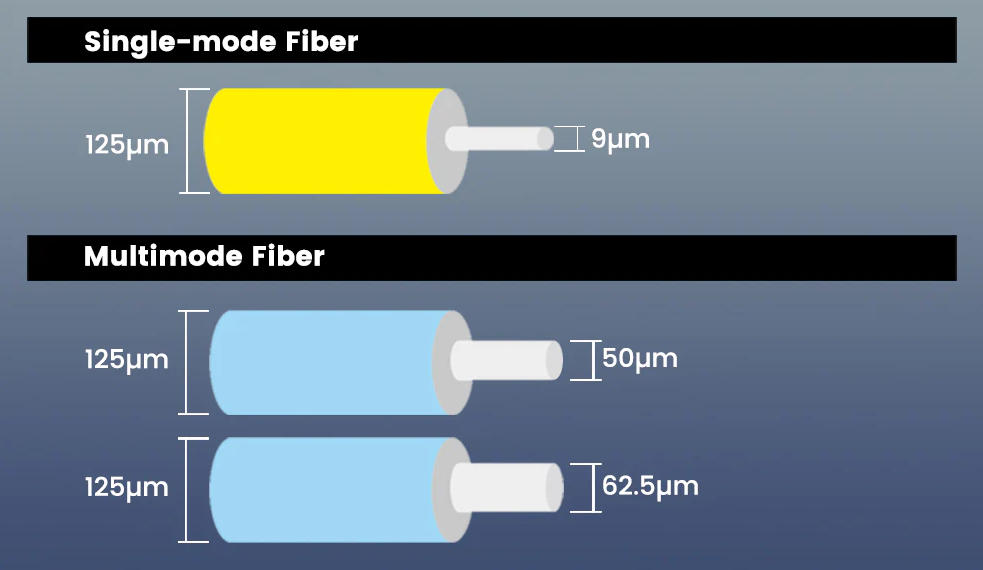
Single mode fiber features a very narrow core, just 9 microns in width. Multimode fiber comes in larger sizes, typically 50 or 62.5 microns. Because single mode’s core is so small, it only lets one light path, or mode, through. This keeps the signal clean and reaches long distances with little loss. Multimode’s broader core allows multiple light paths to propagate simultaneously. Those paths can tangle up into each other, leaving fuzzier signals with distance.
A larger core allows more light to enter, which is why multimode is simpler to splice, especially when using traditional or less accurate equipment. That same large core restricts how far the signal can travel and how focused it remains. Single mode is optimal for long, clean runs, while multimode is convenient and inexpensive for short, congested links.
2. Light Source
Single mode fiber uses laser diodes as its light source. Lasers shoot light directly down the fiber with minimal dispersion, which is ideal for long distances, like up to 40 kilometers. Multimode fiber is typically used with LEDs, which spill light further and can reflect off the core walls. LEDs are good for short hops, like across a building.
Laser sources are more expensive, they’re what give single mode fiber its advantage in distance and speed. LEDs are less expensive and easier, making multimode an economical choice for short links.
3. Bandwidth Capacity
Single mode fiber provides high bandwidth capabilities at any distance, while multimode fiber optic cables can achieve impressive speeds up to 400 Gbps with OM3, OM4, or OM5, but only for short runs. OM5, for instance, tops out at 28000 MHz per kilometer, making it suitable for short distances of roughly 2 kilometers. For greater reach, single mode fiber is the optimal choice, although the components tend to be more expensive.
4. Distance Limitation
Single mode fiber spans up to 40 km without boosters, while multimode fiber optic cable is restricted to typically 2 km or less. This is why single mode is the staple for cities, campuses, or long-haul lines. Multimode fiber is ideal for data centers and offices, and the longer the run, the more single mode’s clean signal pays off. If you’re wiring a small space, multimode pays off.
5. Jacket Color
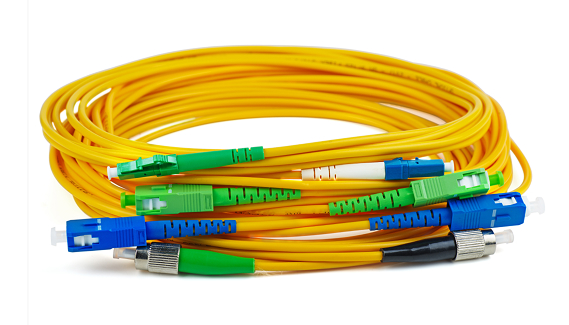
Single mode cables are typically yellow, while multimode fiber optic cables are color-coded for easy identification: orange for OM1 and OM2, aqua for OM3 and OM4, and lime green for OM5. These color codes assist technicians in identifying the correct fiber cable at a glance, reducing errors in installations or service work and simplifying the management of large networks.
Fiber Type | Advantages | Disadvantages |
|---|---|---|
Single Mode | Long distance, clean signal, high bandwidth | Higher cost, harder to install |
Multimode | Lower cost, easy connections, supports fast links | Short distance, lower signal quality |
Choosing Your Application
Selecting your application really boils down to what you require – distance, speed, expansion, and expense. Single mode fiber cables and multimode fiber optic cables each suit certain tasks better. Begin by considering the fiber distance your data must travel, how much bandwidth you require, and whether you intend to expand your network in the future. The smart choice keeps your network nimble and adaptable.
Long-Haul Networks
Single mode fiber excels for long-haul networks. Its tiny core allows light to propagate directly, reducing attenuation over many kilometers.
Performance wise, single mode handles high speeds like 400G, 800G and even 1.6T. You get powerful signals at 10,000 meters plus!
It costs more initially, primarily the optics, but over long runs, it’s friendlier to your wallet. Fewer repeaters means less maintenance and less expense down the road.
Big internet backbones, cross country telecom, submarine cables – single mode. They require trusted, quick links that operate across long distances.
Data Center Interconnects
Multimode fiber optic cable is the best choice for in-building data center links. The short runs, sometimes merely 100 to 550 meters, are a perfect match for multimode fiber’s capabilities. High-speed data centers require massive bandwidth, and laser-optimized OM3, OM4, or OM5 fibers meet the challenge and support speeds up to 100G. Short reach optics are required in data centers, where racks line right up against each other. The wider core of multimode fiber allows less expensive light sources to be effective, which keeps costs down for compact systems. Data centers routinely swap or relocate equipment, and multimode fiber makes this easy with plug-and-play connectors and reduced initial equipment expenses.
Local Area Networks
Multimode fiber optic cable is great for LANs, particularly within offices or schools where the majority of links are less than 300 meters. This type of multimode fiber is widespread in small and medium businesses. While single mode fiber can work in LANs, especially if future expansion is in your thoughts, it is more expensive initially. However, it is designed for future expansion or longer distances between structures. When selecting fiber for LANs, consider how much you want to invest now versus later, how fast your network has to be, and whether you anticipate expansion. Multimode fiber is cheaper initially, but single mode can be beneficial if you ever have to increase speed or range down the road.
The Hidden Costs of Fiber
The cost of multimode fiber optic cable goes beyond just cables and connectors. A lot of attention is paid to the upfront hardware, but the real story is long-term spending. This includes maintenance, upgrades, and the energy that keeps server room lights blinking. The fiber type, particularly multi mode fiber, goes a long way toward shaping these continued costs. In a big data center, for instance, choosing multimode fiber frequently reduces not only parts but the power required to operate and cool transceivers.
Cost Factor | Single Mode Fiber | Multimode Fiber |
|---|---|---|
Cable Price (per meter) | Lower | Higher |
Transceiver Price | Higher (especially at 10G) | Lower |
Max Distance Supported | Up to 100 km+ | Up to 500–600 m |
Installation Labor | Slightly higher | Moderate |
Splicing/Termination | Higher precision needed | Easier, often cheaper |
Power/Cooling Needs | Lower | Higher |
Transceiver Electronics
Transceivers are at the center of every fiber link, converting electrical signals to light and vice versa. The choice between single mode fiber and multimode fiber optic cable is becoming increasingly influential. Single mode transceivers are more expensive, particularly as speeds increase, due to the use of lasers that require precise specifications, which drives up the cost. In contrast, multimode transceivers utilize lower-cost LEDs or VCSELs, making them ideal for applications under 600 meters in an enterprise environment. Compatibility is key: mixing different types of fiber and transceiver types leads to wasted spending and headaches. When designing a multimode fiber system, selecting the appropriate transceiver translates into reduced upfront costs and improved power efficiency.
Installation Labor
Single mode fiber installation requires more craftsmanship and time due to its smaller core diameter, making splicing and aligning trickier and increasing labor costs. Technicians need extensive training, especially for precision splicing in long runs or high-speed links. In contrast, multimode fiber optic cables with their broader core are more manageable and simpler to install. This frequently translates to quicker deployments and reduced costs for in-building networks or short campus links. Any fiber work demands careful planning, as errors will extend schedules and introduce hidden expenses.
Splicing and Termination
Splicing connects two fiber ends, and it’s as much an art as a science. While single mode fiber cables require ultrahigh-precision equipment and expert operators, making them expensive, multimode fiber optic cable is a little more forgiving, allowing for the use of simple tools. Pre-terminated multimode fiber cables may cost more up front but save time, while splicing on-site is cheap for long runs yet requires professionalism. Properly done, either method can keep signals crisp and vibrant, whereas done wrong, network speed lags and troubleshooting turns into an endless nag.
Beyond the Spec Sheet
Fiber optic networks operate in the real world, not just within labs. Spec sheet numbers don’t always add up to what happens when these multimode fiber optic cables run under floors, around tight bends, or through hot and cold environments. Performance is in the little things, from the types of connectors to the fiber core diameter of the cable. Even with great specs, bargain jackets can crack after a few seasons, compromising performance. Testing and certification ensure the multimode fiber system does what it should. Environmental and future upgrades can shift what fiber type is best for you.
Connector Sensitivity
Connector quality counts for a lot, especially when using multimode fiber optic cables. A quality connector allows the light to pass cleanly through the fiber cable, maintaining a strong signal. Bad connectors lead to loss and mistakes, particularly over long distances. Common connector types are LC, SC, ST, and MTP/MPO, which suit specific configurations. These are usually single-mode fibers with angled connectors to reduce reflection, while multimode fiber systems use more flat connectors. Connector sensitivity can cause real headaches, as even a tiny speck of dust can interfere with data, leading to sluggish operations or downtime. Tight connector tolerances translate into easier installs and fewer issues down the road.
Bending Tolerance
Bending tolerance is essentially how much a fiber optic cable can bend before light begins leaking out, leading to increased signal attenuation. If you bend a multimode fiber optic cable too hard, you can lose signal quickly. With its larger core diameter, multimode fiber has traditionally withstood bends better than single-mode fiber, although both now feature bend-insensitive designs. Choosing the proper multimode fiber cable for your setup is essential, especially if cables will snake through corners or tight spaces. Verifying those bending specifications can save you money and hassle later if you don’t have to return and patch it.
Environmental Impact
Manufacturing multimode fiber optic cables is resource intensive. Some materials are more recyclable than others. Most fiber optic cables have glass cores and plastic jackets as well, but not all plastics are created equal. Low cost jackets tend to crack, while higher quality ones last longer. Fiber optics can assist networks in utilizing less power than copper, making them frequently the eco-friendlier option. Nevertheless, how installers deal with old cables and waste matters. Sustainable installs, including recyclable materials and proper disposal, keep the impact low.
Future-Proofing Your Infrastructure
Selecting the appropriate multimode fiber optic cable type is essential for future-proofing your network infrastructure. Single mode fiber is making significant strides in core networks, as it can transfer data much farther, up to 80 kilometers, with greater speed. This capability makes it a preferred choice for those looking to future-proof their backbone systems. In comparison, multi mode fiber continues to serve as the primary workhorse for short distances within data centers, excelling in sub-550 meter setups, but its modal dispersion limits both distance and velocity. To prepare for future demands, it’s crucial to consider how your network will evolve beyond the initial installation.
Scalability is important in fiber design. As networks expand, the requirement for increased bandwidth and extended links keeps increasing. It future-proofs your infrastructure. Single mode fiber, for instance, is a sure bet when you anticipate adding additional racks or connecting buildings farther apart. It’s commonly found in school campuses or large business parks everywhere as it addresses both immediate and forthcoming requirements. If you take multimode, you may save on your initial bill, but you may pay more in labor if you have to change cables as demands increase. Recabling isn’t just about the sticker shock of the fiber itself. It’s about the time and effort required to actually get those new lines laid, which can be an absolute nightmare.
New tech is future proofing your infrastructure. AI clusters, high-radix switch fabrics, and fast storage systems all require faster, longer, and more stable links. OM4 and OM5 multimode fibers can assist with these short, high-speed runs, such as in 40G or 100G big data rooms. If you plan on linking across floors or sites, single mode is the safer long-term move. By opting for high-performance fiber from the beginning, it equates to fewer upgrades in the future and a network that holds up to whatever is new, from larger data streams to next-gen applications.
Conclusion
Choosing between single mode and multimode fiber is a matter of current requirements and future compatibility. Single mode is nice for long-haul runs, like connecting buildings or data centers a few miles apart. Multimode suits short links, like within offices or campuses. Each has its own costs and benefits. For instance, single mode equipment is more expensive, but it manages distance easier. Multimode arrangements maintain uncomplicated and less expensive setups initially. It’s your real-world needs that make the best fit, not just tech specs. A number of teams traded one for the other as the requirements evolved. Are you prepared to evaluate your own requirements? Begin with what’s important to your work, and contact us if you’d like a second opinion.
Frequently Asked Questions
What is the main difference between single mode and multimode fiber?
Single mode fiber cables utilize a small core diameter to transmit light in one path, making them perfect for long distances. In contrast, multimode fiber optic cables feature a larger core that supports multiple light modes, ideal for shorter distances.
Which type of fiber is better for long-distance data transmission?
Single mode fiber cables are better for longer distances due to their greater bandwidth capabilities and lower signal attenuation, making them ideal for applications over distances of a few kilometers.
Is multimode fiber more affordable than single mode fiber?
Yes, multimode fiber optic cables and equipment are cheaper, but operating expenses may rise if longer fiber distances are required.
Can I use single mode and multimode fibers together in the same network?
Incompatible core diameters and light transmission methods in multimode fiber optic cables may result in signal loss.
What are the hidden costs of choosing fiber optic cables?
Hidden costs can include specialized connectors, installation, maintenance, and upgrades, among others. Consider the total cost of ownership before selecting your multimode fiber optic cable.
How do I choose the right fiber type for my application?
Consider these factors when deciding between single mode and multimode fiber optic cables: fiber distance, bandwidth needs, and budget. If you require high data rates over longer distances, single mode fiber is the optimal choice. For short-range applications and lower costs, a multimode fiber cable may perform best.
Is fiber optic cabling future-proof for growing data needs?
Fiber optic cabling, particularly single mode fiber cables, is future-proof. It supports high bandwidth capabilities and can accommodate new technologies, making it a wise investment for future data center applications.