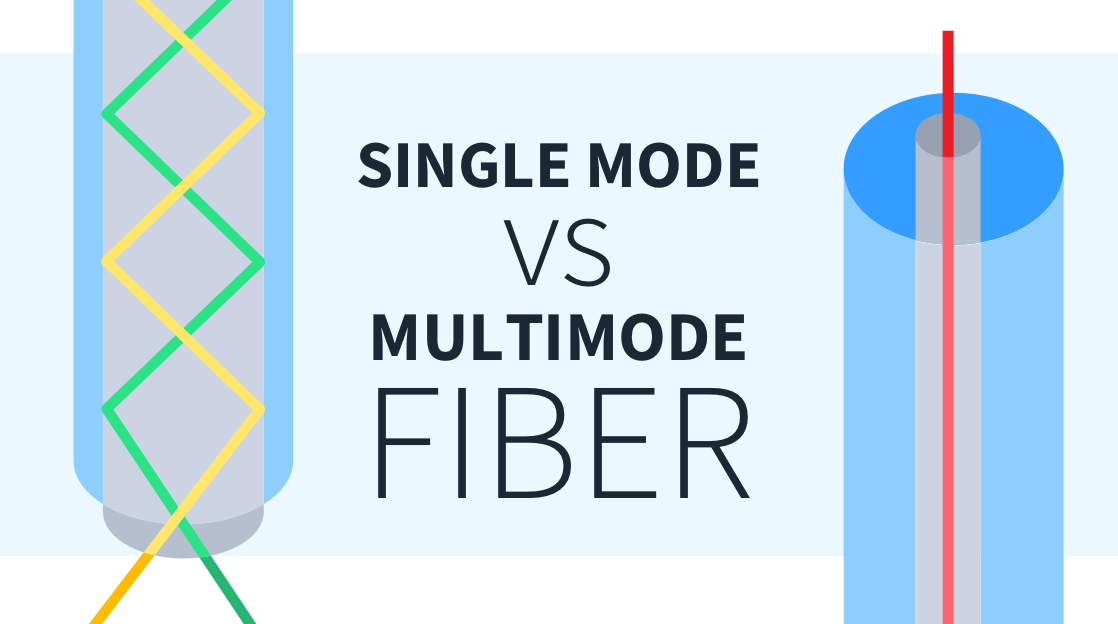
China’s top 10 fiber optic cable manufacturers lead the world in areas of strong quality, wide product range and steady supply. Big names like YOFC, FiberHome and Hengtong Group have shaped the industry with high-speed cables used globally. Most of these manufacturers support their products with international safety and quality marks, which is why they’re trusted by telecoms, big tech and urban projects. Their plants are equipped with new machines and intelligent tools to respond to large orders and dynamic needs. Nearly all top brands carry both single-mode and multi-mode fiber, as well as custom cables for special projects. In the following sections, discover what distinguishes each company and keeps them leading in the rapid fiber marketplace.
Why China Leads the Fiber Optic Industry
China’s dominance in the fiber optics industry is no accident. It’s the consequence of deliberate decisions, a culture of determined persistence, and a passion for momentum. The nation’s path to the summit stems from a combination of strategic investment in optical communication products, state assistance, and an aggressive approach to serving the global fiber optic cable industry.
Strategic Investments in Technology
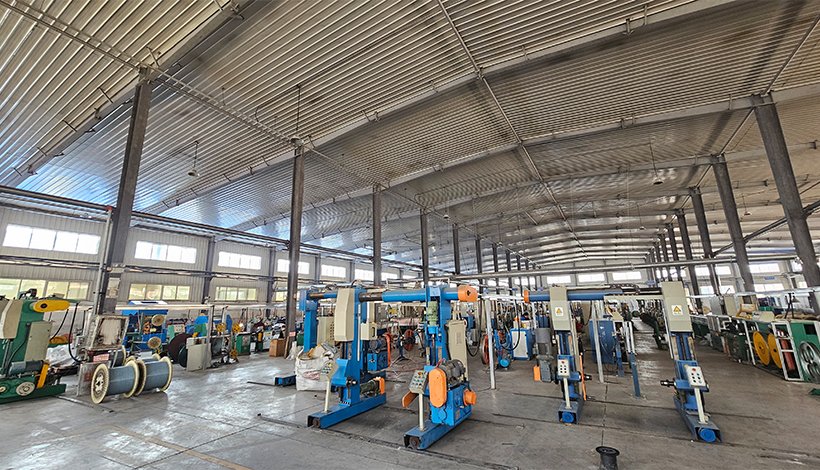
Decades ago, China chose to invest heavily in the fiber optics industry. The government and private firms collaborated, channeling funds into labs and factories. These investments have significantly benefited the optical cable sector. Today, China’s fiber optic plants are among the largest globally, utilizing advanced fiber technology and current tooling, enabling them to churn out optical communication products quickly and in vast quantities. This keeps costs low and allows them to satisfy demand both domestically and abroad.
Extensive Manufacturing Capabilities
Chinese companies, such as yangtze communications and hengtong optic, can manufacture cables on a massive scale. Their factories operate around the clock without stopping, utilizing advanced fiber optic technology to reduce waste and increase productivity. This efficiency is aided by a labor force that is both competent and inexpensive relative to much of the rest of the world. With lower labor costs and a planning process proven efficient through decades of practice, it’s no surprise that Chinese fiber optic cables often cost less than those from anywhere else, making them a key player in the global fiber optic cable industry.
Government Support and Innovation
There’s a force behind this industry — strong state support. The government urges labs to collaborate with corporations, resulting in new products such as fiber optic cables for 5G, smart cities, and harsh conditions. China’s rise of the IoT and 5G adds even more fuel, with new demands emerging constantly. These shifts keep fiber optic manufacturers on their toes, developing optical communication products that match emerging applications.
Meeting Global Demand and Standards
China’s home market is enormous, with people in urban and rural areas craving faster internet and higher quality phone lines, driving demand for fiber optic products. This rush for speed keeps factories humming, especially for leading fiber optic cable manufacturers. At the same time, China adheres to international standards such as IEC 60754-2 to ensure their cables are safe and high-performing, fostering confidence among customers globally. Strategic partnerships help share risks and inspire innovation, so the industry continues to thrive.
Top Fiber Optic Cable Manufacturers in China
China’s fiber optic cable industry, particularly with manufacturers like Yangtze Communications and Hengtong Optic, is notable for rapid growth. Both global giants and agile specialists are shaping the market, with a focus on advanced fiber optic technology. Their cables, including fiber optic patch cords and traditional cables, fuel everything from city networks to sub connections, playing a significant role in deploying 5G and data center support across the globe.
Manufacturer | Key Products | Innovations | Market Presence |
|---|---|---|---|
Hengtong Group | Submarine, power, fiber cables | Submarine cable tech | Global, over 120 countries |
Yangtze Optical Fibre | High-capacity fiber, modules | High-density fiber | Strong in Asia, global reach |
FiberHome | Data cables, network systems | 5G-ready solutions | Broad international projects |
Futong Group | Power/fiber cables | Eco-friendly processes | Asia, expanding globally |
OFS China | Custom fiber cables | Advanced connectors | Stable in export markets |
YOFC | Optical fiber, accessories | Low-loss fiber | Top producer, 90+ countries |
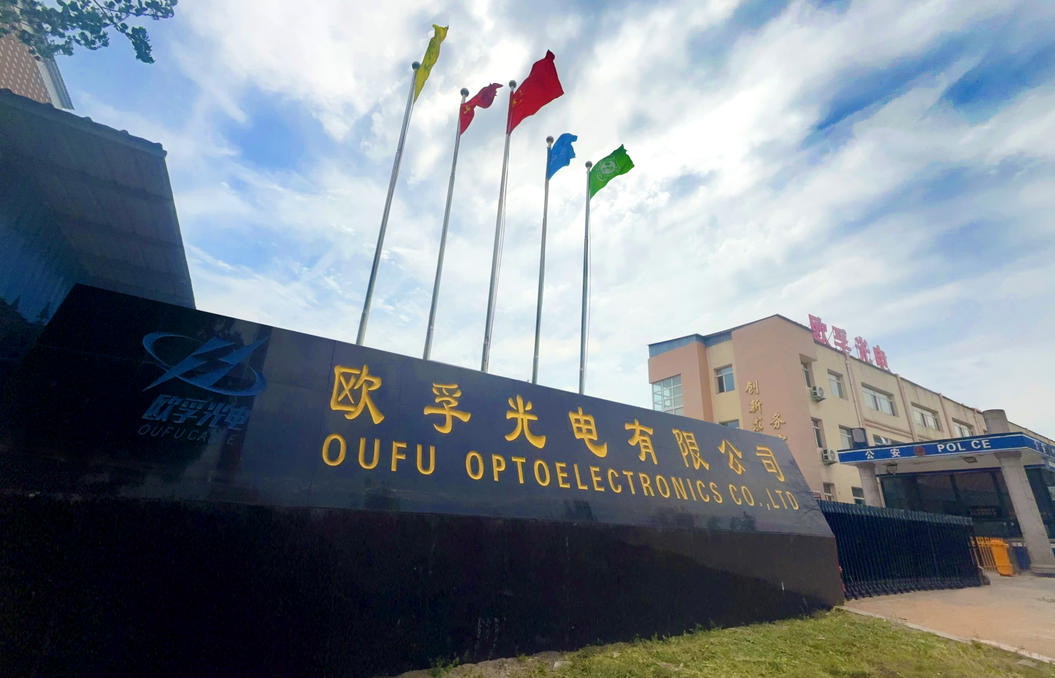
OUFU | Custom fiber cables | Tailored solutions | Niche, strong customization |
ZTT Group | Submarine, optical cables | Smart grid integration | Key player in infrastructure |
Tongding Group | Fiber/power cables | Fire-resistant cables | National and export markets |
Tianjin Zhongtian | Telecom, specialty cables | Flexible cable designs | Regional, growing overseas |
1. The Global Giants
Hengtong Group and Yangtze Optical Fibre (YOFC) head China’s fiber optics industry, with Hengtong operating in over 120 nations and providing submarine cables for underwater networks. As a leading fiber optic cable manufacturer, it possesses an annual capacity exceeding 800,000 optical fiber kilometers. YOFC, known as a top optical fiber maker, supports global telecom projects and serves as a steady supplier for major Asian operators. These firms offer extensive portfolios, from submarine systems to specialty fiber optic solutions, while continuing to innovate through global joint ventures and aggressive market penetration.
2. The Innovation Leaders
FiberHome and Futong Group are top technology drivers in the fiber optics industry. FiberHome offers 5G-ready fiber optic cables and smart network systems, while Futong shines for its green credentials and ultra low-loss fiber, which significantly slashes cost and energy consumption for network builders. These companies frequently collaborate with major technology corporations, merging research and real-world demands to enhance network robustness and speed.
3. The Specialized Experts
Oufu focuses on custom fiber optic cables, catering to clients with special project needs in the fiber optics industry. These specialists assist sectors such as medical, military, and data centers in identifying the right cable fit. Their quality control is of international standard, and they’ve established a name for themselves as a top fiber optic cable manufacturer by tackling hard engineering challenges. For instance, Oufu has customized fiber for tiny city projects where traditional cables simply won’t do.
4. The State-Backed Titans
China’s state-owned manufacturers, such as ZTT Group and Tongding Group, mold infrastructure projects in the fiber optics industry. Supported by government money, they serve extensive builds like national broadband and power grids, leveraging their capabilities as a top fiber optic cable manufacturer. Their scale allows them to provide reliable supply and they tend to be the default for government deals.
5. The Emerging Contenders
Smaller players like Tianjin Zhongtian leverage new tech and nimble methods to create room in the fiber optics industry. They emphasize flexible cable design and green manufacture, attracting partners in the global fiber optic cable industry seeking sustainable solutions.
What Defines a Top Manufacturer
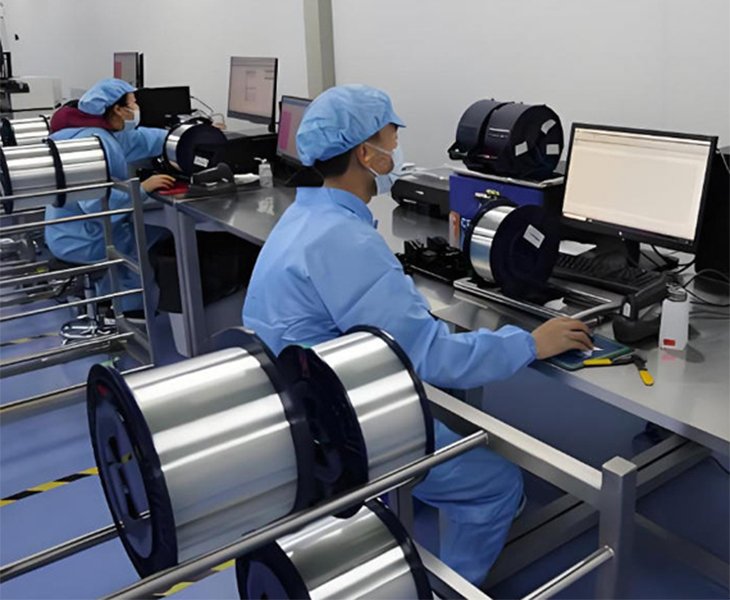
For international customers, understanding what distinguishes the top fiber optic cable manufacturers, such as Yangtze Communications and Hengtong Optic, is essential. These leading companies do not just build cables; they raise the standard in every respect.
Product reliability is a must. What really makes a top manufacturer is materials that withstand rigorous testing and networks that never go down. Their cables perform in harsh weather conditions, resist tension, and maintain minimal signal loss. This trust assists in securing repeat business.
Wide product lines count. The best brands offer more than cables, from ODF to keystone jacks and everything in between. This “one-stop” mentality saves buyers time and hassle.
Cutting-edge equipment and test labs identify defects prior to shipping. Top manufacturers with state-of-the-art machines and labs detect issues early. Fewer defects, happier clients, less waste.
Experience matters. A lot of leading Chinese brands have over 30 years in the industry. This extended experience has taught them what works.
R&D is the key. Leading manufacturers invest in research, securing design, materials, and methods patents. Their teams work on trends such as 5G, IoT, and AI.
Worldwide distribution proves might. Big names export globally, adjusting products for local regulations and market demands.
Certifications show they do play by the rules. Being IEC 60754-2 compliant means the cables are both safe and reliable.
Customer service is what makes a top manufacturer. Quick assistance, candid responses, and post-sale service create allegiance and trust.
Good reputation means more sales. Quality and service brands typically get the first call for new projects.
Quality Control
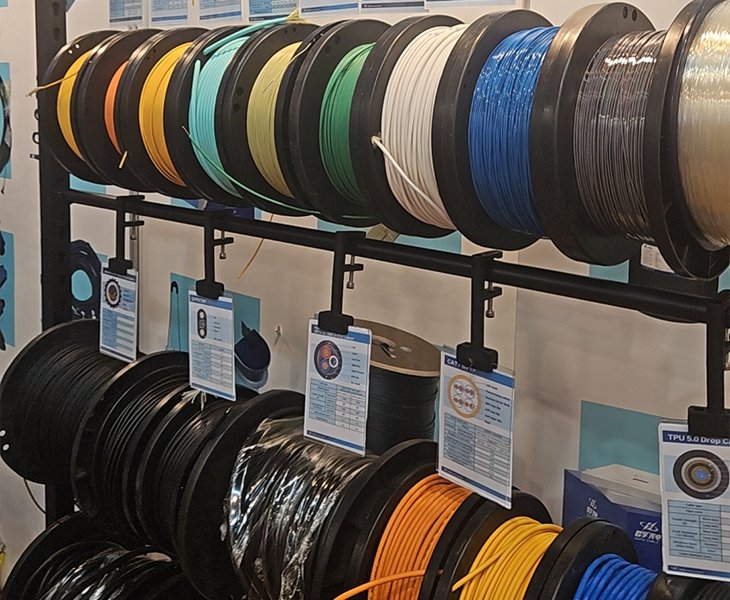
Top makers in the fiber optic cable sector don’t cut corners. Each cable, including those from leading optic cable producers, goes through a battery of strict checks: tensile strength, temperature swings, bend radius, signal loss, and fire resistance. All these trials eliminate vulnerabilities. A relentless attention to quality translates into less churn and more users thrilled to have stumbled upon a top manufacturer. Certifications such as ISO 9001, IEC 60754-2, and RoHS go a long way to telling you about a company’s standards. Your quality system then becomes part of your company DNA, ensuring good habits persist for decades.
R&D Investment
Manufacturer | R&D Investment (USD, millions) | Patents Held | Notable Product |
|---|---|---|---|
Company A | 38 | 120 | 5G-ready outdoor cables |
Company B | 22 | 89 | Low-loss indoor fibers |
Company C | 41 | 147 | AI-optimized cable lines |
Big R&D budgets allow the leading fiber optic cable manufacturers to experiment with new concepts, like flameproof sheathing or bend-insensitive cables. These investments yield 5G or cloud data center-ready products, showcasing the advanced fiber technology that makes them fast to adapt and tough to beat.
Global Certifications
ISO 9001 for quality management
IEC 60754-2 for halogen-free cables
RoHS for environmental safety
UL for product safety
CE for European market entry
Certifications make companies exceptional, especially in the fiber optics industry. They demonstrate to purchasers that the optical fiber cables conform to international safety and quality standards. Hitting these marks means the fiber optic products can go anywhere. Transparent evidence of compliance establishes a buyer’s trust and helps close deals.
Green Initiatives
Sustainability isn’t even a buzzword anymore in the fiber optics industry. Top cable makers, including leading fiber optic cable manufacturers, have repurposed materials, reduced waste, and made the shift to clean energy. Many customers now desire environmentally friendly cables, pushing factories like Yangtze Communications to abandon bad habits and embrace greener thinking.
Navigating the Chinese Market
Firmly in the spotlight is China’s fiber optic cable market, a fast-moving space influenced by major players, daring plans, and ruthless competitiveness. Manufacturers, such as Yangtze Optical Fibre, distinguish themselves by combining rapid-fire production with cost discipline, supported by huge infrastructure and extensive supplier connections. Buyers are drawn to the market for its cheapness, speed, and value-added services such as design or after-sales service. These advantages, in addition to robust research labs and close-knit relationships between suppliers, have made China the world’s leader in the fiber optics industry. If you want to make it, you need a grasp on local norms, IEC 60754-2 safety requirements, and ISO, RoHS, and REACH certification—particularly for overseas purchasers.
Chinese manufacturers frequently purchase materials in volume, which lowers their prices and increases their velocity.
Massive volume allowed them to employ high-speed machines in large factories.
The market operates through close connections between labs, suppliers, and cable manufacturers, maintaining innovation and quality.
For overseas purchasers, you should consider quality, price, delivery time and supplier certifications when making a decision.
Sourcing Challenges
Discovering the right supplier in China, especially in the fiber optic cable sector, seems simpler than it actually is. Many face challenges with raw material price swings that can drive up expenses quickly. Others struggle with supply chain breaks, particularly during global crises or when transport grinds to a halt. Trustworthy supply chains are crucial for consistent quality and quick shipments in the optical communication industry. Manufacturers often establish long-term agreements with reliable suppliers or utilize alternate resources to mitigate risks. Some develop in-house testing labs to maintain quality, even if materials change, while others maintain spare inventory to weather supply stutters.
Strategic Partnerships
For most Chinese fiber optic companies, including prominent players like Yangtze Optical Fibre and Hengtong Optic, partnering fuels expansion. With deepening economic ties, strategic partnerships help share know-how, cut costs, and reach more markets. By collaborating with research labs, businesses can accelerate product launches in the fiber optics industry. Other well-known alliances have resulted in quicker fiber optic cables or novel green materials. Joint ventures, frequently with overseas players, give access to new territories and allow both parties to gain from one another.
After-Sales Support
A robust after-sales team earns trust and repeat buyers, especially in the fiber optics industry. Good support includes fast responses, actual assistance with issues, and education to maximize the product, particularly for a top fiber optic cable manufacturer. This TLC frequently defines a brand’s cache and secures long-term deals, making dependable after-sales assistance a game changer for international customers who appreciate transparent assistance and quick remedies.
Future of Fiber Optics in China
China’s fiber optics ecosystem is remarkable for its close connection. Material suppliers, cable makers, and research labs collaborate, which keeps the country at the forefront of the fiber optics industry. Built on tight relationships and reliable supply chains, China maintains its lead as a top fiber optic cable manufacturer. This tight network implies that innovations get from the laboratory to the factory quickly, allowing industrial innovation to appear in practical applications earlier than in most countries.
Fiber optics will continue to grow. In the next decade, China should maintain its number one position in the global fiber optic cable industry. The world’s hunger for speed and dependability continues to grow, and China’s mills are prepared. Growth isn’t just about making more cables; it’s about making smarter ones. Fifth generation technology, smart cities, and cloud computing investments have driven research and development. China invests heavily in these areas, ensuring its fiber offerings correspond with the global demand for rapid and minimal latency. Worldwide, the market for fiber optic products is expanding at more than ten percent annually. China’s robust base and rapid turnaround time, aided by its geographic location, allow it to deliver to both regional and international orders, including sub-sea cables.
New technologies will determine its next direction. Innovations such as hollow-core fibers can transmit information at rates up to 1 terabit per second. Another advancement is space division multiplexing, which allows even more signals to pass through a single optical cable. Companies like Hengtong Optic are manufacturing bend-insensitive and ultra-low loss fibers, so that cables can be deployed in challenging locations and preserve information across great distances. These enhancements are essential for emerging technologies such as 5G and intelligent smart grid.
Government policy makes a big difference. Backing research, tax breaks, and rules that support local suppliers nurture new ideas. By supporting innovation, the state ensures China maintains its competitive advantage and remains resilient to global changes, such as demand fluctuations or trade regulations.
International developments count as well. With the demand for speed networks increasing around the globe, China’s optic cable producers are positioned to answer fresh challenges. Their capability to produce and deliver fiber optic patch cords quickly is a significant asset.
Beyond the Hype: A Reality Check
Fiber optic cables, particularly those from leading manufacturers like Yangtze Communications, are often celebrated for their impeccable performance. However, the reality is more nuanced. Many assume that fiber optics imply immediate, flawless connections. Even with premium fiber optic technology, factors such as bends, dust, or mismatched connectors can degrade or lose signals. It’s not magic—just science, and like any tech, it has limits. Nevertheless, fiber optics have triumphed over traditional cables in numerous respects. They transmit data much faster, in the terabits per second, not just megabits. Additionally, they can run long distances of up to 100 kilometers with minimal loss or lag and are resistant to electrical noise, a common issue with copper cables. Fiber doesn’t rust or heat up, ensuring a longer lifespan in challenging environments.
These advanced fiber optic solutions are now ubiquitous, from urban data networks to transoceanic cables connecting continents. In hospitals, fiber translates into virtually no lag when transmitting scans between physicians. At data centers, racks of shiny cables shuffle terabyte files in seconds. Even emerging spaces such as smart factories or 5G towers depend on fiber for real-time control and feedback, showcasing the vital role of the fiber optic cable sector in the global telecommunications landscape.
The fiber optic cable manufacturing industry does face real challenges. Producing fiber is complex, involving the pulling of glass thinner than a hair and coating it in durable jackets. The finest plants in China, including those operated by top fiber optic cable manufacturers, can produce 250,000 core-kilometers a month, but maintaining quality requires stringent inspections. Global standards like IEC 60754-2 ensure that cables are safe and won’t emit toxic smoke if they catch fire. Buyers increasingly seek custom specifications, such as cables that can endure harsh deserts or survive freezing temperatures, prompting many factories to offer rapid custom jobs, sometimes crafting new designs within weeks.
Sustainability is also becoming a priority in the fiber optics industry. Some manufacturers coat jackets in recycled materials, significantly reducing carbon production by around 15%. Leading brands are now consulting with clients on aspects such as timing, durability, and even jacket color—there’s no one-size-fits-all solution. With the Chinese market exceeding USD 10 billion and accounting for over half of the world’s production, innovation is crucial. Companies are investing in R&D and developing technologies like quantum-safe fibers and hollow-core technology, which have the potential to be game-changers in the fiber optics sector.
Conclusion
China retains its position as the fiber optic cable powerhouse. Big names like YOFC and FiberHome continue to lead the pace with strong equipment and innovation. Clear objectives and hard work fuel these companies. Buyers worldwide rely on them to deliver on demanding needs, from smart city projects to transnational grid constructions. Skipping the hype, real evidence is in robust networks and reliable supply. To select the appropriate partner, begin with defined requirements and review histories. Seek evidence in real-world projects, not just slick advertising. Thought you’d dig to know about our editors’ recent reads. Watch how these innovators operate, expand and evolve. Get smart and track what defines the next surge in fiber.
Frequently Asked Questions
Why is China a leader in fiber optic cable manufacturing?
China’s dominance in the global fiber optic cable industry comes from a combination of cutting-edge technology, massive manufacturing capabilities, and robust R&D investment. As a leading fiber optic cables manufacturer, the nation is a worldwide center for optic cable solutions.
What are the top qualities of a reliable fiber optic cable manufacturer in China?
Important features of a top fiber optic cable manufacturer include global certificates, rigorous quality control, aggressive pricing, and extensive global client experience in the fiber optics industry.
How can I verify a Chinese fiber optic cable manufacturer’s credibility?
Look for international certifications, client testimonials, and adherence to global standards in the fiber optic cable sector. Transparency in company details and visiting the factory can be helpful.
Are Chinese fiber optic cables suitable for international projects?
Absolutely, many Chinese manufacturers, especially in the fiber optics industry, are world class and export globally. Always check the product’s compliance with your country’s requirements before buying.
What are the main challenges when sourcing fiber optic cables from China?
Challenges in the fiber optics industry include language barriers, quality assurance, and shipping laws. Collaborating with seasoned exporters or local agents can reduce risks.
Is it cost-effective to import fiber optic cables from China?
Frequently, yes. Isn’t China’s pricing amazing because of scale in the fiber optic cable sector? Remember, shipping, tariffs, and quality control factor into the final cost.
What is the future outlook for China’s fiber optic industry?
China’s fiber optic boom, led by companies like Yangtze Communications and Hengtong Optic, positions the country as a top fiber optic cable manufacturer globally.