Fiber optic cable testing is the testing of fiber optic cables and associated equipment for faults, loss, or performance issues. They employ testing tools to identify breaks, bends, or weak spots in the cables that impede or disrupt data flow. Proper testing keeps networks zippy and reliable from the metropolis to Crossville, Tennessee. Good test results lead to less dropped calls, seamless streaming, and powerful internet connections for homes and businesses. Most test techniques measure power loss, cable integrity, or signal clarity as signals propagate through the fibers. Armed with the appropriate equipment and processes, users have the ability to catch issues as they emerge and remedy them quickly. The following sections display frequent tests, describe tools, and provide advice for optimal results.
The Strategic Value of Fiber Testing
Fiber testing lies at the heart of dependable, ultra-high-speed networks, whether at global data centers or next-gen FTTx deployments. Fiber optic technicians ensure that testing meets the demands of modern infrastructure, which are much higher due to 5G, submarine cables, and cloud services that all rely on rock-solid connectivity. Dependable testing doesn’t just monitor performance; it also protects against downtime, ensures compliance with global standards, and enables networks to scale as technologies evolve.
1. Ensuring Performance
Signal loss, reflection, and physical faults can creep in, affecting fiber optic network performance. By quantifying characteristics such as attenuation, return loss, and optical signal-to-noise ratio, testing identifies potential vulnerabilities prior to service interruptions. Your average OTDR trace can identify a fault kilometers away, enabling engineers to address problems quickly. Regular testing gives you insight to optimize your fiber optic installations and provide better throughput and reliable connections, leading to clean signals and fewer dropped connections.
2. Preventing Downtime
The majority of network failures are caused by cable damage, connector faults, or splices that were not done correctly. Scheduled fiber optic testing catches these problems early, ensuring optimal network performance. In high-traffic periods, an invisible glitch can cause massive damage. Strategically, this is the value of using fiber optic inspection microscopes. If a problem emerges, test logs enable teams to respond rapidly and minimize outage time, which is crucial for maintaining network connectivity.
3. Verifying Installation
Testing isn’t just for debugging; it ensures that new fiber optic installations are deployed to spec. Fiber optic technicians use testers to verify connections and splices, utilizing tools like the fiber optic inspection microscope. Results offer the evidence required for U.S. International standard conformance, an important step for security, excellence, and long-term service, ensuring optimal network performance.
4. Future-Proofing Networks
Upcoming technology requires flexible, high-quality cables, making fiber optic technicians essential for ensuring optimal network performance. Fiber testing, including the use of a fiber optic inspection microscope, allows you to determine whether your network can support upgrades for things like 5G or increased bandwidth. Comprehensive fiber optic measurements help make sure today’s installations won’t hinder tomorrow’s innovations.
5. Reducing Lifetime Costs
Early fault detection reduces costly repairs in fiber optic networks. Strategically, fiber testing using tools like a fiber optic inspection microscope on a consistent schedule translates to fewer unexpected failures and more manageable upkeep. That keeps service calls down and budgets stable. High-quality installations, like those offered by oufu, a trusted custom fiber optic cable maker, further reduce future costs. When you test right, you waste less and use your resources more wisely.
Essential Fiber Testing Methods
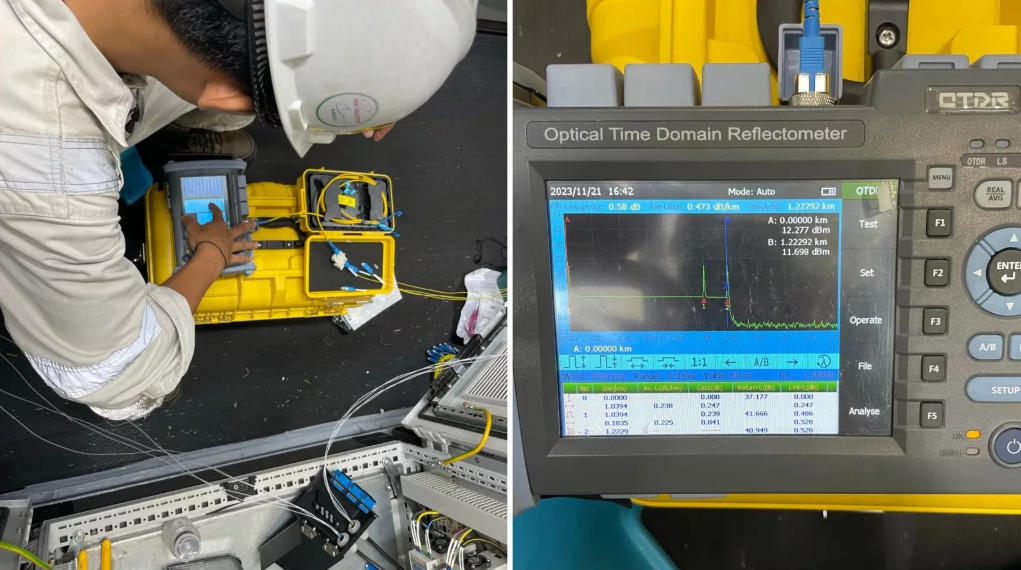
Fiber optic cables connect the world, and how we monitor their health makes a world of difference. Diverse test approaches assist in identifying issues before they become severe, maintain network robustness, and ensure compliance with industry standards. Here’s where using a combination of tools and steps provides a more comprehensive view of cable performance. The table below compares how each technique finds common network issues:
Testing Technique | Signal Loss | Fault Location | Dirt/Damage | Baseline Establishment |
|---|---|---|---|---|
OLTS | High | Low | None | Yes |
OTDR | Medium | High | None | Yes |
VFL | Low | Medium | None | No |
Fiber Optic Microscope | None | None | High | No |
One-Ended Fiber Test | Medium | High | None | Yes |
Standardizing these practices implies that they all test in the same manner resulting in more dependable outcomes. Combining complementary approaches such as OLTS for loss, OTDR for faults, and microscopes for clean connectors provides a richer picture of network condition.
Tier 1 Certification
Tier 1 certification tests fundamental fiber links, ensuring optimal network performance by measuring key parameters such as continuity and insertion loss with instruments like OLTS. This phase is essential for verifying that fresh fiber optic installations comply with minimum requirements from worldwide organizations. It’s simple: connect a light source and a meter, send light through, and see what’s lost. Capturing these outputs is crucial for complying with industry regulations and assists down the line when you have to audit for modifications in fiber optic measurements.
Tier 2 Certification
Tier 2 certification gets more in depth, utilizing fiber optic inspection microscopes and OTDR to chart each splice and connector. This process tests insertion loss and reflectance in greater detail, helping to discover unseen problem areas in the fiber optic network. The one-ended fiber test is particularly useful here, allowing you to detect where the loss occurs. Only the right, well-calibrated test tools work for Tier 2, as precision is crucial to capture stubborn issues and preserve network integrity.
Inspection and Cleaning
Cleaning stops dirt from ruining signals. A checklist helps:
Inspect end faces with a fiber optic microscope.
Use approved wipes and cleaning sticks on connectors.
Double-check for leftover dust or scratches.
Log each cleaning for tracking.
Cleaning isn’t a one-and-done. You inspect and clean on a fixed schedule, for example, before every test or after maintenance. This maintains the fiber in optimal condition, prevents minor issues from becoming major, and facilitates repairs when you have a ‘clean baseline.’ Dirty connectors are the quiet assassins of networks.
Key Fiber Testing Equipment
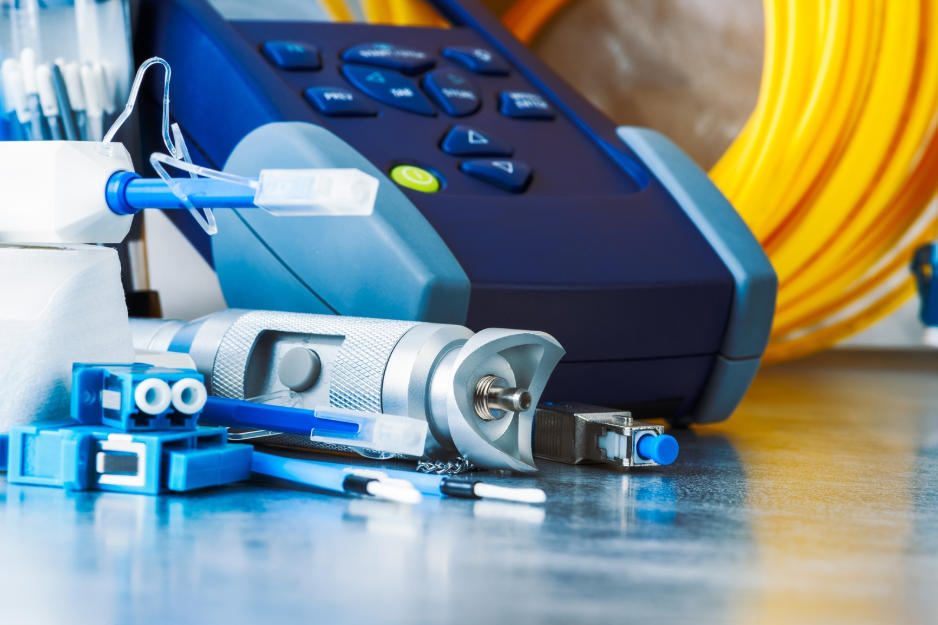
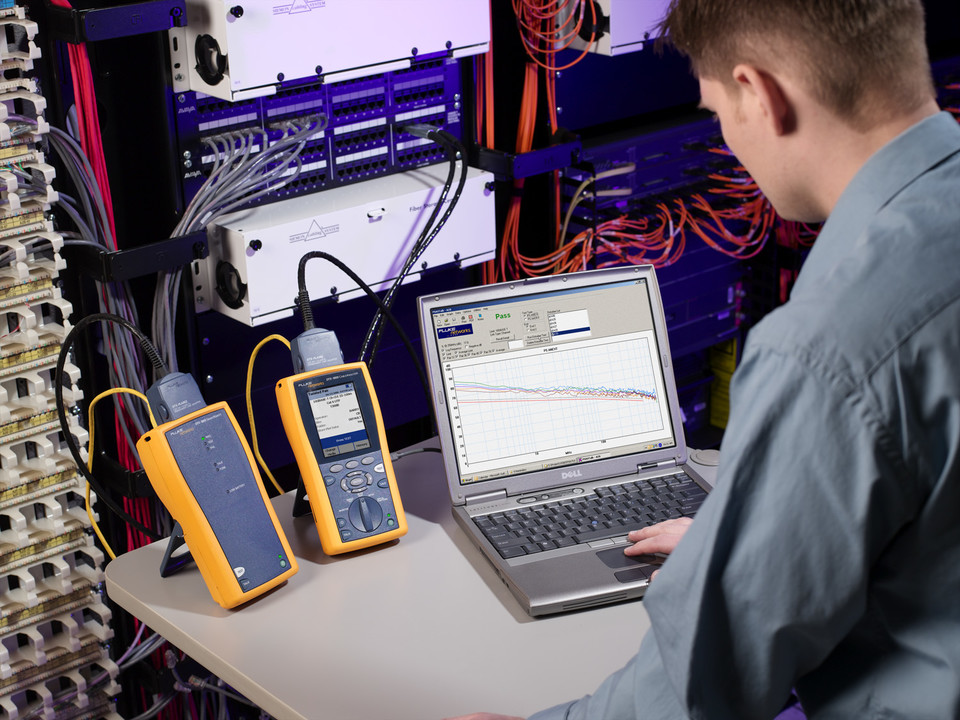
Robust fiber optic networks require diligent testing with effective fiber testing tools. The appropriate testing equipment can detect problems in their infancy, maintain the integrity of your signals, and reduce expensive downtime. When you invest in professional-grade testing equipment like a fiber optic inspection microscope, you’ll get more precise readings and fewer unexpected issues when deploying or maintaining. New technologies make testing simpler and more accurate, enabling techs to work quicker with networks across the world humming along.
Optical Loss Test Set
An optical loss test set measures how much signal loss occurs as light passes through the fiber link. This equipment is crucial for both single and multi-mode fibers. Coupled with an optical power meter and a light source, it measures the amount of light coming out of the other end compared to the amount coming in. This helps determine if a cable is within operating range or requires repair.
These sets are used for insertion loss tests, which tell you how much signal is lost at connectors or splices. Calibration is key or you can get false readings. Most test sets have advanced features such as live image viewing and results can be stored or shared to document the changes over time. Scheduled loss checks can detect minor problems before they turn major.
Optical Time-Domain Reflectometer
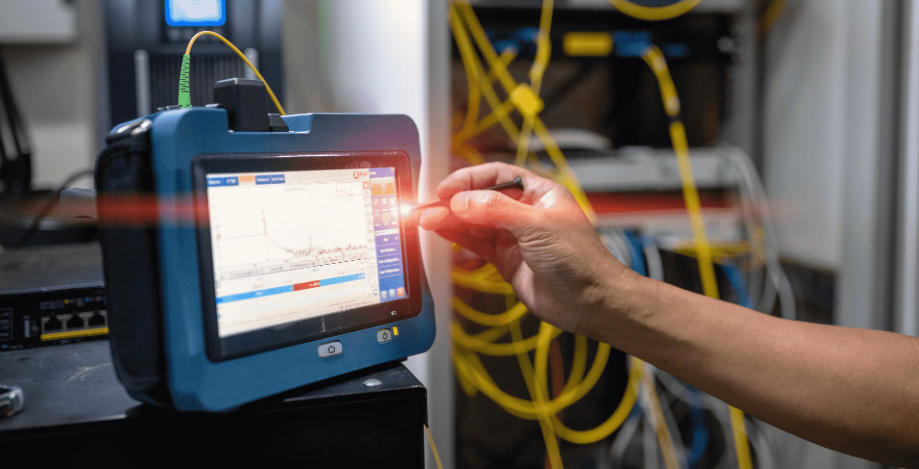
An OTDR fires pulses of light down the fiber and measures reflections to map out the entire cable. Key fiber testing equipment identifies where faults, bends or breaks occur, even deep in the line. The OTDR provides you a ‘trace’ that pinpoints the length and severity of the problem, so you know exactly where to dig.
With OTDRs, you receive a complete view during installation and for maintenance. They’re convenient for confirming the length of the fiber and testing overall signal loss. Key Fiber Testing Equipment allows you to append the OTDR data to maintenance logs, helping you identify patterns or repeat trouble spots. More sophisticated models can test multiple wavelengths and store hundreds of traces for greater record keeping.
Visual Fault Locator
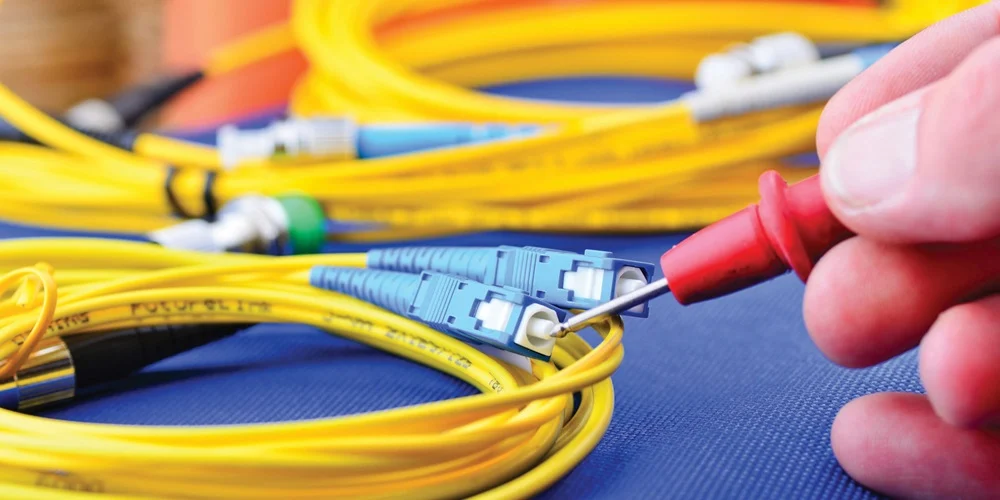
Visual fault locators use red light that you can see to locate breaks or acute bends. When there’s an issue, you watch the light leak out, keeping it fast to identify problems in the field. They’re tiny, cheap, and user friendly, so techs keep them on hand for quick-draw testing.
They can be used for fiber tracing, routing, and confirming fiber continuity prior to proceeding. They work best for short distances, and it’s a good first step before moving on to more advanced equipment. Integrating a visual fault locator with these other techniques ensures nothing slips through the cracks.
Fiber Inspection Probe
Fiber inspection probes allow you to inspect connector end faces up close for contamination, scratches, or damage. Clean connectors are essential for consistent network performance, as even a small speck of dust can obstruct the light. Some probes operate by basic optics. Others employ video for live images and PASS/FAIL analysis.
These probes belong in every test toolbox, and it’s worth checking connectors each time you install or repair a cable. Store and export inspection findings to maintain an auditable record of fiber condition. Over time, this assists in identifying trends and scheduling optimal maintenance.
Navigating Testing Standards
Fiber optic cable testing relies on transparent and uniform standards essential for optimal network performance. These standards direct how fiber optic technicians test cables for quality, safety, and performance, ensuring effective fiber testing. Adhering to standards enables international firms to collaborate, increase interoperability, and sidestep expensive blunders in complex fiber installations.
Global Protocols
Global standards are the backbone of fiber optic testing. Standards such as IEC 61280-4-1 provide detailed procedures for testing and establish a common vocabulary for fiber optic technicians across the globe. International organizations like the IEC and ITU play a significant role in developing and maintaining these rules. For companies operating internationally, adherence to these standards is essential for ensuring optimal network performance and seamless connectivity. Consider a telecom company that installs fiber optic networks on multiple continents; with IEC standards, cables tested in Europe or Asia follow the same regulations as in North America. To align with global best practices, technologists frequently employ the one-cord method for both single-mode and multimode fiber links, as it yields the most repeatable results. OLTS (Optical Loss Test Set) checks are standard testing methods, determining the amount of signal lost as it travels through the cable.
Regional Variations
Though world standards set the minimum, each region adds its local flavor. North America has the TIA/EIA, which sets design, installation, and testing rules for fiber optic installations. These could be different from what’s typical in Europe or Asia. To ensure optimal network performance, teams had to adjust their approaches to local regulations. For example, certain parts of the world still require the two-cord method for permanent link testing when cables with mixed connectors are present. To disregard these distinctions is to risk bad network reliability or worse, legal issues. Some companies, of course, attempt to mix and match local and global standards, including fiber optic measurements, so their networks can process international traffic without a hitch.
Application-Specific Rules
Testing is not a universal standard, especially when it comes to fiber optic installations. The standards vary significantly if the fiber is for testing use; for instance, data centers necessitate more rigorous testing compared to home networks. Certain verticals, such as banking or healthcare, must adhere to strict regulations to ensure data is secure and transmitted swiftly. The three-cord method is employed to exclude loss from each cable end, which accounts for customized cabling configurations. Fiber optic technicians navigate testing standards by selecting the appropriate technique based on network requirements, consistently verifying references between source and power meter using launch cables, which results in fewer outages and more stable connections.
Common Fiber Faults Uncovered
We find signal loss to be the most common fiber fault in fiber optic networks. Just a slight fault can cut optical power, sometimes too small to see. Effective fiber testing reveals faults buried deep within the cable, allowing fiber optic technicians to detect issues before they surface. With these faults in mind, teams can establish pragmatic plans to keep systems running.
Contamination is a common fiber fault. Use routine inspections and cleaning to reduce it.
Educate employees to identify and repair kinks, breaks, and splice problems.
Test cables frequently to detect faults before they lead to larger issues.
Remind technicians that minor changes, like a 0.1% change in core diameter, can cause a 10 dB/km loss.
Identify buried common fiber faults when connectors are in close proximity. Utilize OTDRs.
Check connectors and splices to prevent loss from escalating.
Contamination
Fiber connectors can be terribly harsh environments for fiber optic communications, as dust and oil can cause a huge drop in signal quality. This debris obstructs light from traveling through cleanly, leading to network downtime or outages. Inspection equipment such as a fiber optic inspection microscope helps identify small debris that is hard to detect with the naked eye. Testing and cleaning each connector prior to use prevents these issues. Training staff on cleaning protocols ensures that everyone understands how to maintain fiber optic network connections free of debris. One piece of dust can become a nightmare, so cleaning has to be the first priority.
Bends and Breaks
Ungentlemanly treatment stresses cables, causing kinks or fractures. Tight bends can lead to light scattering, while sharp bends may actually break the fiber core. Rayleigh Scatter is ever present in cables, but superimposed stress makes loss worse, especially at longer wavelengths. Comprehensive fiber optics testing assists in identifying these stressed areas, allowing repairs before exacerbated damage occurs. Good cable management and training fiber optic technicians to recognize warning signs protect cables.
Splicing Issues
A reliable splice checklist for routine inspections:
Look for obvious gaps or offsets at the splice.
Measure loss with an optical power meter and strive for sub 0.1 dB fusion splices.
Look for mechanical splices with loss over 0.2 dB. These require special attention.
Inspect for cracks, chips, or dirty surfaces before splicing.
Installation day testing, for example, can immediately detect bad splices. Training sessions assist techs in perfecting proper splicing methods, resulting in reduced signal degradation and subsequent issues.
Connector Damage
Damaged connectors can lead to network downtime and slowdowns in fiber optic networks. Frequent inspections using a fiber optic inspection microscope can discover chipped or fractured connectors, allowing for quick replacements. Testing with an OTDR is essential for revealing non-obvious faults, including those buried in the event dead zone, ensuring optimal network performance.
The Future of Fiber Testing
Fiber is spreading like wildfire as cities, towns, homes, and businesses all across the world are getting connected. With the increasing demand for speedier, more dependable data, the role of fiber optic technicians and fiber testing labs is becoming more crucial than ever. As 5G, IoT, and AI elevate network demands, effective fiber testing, including the use of a fiber optic inspection microscope, will be essential. The fiber optics testing market is growing at close to 9 percent per year, reflecting the rapid change in this field. Next-gen tech such as “twisted light” could increase bandwidth one hundred times beyond today’s limits, necessitating new methods of testing and monitoring.
Trend | Impact on Maintenance Practices |
|---|---|
Automation | Speeds up routine tasks, cuts down human error |
AI-driven Analysis | Spots issues earlier, helps plan proactive maintenance |
Remote Monitoring | Enables real-time response, reduces field visits |
New Transmission Methods | Calls for new testing tools and skills |
Higher Bandwidth Demand | Increases test frequency and complexity |
Automation
Automation is transforming fiber optic installations by enabling fiber optic technicians to perform testing more efficiently. Rather than relying on manual checks, automated systems can conduct scheduled tests, catching minor problems before they escalate and notifying network teams. Such systems assist labs and field technicians in managing larger, more intricate fiber optic networks without the need for additional personnel. This capability is essential for updating fiber lines to support 5G and IoT as their numbers increase.
With automation, data from every test is stored and analyzed, allowing companies to identify trends and optimize their fiber optic measurements. This leads to less network downtime and fewer mistakes, as machines follow precise protocols consistently. Looking ahead, automated testing will be vital as networks continue to expand in both size and complexity.
AI-Driven Analysis
AI is on the cusp of revolutionizing fiber testing. AI can examine millions of data points from previous tests and identify early warning signs that humans might overlook. For instance, if AI notices a particular type of cable consistently failing after storms, it can alert teams so they can repair vulnerable areas before issues escalate.
Machine learning, a form of AI, takes it further. It learns from every new test, so the system gets smarter and smarter. As networks evolve and new technology emerges, AI-powered tools like these will assist teams in keeping up and making fiber networks more resilient for all.
Remote Monitoring
Remote monitoring implies specialists are able to oversee fiber networks from any location. They can test cable health, detect faults, and conduct tests without ever visiting the location. This is time-saving and cost-saving, particularly in inaccessible regions.
When things break, real-time observability empowers teams to leap into action quickly. They can repair little issues before they become outages. With larger networks and more data going every day, remote tools are essential.
Remote testing just suits new tech, like the buildout for 6G or for “twisted light” systems. As networks become intelligent and complex, remote tools will keep everything humming.
Conclusion
Great fiber testing keeps your networks powerful and fast. Cable testers are the unsung heroes of fiber optic cable testing who find faults on the double, maintain signal integrity and keep work flowing. With basic testers, workers test each line for breaks, bends, or bad connections. A small device can display a huge issue; perhaps a line has been cut or there is dust on a tip. Testing steps do change as the technology grows, but the objective remains constant: crystal clear, high speed connections that never stop. Teams that stay on top of novel cable testing methods tend to avoid major headaches down the road. To maintain your network smoothly, stay smart, select the proper instruments, and stay on top of the latest fiber testing tips. Give these steps a whirl and watch the difference.
Frequently Asked Questions
What is fiber optic cable testing?
Fiber optic cable testing ensures optimal network performance, validates installation, and diagnoses problems in fiber optic networks.
Why is fiber optic testing important?
Testing saves you from signal loss, downtime, and premature fiber lifespans, ensuring optimal network performance and reliable connectivity in fiber optic networks.
What are the main methods used for fiber testing?
Typical tests for fiber optic technicians include OTDR testing, insertion loss testing, and visual inspection, each crucial for troubleshooting performance problems in fiber optic networks.
Which equipment is essential for fiber optic cable testing?
Essential equipment for fiber optic technicians includes an OTDR, light source, power meter, and fiber optic inspection microscope, which assist in measuring and diagnosing fiber optic networks.
What international standards guide fiber optic cable testing?
Typical standards like ISO/IEC, ITU-T, and TIA/EIA establish testing and performance requirements for fiber optic technicians globally.
What are the most frequent faults found during testing?
Common faults such as connector contamination and high loss splices can be identified using fiber optic inspection microscopes, ensuring effective fiber testing and optimal network performance.
How is fiber optic testing evolving for the future?
Future testing for fiber optic technicians is said to revolve around automation and real-time monitoring. Innovative technology is helping fiber optic network testing become faster, more accurate, and easier for technicians everywhere.