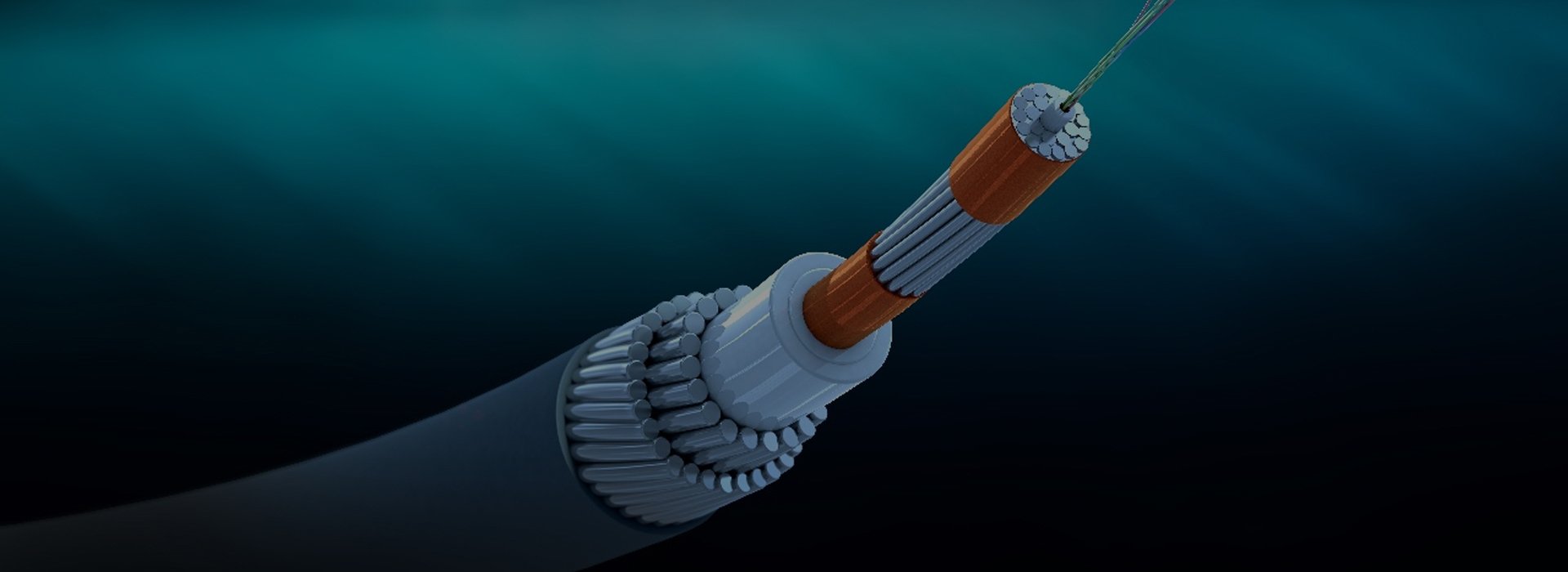
Heavy-Duty Armored Structure
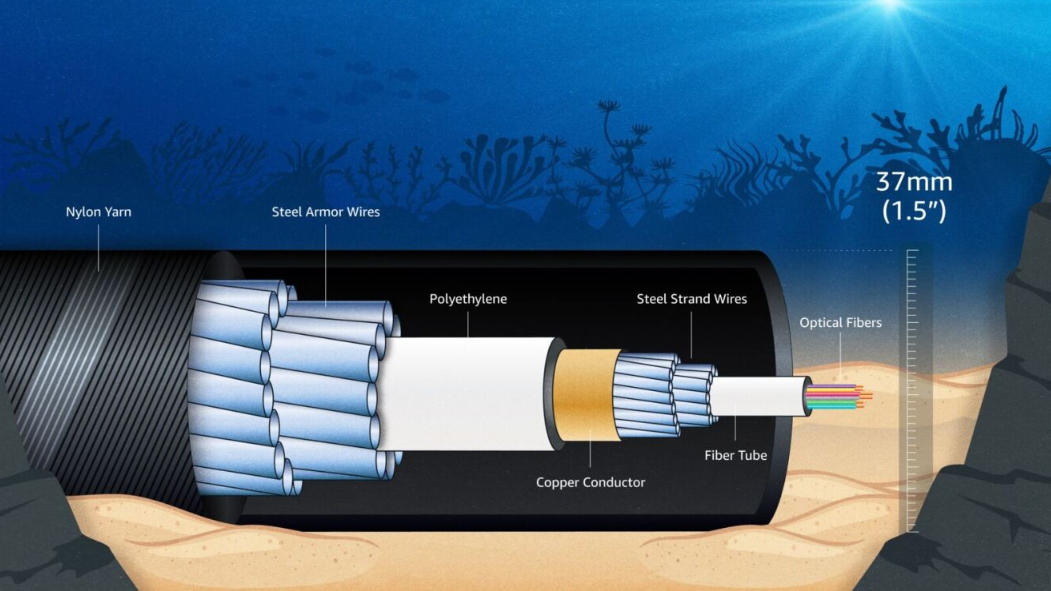
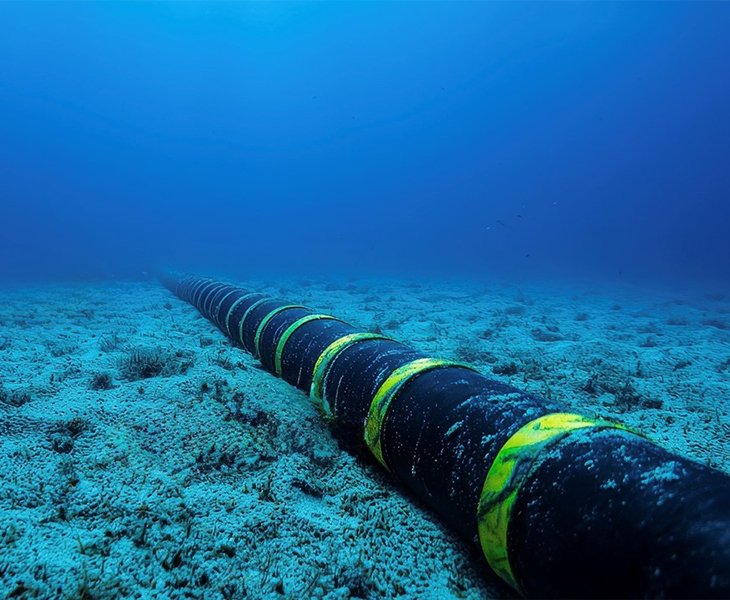
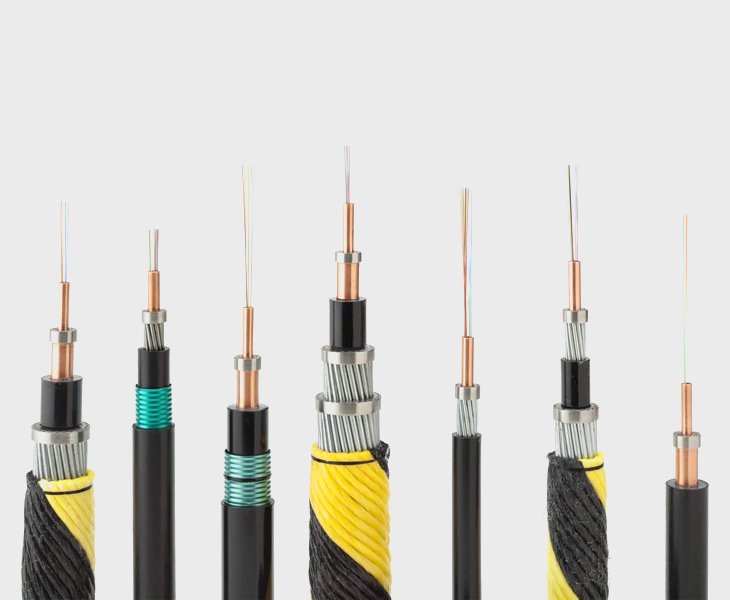
Multi-layer high-strength steel armor + metal sealing tube + water-blocking layer. Resists deep-sea high pressure, anchor dragging, fishing net pulling, rock abrasion and biological damage. High mechanical strength ensures safe and reliable laying.
OUFU Submarine Fiber Optic Cable
- Over 20 years focus on fiber optic cable R&D & manufacturing
- Support customized structure, fiber count, length and laying depth
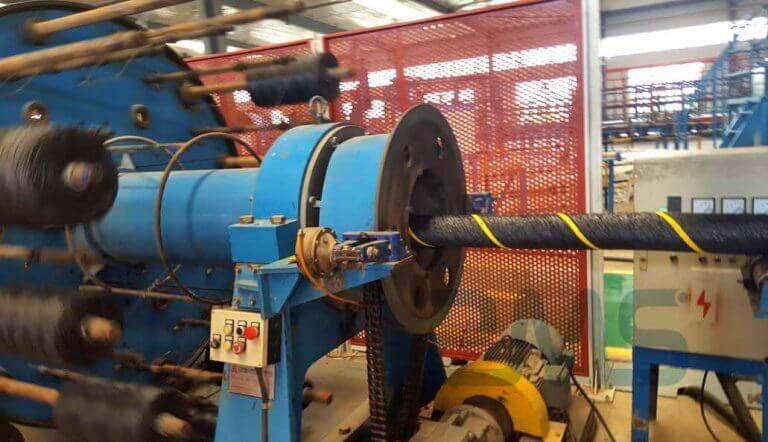
- Automated production line with strict tension, hydraulic & deep-sea simulation tests
- Complete third-party test reports, classification society certificates & international certifications
- Support OEM/ODM, capable of large-scale marine communication projects
Well-known Submarine Fiber Optic Cable Manufacturer in China
Submarine fiber optic cables are the core infrastructure for global cross-regional communication. Compared with other transmission methods such as satellite communication and terrestrial optical cables, four core advantages: large transmission capacity, strong stability, low latency, and high security. Moreover, in long-distance transmission scenarios, the overall cost is more favorable.
As one of the most professional manufacturers of Submarine fiber optic cables, OUFU focuses on designing and manufacturing Submarine fiber optic cables and provides customized services for you!
Welcome to visit our factory. Feel free to contact us at any time!
Various Types of Submarine Fiber Optic Cable
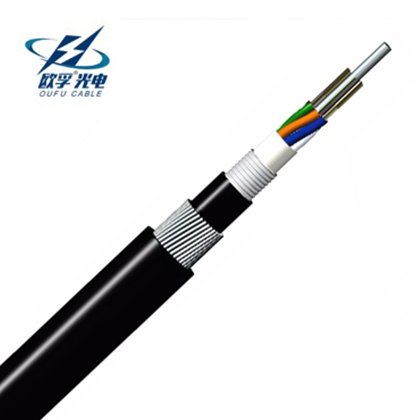
Tbps large capacity, ideal for cross-border data backbone
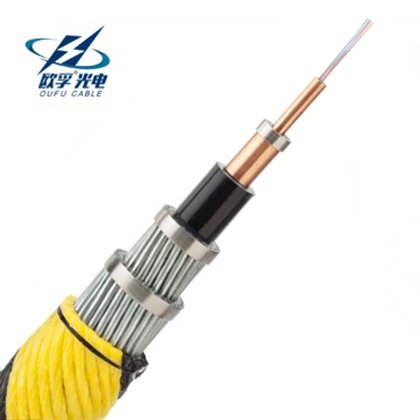
8000m+ deep sea pressure resistant, armored & anti-drag
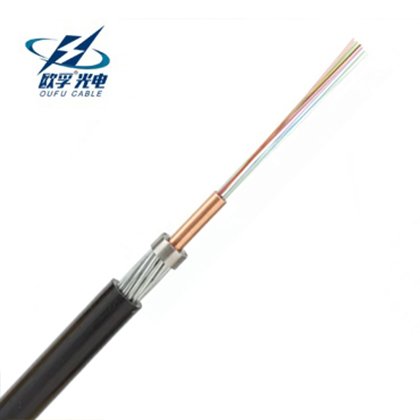
Fully waterproof & anti-corrosion for ocean/river/lake projects
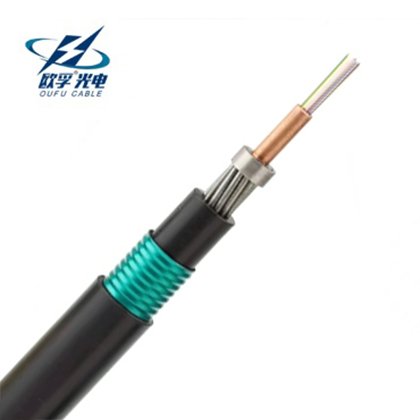
Extremely Large Transmission Capacity
Submarine fiber optic cables can carry transmission bandwidth of tens or even hundreds of Tbps, equivalent to simultaneously transmitting millions of high-definition videos or billions of phone calls.
The capacity of undersea fiber optic cables can easily meet the transmission needs of your vast range of services, such as intercontinental internet data, financial transaction data, and cross-border enterprise dedicated lines.
Low Transmission Delay
The transmission speed of optical signals in optical fibers is close to the speed of light, and the laying path of Submarine fiber optic cables is closer to a straight line. The transmission delay across oceans is significantly lower than that of satellite communication. The extremely low delay can ensure the stable operation of time-sensitive businesses such as your financial high-frequency trading, remote medical services, and real-time video conferences.
Strong Global Coverage Capability
Submarine fiber optic cables can traverse areas such as oceans and straits that terrestrial optical cables cannot reach, connecting islands, coastal countries, and continents. It is the only feasible way to build a global communication network. Currently, over 99% of cross-border data transmission globally relies on Submarine fiber optic cables
Strong R&D in Submarine Fiber Optic Cable
OUFU has high R&D investment and a large number of patents, giving us a technological barrier. We can quickly respond to your customized requirements and meet the individualized needs of submarine fiber optic cables, which is one of our core competencies.
The main difference lies in the protective structure and laying environment. Submarine fiber optic cables need to add an anti-corrosion sheath and a protective layer against mechanical damage; terrestrial optical cables focus on resistance to stretching and bending, and the protective structure is relatively simpler. Submarine optical cables need a dedicated submarine cable laying vessel for laying, while terrestrial fiber optic cables can be constructed through various methods such as overhead laying, pipeline laying, and direct burial.
The transmission capacity of submarine fiber optic cables is at the industry-leading level. The transmission capacity of a single submarine cable can reach the level of several hundred Tbit/s, far exceeding other transoceanic transmission methods such as satellite communication, and can meet the demand for massive international data interaction.
Submarine fiber optic cables without repeaters can have a transmission distance of several thousand kilometers. Ultra-long distance transoceanic cables will set repeaters on the seabed, using them to amplify the optical signal and achieve intercontinental transmission over tens of thousands of kilometers.
Submarine fiber optic cables are mainly used for: international internet data transmission (such as cross-border e-commerce, international video conferences, cloud service data interaction); international voice communication; cross-border data dedicated lines in key industries like finance and energy; communication connections between islands and the mainland.
Route survey: Using specialized equipment, the seabed topography and geology are explored to determine the optimal laying path, avoiding dangerous areas such as trenches and volcanically active zones.
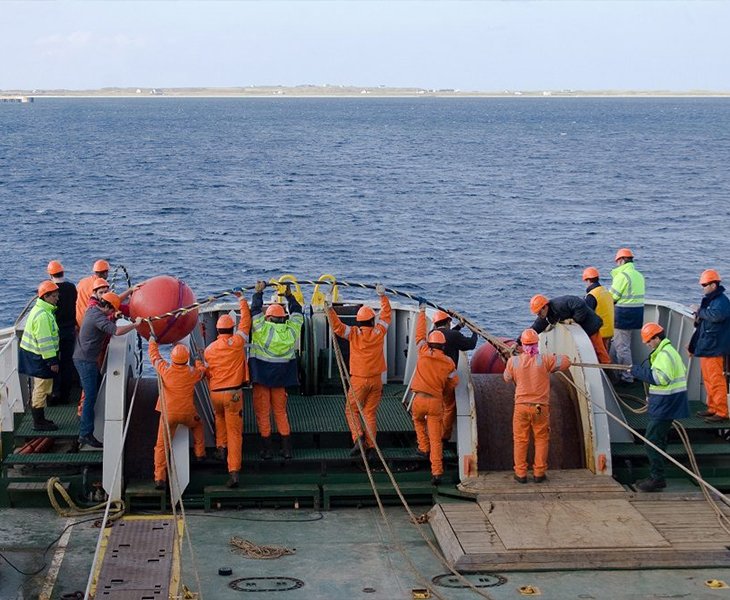
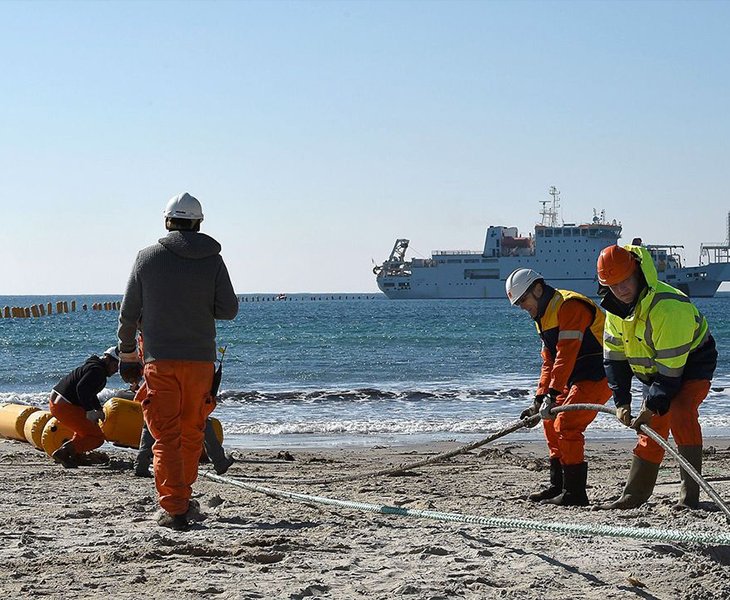
Cable deployment: Using a dedicated cable laying vessel, the cable is released from the ship’s cable reel and precisely buried in the seabed soil to a certain depth using laying equipment.
Terminal connection: Connecting the two ends of the cable with the equipment at the land-based communication station to complete system debugging and then put into use.
Large transmission capacity: A single submarine fiber optic cable has a much greater capacity than satellites, capable of carrying more data.
Low transmission delay: The transmission delay of light signals in optical fibers is much lower than the round-trip transmission of satellite signals, ensuring the real-time nature of cross-border communication.