Fiber optic cables are generally buried 2 to 4 feet underground, based on location and application. For example, in cities, cables may be located underneath sidewalks or roads approximately 0.6 meters deep, whereas in rural and cross-country areas, workers may bury cables 1.2 meters deep for increased protection. That depth helps protect it from damage by digging, weather, or animals. Installers choose the depth by examining the region’s soil, traffic, and upcoming construction or roadwork. In some locations, concrete covers or warning tapes are utilized above the cables to prevent incidents. Understanding the location and depth of these cables prevents expensive breaks. The following discusses additional detail on cable care and management.
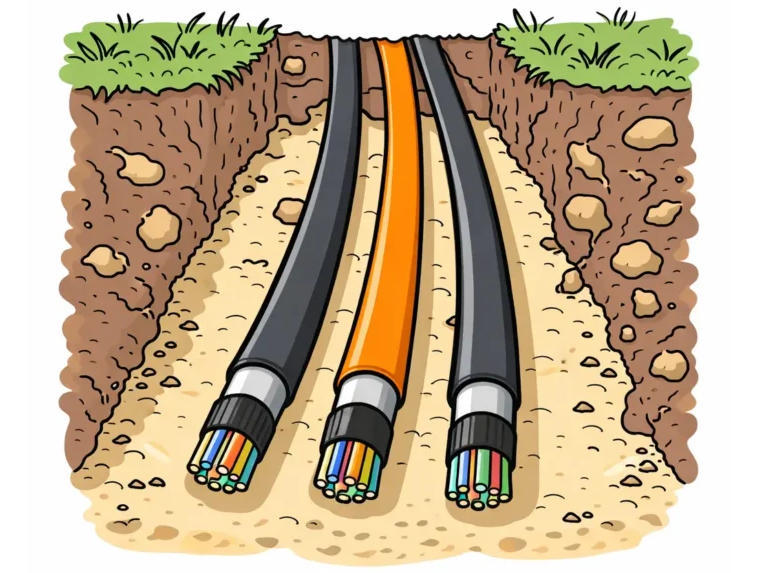
Fiber optic cables are generally buried at varying depths based on urban, rural, or undersea environments. Local laws and regulations usually dictate the depth requirements.
Soil conditions, climate, and future plans all figure into how deep cables need to be buried. Site-specific planning is crucial for long-term reliability.
Thorough pre-installation surveys and precise utility records avoid damage to existing infrastructure and expensive delays.
Selecting the appropriate installation method, whether it be trenching, micro-trenching, or directional boring, can affect how deep fiber optic cables are buried and the project’s expense.
While deeper cable installations may provide greater protection, they can drive up costs and complicate future repairs or upgrades. It’s important to strike a balance between depth and accessibility.
Adhering to best practices, such as utilizing quality materials, proper backfilling, and clear marking, goes a long way toward ensuring the safety, durability, and future accessibility of fiber optic networks.
How Deep Are Fiber Optic Cables Buried?
How deep are fiber optic cables buried? Typical burial depths for direct burial fiber cables range from 24 to 48 inches, roughly 60 to 120 cm. Deeper burials provide more protection against physical damage, but cost, soil conditions, and accessibility are important factors to consider.
Setting | Typical Burial Depth (cm) | Key Considerations |
|---|---|---|
Urban areas | 60–90 | Crowded utilities, surface activity |
Rural/agricultural | 90–120 | Plowing risk, soil shifts |
Commercial zones | 90–120 | Heavy traffic, deeper regulations |
Roadside | 105–120 | Vehicle loads, frost lines |
1. Urban Environments
In urban areas, direct buried fiber optic cables typically run 60 to 90 cm deep, but industry standards may require deeper burials beneath high-traffic roadways or sidewalks. Old pipes, power lines, and congested rights-of-way complicate the installation process. To ensure proper installation and protect against physical damage, installers often deploy conduit systems or additional warning tape above the fiber optic network.
2. Rural Landscapes
In rural areas, while there is more room, direct burial fiber cabling may need to be installed at deeper burial depths of 90 to 120 cm to avoid damage from farm equipment or soil work. Additionally, soft or sandy soils may necessitate reinforced conduit systems. Planners must carefully map out all lines to prevent crossing paths with water, gas, or electric lines, ensuring proper installation for the infrastructure.
3. Undersea Crossings
Marine cables are buried using specialized plows that trench the ocean floor, with burial depths varying from a few centimeters below the seabed to several meters deep based on shipping lanes, fishing activity, and the seabed composition. Installers must follow guidelines to ensure proper installation and maintain the safety and reliability of the fiber optic network, considering factors like wave action, currents, and marine life.
4. High-Risk Zones
High-risk areas such as earthquake zones, floodplains, or hillsides where landslides are common require additional precautions for direct burial fiber installations. Cables may be deeper than 120 cm, in heavy conduit systems, with warning tape. Local regulations frequently mandate extra precautions to protect against moving soil or water, ensuring proper installation techniques are followed.
5. Private Property
On private property, legal procedures precede any direct burial projects. Owners must grant permission and provide maps of their lines. Installers aim to avoid utility clashes and minimize mess, utilizing experienced providers like Oufu, who offer custom solutions for proper installation.
What Determines Burial Depth?
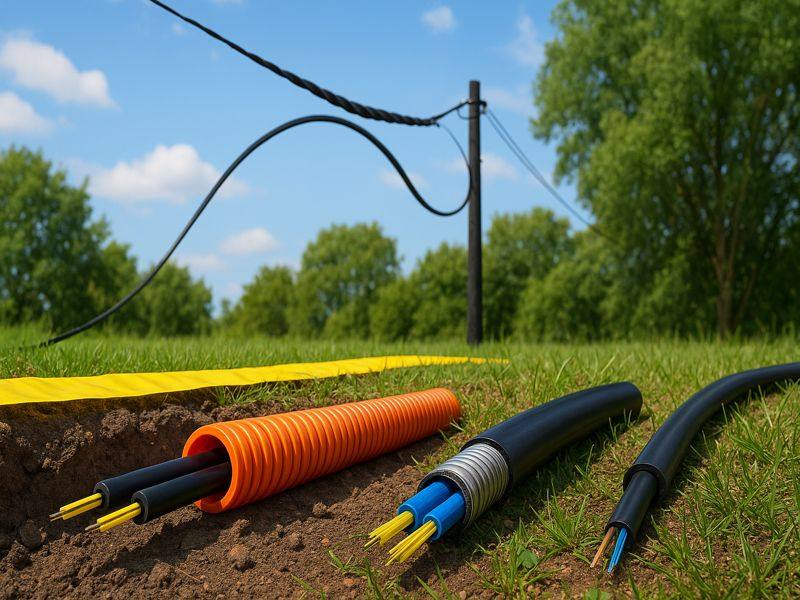
Fiber optic cable burial depth is not a cookie-cutter decision; it varies with local regulations, burial depths, soil conditions, and climate. The table below provides a quick look at how these factors influence proper installation practices.
Factor | Local Regulations | Soil Conditions | Climate Impact |
|---|---|---|---|
Urban Areas | 36–48 inches | Hard or mixed | Flood/freeze risk |
Rural Areas | 24–36 inches | Soft, loose | Drought, heat, frost |
Main Lines | 2–4 feet | Variable | Heavy rains, storms |
House Drops | 8–12 inches | Stable needed | Less climate impact |
Local Regulations
Almost everywhere has building codes that specify the minimum burial depths for fiber optic installations. Urban centers commonly need direct burial fiber cables to be buried at least 36 to 48 inches deep, whereas rural locations may permit them at 24 to 36 inches. These aren’t just guidelines; they’re the law. Ignoring them can lead to project hold-ups or expensive repairs. Local codes can differ wildly from one area to another based on population density, utility congestion, and safety requirements, especially in regions with unstable soils or frequent excavation work.
Soil Conditions
Soil makes all the difference in fiber optic installations. In hard, rocky ground, cables can be buried more shallowly, sometimes with additional coating such as duct. Loose or sandy soils may require direct burial fiber cables to be buried deeper to prevent shifting or washout. Soil tests prior to excavation assist in selecting appropriate burial depths. Moisture matters as well, as wet soils can freeze or shift, leading installers to bury cables deeper for added security.
Surface Activity
Burial depth is very dependent upon what’s going on on the surface. Just like heavy traffic or tons of digging, direct burial fiber cables have to go deeper—sometimes 4 feet or more—to avoid being damaged by machinery. Shallow installations like 12 to 18 inches for house drops are fine where the risk is low, but proper installation techniques with conduit is where it becomes key. New buildings or road projects can force changes, so planning for growth or construction is wise.
Climate Impact
Locations with severe winters or flooding may necessitate deeper burial depths, sometimes exceeding a meter, to safeguard direct burial fiber cables from frost or water. In hot or dry regions, soil shrinkage or expansion can stress cables, so proper installation techniques and extra protection both come into play. As weather becomes even less predictable, installers may bury cables even deeper as a future-proofing measure for the fiber optic network.
Future Development
To plan burial depth is to plan ahead. Expanding cities or new roads can threaten cables if they aren’t deep enough. What defines burial depth?
As cities grow, protecting cables requires planning for tomorrow, not just today.
The Unseen Underground Conflict
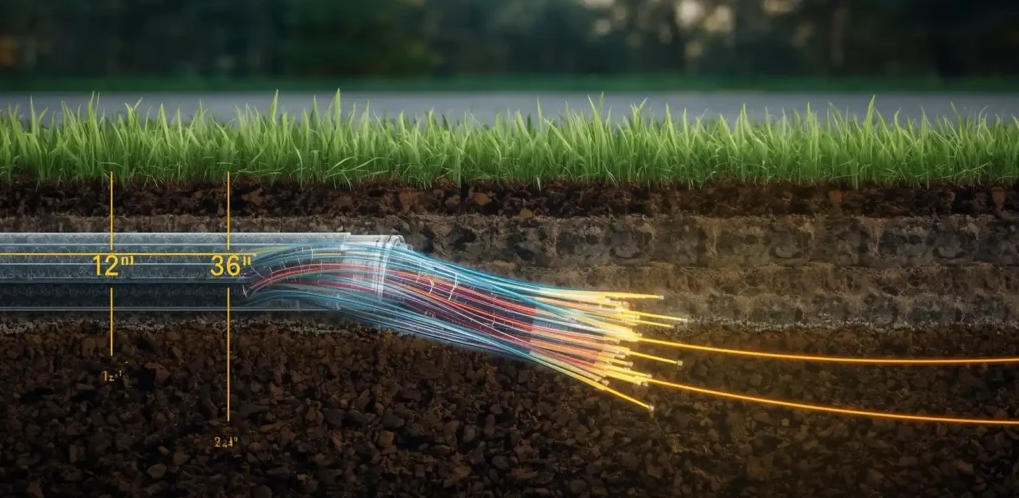
There’s more to burying direct burial fiber cables than just digging a trench and laying cable. It’s a delicate tango between aging conduits, overhead cables, highways, and the unstable terrain. Cities and towns across the globe have their tangled mess of gas lines, water pipes, and electrical cables underground. This congested environment determines how far fiber can dig and how securely it can be laid to prevent future strife. Installers need to bury fiber optic cables to safe minimum burial depths, typically between 30 and 90 centimeters, against harm from heavy vehicles, water, or pressure from soil overhead. In particularly cold areas with severe winters, such as the northern US, cables might be buried even deeper beneath the frost line to prevent cracking from the freeze-thaw cycles.
Utility Congestion
The unseen underground conflict presents challenges for fiber optic installers, particularly due to overlapping utility lines. With many services operating in parallel, the risk of striking something increases significantly. To mitigate this, installers must carefully plan the path for fiber cable placement to avoid damaging gas or water lines, often utilizing horizontal separation of 30 to 60 centimeters. This precaution reduces the risk of future excavation work needing repairs or upgrades.
Cable locators, for example, are deployed prior to excavation, allowing crews to ‘visualize’ what’s beneath the surface. That doesn’t mean that even the best technology can’t find everything, particularly in older neighborhoods. Squads speculate they may resort to GPR or even hand digging in pesky areas. A little planning, patience, and a good map go a long way in these cramped quarters.
Certain locations necessitate vertical separation at crossings of other utilities. Here, protective sleeves, similar to sturdy duct systems, are used at these junctions. These protective measures ensure the longevity of the fiber by safeguarding it from abrasions or compressions that can occur during roadwork or new utility installations.
Inaccurate Records
Ancient maps are the bane of my existence, especially when it comes to fiber optic network installations. Depending on these can mean digging in the wrong spot or missing hidden lines, which can lead to damaging direct burial fiber cables. It’s not just the financial risk; breaking a gas or electric main can be life-threatening. Teams must second-guess what’s under the ground, not just believe reports, making it essential to follow proper installation techniques for fiber cable placement. Delays and repairs become expensive quickly when surprises arise, so it behooves you to be careful and ensure accurate burial depths are maintained.
Good practice is to update records whenever work is performed, particularly for direct burial projects. In the end, accurate, shared maps keep all of us safer and save time down the line, ensuring that our digital infrastructure is reliable. Using a cable locater can help avoid costly mistakes during excavation work. Moreover, maintaining proper depth for fiber deployments is crucial to prevent future complications and ensure the longevity of the installations.
Incorporating industry standards into our practices is vital. This includes understanding the minimum burial depths for different cable types, especially in areas with unstable soils. By adhering to these guidelines, we can minimize the risk of damage to our fiber optic service and ensure that our communications company can provide uninterrupted service to customers. Accurate mapping and careful digging are key to successful fiber cable installations.
Cross-Bore Dangers
Cross-boring occurs when a nascent cable unintentionally bores through another utility, like a gas or sewer pipe. It’s a silent threat that can result in leaks, outages, or explosions.
Tunnel work always threatens whatever is already underground. That’s why professional crews employ special methods and tools to identify buried lines and bypass them.
Professional diggers reduce the risk of cross-bores by adhering to rigorous procedures, sending cameras through existing conduits or digging test pits.
Safety rules, transparent communication, and checklist-driven procedures prevent these incidents from occurring.
Installation Methods and Depth
There are a number of installation methods available for underground fiber optic cable installation, including direct burial fiber and duct systems, each selected based on compatibility with soil type, project size, and the required burial depths. When it comes to installation, proper techniques and minimum depth are key to ensuring durability and avoiding expensive repairs. Project expenses, cable protection, and the appearance of nearby terrain all connect to these installation practices.
Trenching
Trenching is the traditional method of digging a deep, wide swath, typically with a backhoe. Crews dig trenches from 0.6 to 1.5 meters deep, depending on local regulations and soil requirements. In urban areas, a depth of 0.6 to 0.9 meters is common, ensuring that the fiber optic network cables are out of the way of construction and pedestrians. Farmers prefer 1.0 to 1.5 meters to protect cables from plows and tractors. In cold regions, cables must be buried beneath the frost line, approximately 24 to 48 inches, to prevent freeze-thaw damage.
Trenching requires stable earth. After laying the direct burial fiber cables, workers compact the soil at 50 kN/m² to prevent settling that could squeeze the cable, which can withstand up to 100 N/cm before crushing. Safety remains paramount; crews must locate any other buried utilities prior to digging, wear high-visibility clothing, and cordon off the area with signs and barriers.
This method can be disruptive. Lawns, roads, and gardens often get damaged, and restoring them takes both time and money, emphasizing the importance of following industry standards for proper installation techniques.
Micro-Trenching
Micro-trenching is the new, less invasive approach. Instead of a broad trench, it carves a slender furrow, only 10 to 15 cm wide, directly alongside sidewalks or curbstones. The cable is installed at a more shallow depth, frequently only 0.3 to 0.4 meters deep. This is effective in urban areas, where excavating to depth is a pain. It reduces road surface mess by roughly 30%, which is why it is so popular in jam-packed downtowns.
Micro-trenching employs small saws and vacuum systems to control dust, and the method is quick. It’s not for all locations. Heavy traffic or drainage can erode the shallow cable trench, so it’s ideal where roads and sidewalks remain dry and protected.
Directional Boring
Directional boring remains the standard for difficult terrain, such as under thoroughfares or waterways. A drill head bores underground, led by sensors, so the surface remains unimpaired. Crews string cables at depths of 0.6 to 1.5 meters. This keeps cables apart from traffic loads of up to 2000 N per centimeter at crossings and spares them from vehicle damage.
City projects adore this approach since it bypasses tearing up congested roadways. It’s more expensive initially. The reduced risk of future repairs and less traffic disruption usually ends up saving money anyway.
Why Deeper Isn’t Always Better
How deep fiber gets buried isn’t only about regulations or safety; it also involves proper installation techniques that balance expense, reparability, and terrain. Direct burial fiber cables require careful digging to avoid future excavation challenges. Going deeper isn’t always the smart play, as it can complicate repairs and increase costs, particularly in urban or rocky terrain.
Depth | Installation Cost | Maintenance Ease | Protection Level |
|---|---|---|---|
Shallow (6-12 in) | Low | High | Low |
Medium (12-24 in) | Moderate | Moderate | Moderate |
Deep (24+ in) | High | Low | High |
Accessibility
Burying cables deep only complicates access when issues arise. Service teams may require jack hammers or have to dig up roads to reach a cable, delaying repairs and disrupting traffic or daily life. A cable buried at 6 inches is too close to the surface, risking damage from shovels or small diggers. Conversely, burial depths beyond 24 inches result in significantly longer and costlier repairs.
Thinking ahead is essential for installers, who must anticipate access needs a decade into the future, not just for today. When cables are accessible, the fiber optic network becomes more durable and can be repaired quickly after storms or accidents. In areas with direct burial fiber cables or robust conduit systems, shallower burial depths can be effective. Proper installation techniques and scheduling can minimize downtime for everyone involved.
Cost
Digging deep holes isn’t cheap. Labor, time, and machines all accumulate quickly, particularly in rocky soil or congested urban areas. If you dig down 24 inches or more, it becomes more expensive to dig and backfill each meter. Materials such as armored cable or conduit, both required for shallow installations, increase expenses, but can pay for themselves by simplifying future repairs.
Budget constraints are typically what dictate how deep we go. For major projects, skimping on depth can release capital for superior cable protection. Skimping too much can jeopardize long-term harm and expensive repair costs. It’s a tricky balance: short-term savings versus long-term maintenance.
Environmental Impact
Digging deeper disturbs more earth and can damage roots or water channels. In wilderness, this can disrupt roots, animal habitats, or waterways. Shallow trenches wreak less havoc, but only if the cable remains free from harm. Using conduit or warning tape safeguards both the cable and the land.
Certain soils such as clay or sands drain water when disrupted in varying manners. Digging deeper can create additional runoff or alter the subterranean water flow. Green projects seek to bury cables with the least amount of damage, often opting for medium depths with additional guarding.
Best Practices for Installation
Installing direct burial fiber requires caution and strategy, as proper installation techniques are essential for maintaining a secure and operational fiber optic network for years. This guide provides the information needed to do it right, from start to finish.
Pre-Installation Survey
A pre-install survey is crucial for the success of direct burial projects. It scans the earth, detecting compacted areas and identifying the presence of other conduits or pipes, which is essential for maintaining the integrity of the fiber optic network. Failing to conduct this survey can lead to expensive repairs if a cable gets sliced or a pipe bursts. Always call 811 in the USA and other utility locating services in your country before you dig, as they assist in marking where it is all buried. Underground cable locators are a valuable tool that can identify fiber lines underground, ensuring proper installation techniques are followed and minimizing the risk during excavation work.
Material Selection
Choosing the appropriate materials is an important element of quality fiber optic installation, especially when considering direct burial fiber options. For many jobs, armored fiber optic cables are a no-brainer, particularly in rocky terrain or where rodents could nibble on the cable. In commercial settings, HDPE conduit is a solid pick because it holds up well to abuse. The selection of materials is influenced by the soil, climate, and minimum burial depths for cable burial. Quality materials can translate into less repairs later on.
Proper Backfilling
Backfill with clean, rock-free soil or sand.
Tamp the soil in layers to reduce settling.
Maintain an 18-inch-deep cable trench for the majority of installations.
Fiber cables should be separated from power and water lines by 30 centimeters.
Please put marking tape or a marker mesh above the cable prior to backfilling the trench.
Backfilling properly secures the direct burial fiber cable in place and protects it from ground movements. When the dirt is compacted effectively, it acts as a moisture barrier, keeping water at bay and reducing the likelihood of cable failures, ensuring a hassle-free fiber optic network.
Clear Marking
Clear marking aids in locating where fiber optic cables are buried. Warning tape or signs facilitate later identification of direct burial fiber cables, ensuring that other crews do not accidentally damage them during excavation work. Placing warning tape above the cable but beneath the surface is an easy yet effective method to assist with this. Maintaining records and GIS maps of fiber infrastructure locations benefits everyone both now and in the future. Well-marked networks lead to longer-lasting and more reliable systems.
Conclusion
Fiber optic cables typically lie just above a meter beneath the surface, although depth can vary based on soil, usage, and required precautions. Shallow ground works well in cities where space runs tight, while rural places may allow cables to be buried deeper. Crews utilize plows, drills, and even hand digging to get cables just where they need to go. Every location presents its own requirements, and crews account for stones, wood, conduits, and climate. Good preparation prevents a lot of hassle down the road. If you want to make the most of a fiber network, follow savvy designs and stay abreast of innovative strategies to lay cable. Want to know or have a story of your own? Leave your comments or get in touch with inquiries.
Frequently Asked Questions
How deep are fiber optic cables usually buried?
How deep are direct burial fiber cables buried? Specifically, what are the minimum burial depths for fiber optic installations?
Can fiber optic cables be buried at different depths?
Yes, depending on location, ground conditions, and protection needs, the minimum burial depths for direct burial fiber cables can vary significantly.
What factors influence how deep fiber optic cables are buried?
Several factors influence the minimum burial depths for direct burial fiber cables, including soil type, climate, and traffic above the cable, as well as compliance with local building codes for proper installation.
Are there risks if fiber optic cables are buried too shallow?
Yes, shallow installations of direct burial fiber cables leave the fiber optic stranded cable more vulnerable to injury from digging, weather, or heavy trucks; proper installation depth is essential to avoiding outages.
Why are fiber optic cables not always buried deeper?
Deeper burial depths complicate repairs and increase costs; thus, proper installation techniques provide the right balance between safety, ease of access, and installation costs.
What installation methods are used for fiber optic cables?
These methods, including trenching and horizontal directional drilling, vary by terrain, burial depths, and environmental concerns for proper installation.
Is there a global standard for fiber optic cable burial depth?
There is no universal standard for direct burial fiber installations; most countries have their own guidelines based on local requirements and situations.