In 2026, the global optical fiber market has entered another wave of price fluctuations, and the most discussed topic among telecom operators, distributors, and OEM manufacturers is the rising cost of G657A2 fiber. As of Q1 2026, the mainstream market price of G657A2 optical fiber has reached around $30–$32 per kilometer, marking a noticeable increase compared to the previous 12 months.
This article provides a data-driven explanation of why G657A2 prices have reached $32/KM, the real market indicators behind this trend, and what buyers should expect in the coming months.
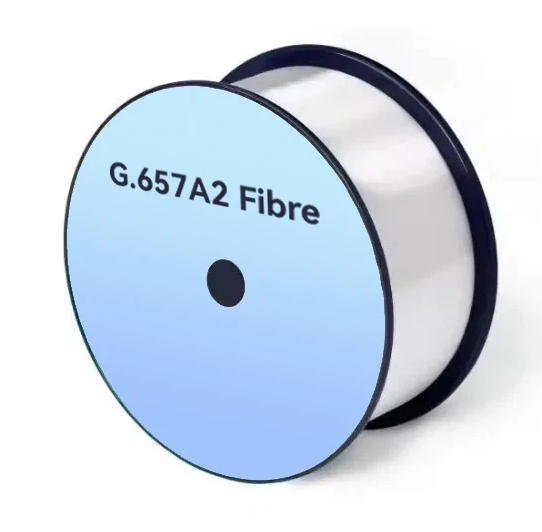
1. What Is G657A2 Fiber and Why It Matters in 2026
G657A2 fiber is a bend-insensitive single-mode optical fiber widely used in:
- FTTH and FTTx deployments
- Data center patching
- Indoor and outdoor drop cables
- 5G small cell connections
- High-density fiber management environments
Compared with G652D, G657A2 provides better bending performance, enabling a minimum bending radius down to 7.5 mm.
2. 2026 Price Snapshot: G657A2 Fiber Reaches $32/KM
Based on market monitoring from major suppliers in China, India, Southeast Asia, and Europe, the 2026 price range is as follows:
| Fiber | Average Price | Year-on-Year Change |
|---|---|---|
| G.652.D | ¥85–120/km | +650% |
| G.657.A1 | ¥115–135/km | +487% |
| G.657.A2 | ¥210–230/km | +557% |
3. Why G657A2 Fiber Price Hits $32/KM: Top 6 Data-Driven Factors
Below are the major reasons behind the current market price, supported by data and industry indicators.
3.1 Surge in Global FTTH Deployment
According to industry forecasts, global FTTH new-build mileage will grow by 18–22% in 2026, with high demand from:
- United States rural fiber projects
- Europe’s FTTH expansion (Spain, France, Germany)
- Middle East digitalization plans
- Africa’s broadband penetration increase
- SEA (Philippines, Vietnam, Malaysia) pushing for national fiberization
Data:
- In 2025, global FTTH installations exceeded 670 million homes passed.
- 2026 is expected to exceed 740 million.
More deployment = more fiber demand = upward price pressure.
3.2 Raw Materials Cost Increase (Silica, Coating, UV Ink)
The cost structure of G657A2 optical fiber includes:
- Preform rod / silica materials – 45–55%
- Drawing process cost – 20–25%
- Coating materials – 10–13%
- Packaging & quality inspection – 5–7%
Between 2024–2026, raw material prices rose significantly:
| Material | 2024 Price | 2026 Price | Increase |
|---|---|---|---|
| Silica (SiO₂) | $7.8/kg | $9.6/kg | +23% |
| Dual-layer UV coating | $4.2/kg | $5.3/kg | +26% |
| Fiber coloring ink | $2.1/kg | $2.6/kg | +24% |
This directly raises the cost per kilometer from $18–$20 to $25+.
3.3 Global Optical Fiber Preform Shortage
Preform supply has been tight since 2023 due to:
- Limited expansion of Tier-1 factories
- Surging demand in Asia and Europe
- High entry barriers and long production cycles
Industry fact:
A single preform production line requires $15–$25 million investment and 18–24 months to start full capacity.
With insufficient preform supply, fiber manufacturers face increasing procurement costs, pushing G657A2 price upward.
3.4 Delivery Time Pressure (Lead Time Extended to 6–10 Weeks)
Before 2023, fiber manufacturers could supply G657A2 within 2–3 weeks.
In 2026, the average lead time extends to:
- 6–10 weeks globally
- Up to 12 weeks during peak season (July–October)
Extended lead time increases storage, logistics, and planning costs, which are reflected in the final market price.
3.5 Strong Demand for G657A2 in 5G and Data Center Applications
5G small cell construction requires:
- High-density fiber connections
- Bend-insensitive fiber routing
- Thousands of fiber links per square kilometer
Additionally, hyperscale data centers (US, EU, Singapore, Malaysia, India) are expanding at 15–20% per year.
G657A2 is the standard for:
- Patch cords
- Pigtails
- MPO/MTP assemblies
- Data center indoor riser cables
Higher demand = higher procurement price.
3.6 Labor Cost and Energy Cost Increase in Manufacturing Countries
Countries with large fiber-drawing capacity (China, India, Vietnam) have seen rising manufacturing costs:
- Labor cost: +8–12% annually
- Electricity cost: +10–15%
- Environmental compliance cost: continues rising
Fiber-drawing is extremely power-intensive, and these increases push the cost floor higher.
4. G657A2 Fiber Price Breakdown in 2026
Below is a typical cost structure for 1 KM of G657A2 fiber:
| Cost Component | Percentage | Cost (USD/KM) |
|---|---|---|
| Optical Preform | 45–55% | $13–$17 |
| Fiber Drawing Process | 20–25% | $6–$8 |
| Coating & Coloring | 10–13% | $3–$4 |
| Testing, QC, Packaging | 5–7% | $2 |
| Labor & Energy | 6–8% | $2 |
| Total | — | $26–$33 |
This aligns with the current $30–$32/KM market level, proving the pricing is cost-driven rather than speculative.
5. Will G657A2 Fiber Price Drop Soon? 2026–2027 Forecast
5.1 Short-term (2026 Q2–Q4)
Prices may remain between $30–$34/KM, driven by:
- Consistent FTTH demand
- Preform shortage
- High manufacturing cost
5.2 Mid-term (2027)
Possibility of mild decrease:
- New preform capacity expected to release in China, India, Vietnam
- Raw material price may stabilize
Predicted 2027 price: $26–$28/KM
But unlikely to fall back to 2021–2022 levels ($18–$20/KM).
6. How Buyers Can Control Cost When G657A2 Price Is High
To reduce procurement cost, buyers can use these strategies:
6.1 Order in Bulk (3–6 Months Forecasting)
Bulk orders reduce:
- Unit fiber drawing cost
- Packaging cost
- Handling cost
- Shipping cost
Savings: 5–8%
6.2 Combine Fiber + Cable Procurement
Many factories produce both optical fiber and fiber optic cable.
Bundling offers:
- Lower fiber cost
- Reduced logistics expense
- Faster delivery time
Savings: $1–$2 per KM
6.3 Choose G657A1 When Possible
If your application does not require ultra-bend performance, G657A1 can reduce cost by:
- $3–$4/KM
Common for outdoor cables, ADSS, GYTA, GYTS, etc.
6.4 Avoid Peak Procurement Months
Peak months: July–October
Prices typically increase 3–5%.
Plan earlier to avoid this window.
7. G657A2 vs G652D vs G657A1: Price Comparison (2026)
| Type | Price (USD/KM) | Bending | Application |
|---|---|---|---|
| G652D | $12–$17 | Standard | Outdoor, long-distance |
| G657A1 | $16–$20 | Good | FTTH, indoor distribution |
| G657A2 | $30–$32 | Excellent | Tight bends, backbone-to-home |
G657A2 is the most expensive because of its bending performance and process complexity.
8. Frequently Asked Questions (FAQs)
1. Why is G657A2 more expensive than G652D?
Because of stricter coating materials, smaller bending radius, and higher-quality preform requirements.
2. Will G657A2 price drop below $25/KM again?
Highly unlikely before 2028 due to rising global deployment and manufacturing cost.
3. Which countries have the highest demand?
United States, Germany, France, UAE, Saudi Arabia, Philippines, Vietnam, India, Nigeria.
4. How long is the current supply lead time?
Typically 6–10 weeks depending on factory capacity.
5. What is the minimum order quantity for G657A2 optical fiber?
Most factories require 50–100 KM, but OEM orders usually exceed 1,000 KM.
9. Conclusion: G657A2 Fiber at $32/KM Is the New Market Norm
The 2026 price of $30–$32/KM for G657A2 fiber is the result of:
- Global FTTH and 5G expansion
- Preform bottleneck
- Increased manufacturing and raw materials cost
- High demand from data centers
- Longer delivery times
For you, the best strategy is early planning, bulk procurement, bundling cable orders, and supplier optimization.
If you need G657A2 optical fiber or customized fiber optic cables with stable pricing and short lead time:
Contact us for the latest bulk pricing (Factory Direct).
Free samples available for qualified projects.
Support OEM / ODM / Custom fiber cable design.
Our engineering team can provide:
- Technical datasheets
- Preform origin report
- Loss & attenuation test results
- Long-term price forecasts