In the era of high-speed internet, 5G connectivity, and data center expansion, fiber optic cable connectors are the unsung heroes that enable seamless, low-loss transmission of light signals across global networks. Whether you’re a network engineer, IT professional, or a business owner looking to upgrade your connectivity, understanding fiber optic cable connectors is critical to optimizing performance, reducing downtime, and making informed purchasing decisions. This comprehensive guide breaks down everything you need to know about fiber optic cable connectors—from their basic definition and core components to the most common types, key performance metrics.
What Are Fiber Optic Cable Connectors? A Basic Definition
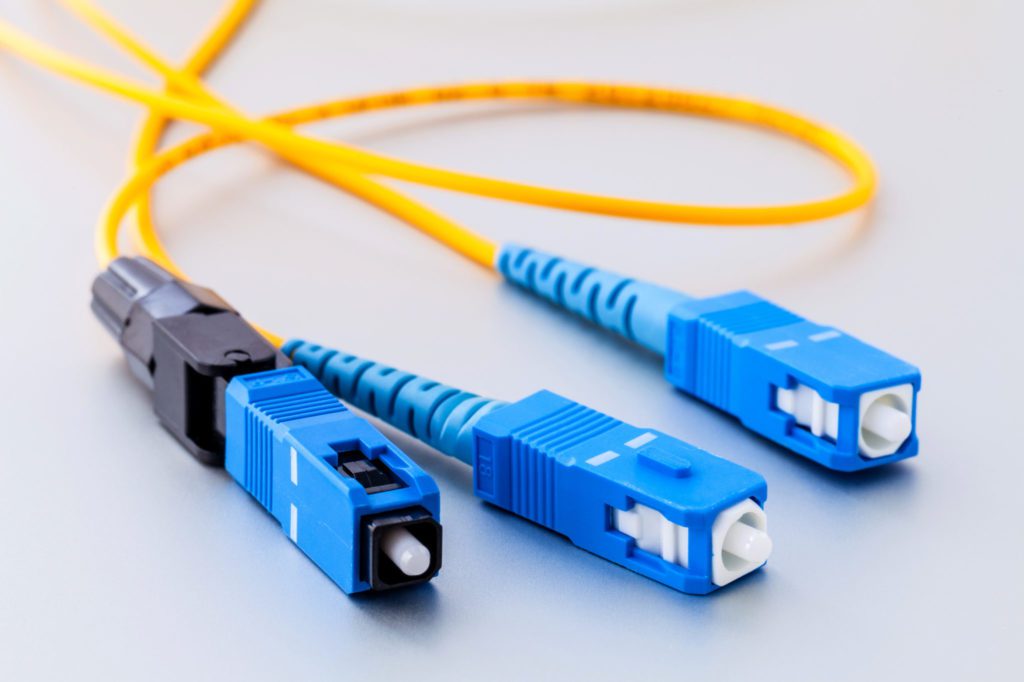
Fiber optic cable connectors are mechanical devices designed to join two optical fibers securely, aligning their cores with extreme precision to ensure maximum light signal transmission with minimal loss. Unlike traditional copper connectors that transmit electrical signals, fiber optic connectors handle light waves, requiring microscopic alignment to avoid signal degradation. Think of them as the “bridge” between fiber optic cables, enabling detachable (and reusable) connections in everything from home internet setups to large-scale data centers and long-haul telecom networks.
Every fiber optic connector shares three core components, regardless of type: the ferrule (a thin, cylindrical component—usually made of zirconia ceramic—that holds the fiber core in place), the connector body (a plastic or metal housing that secures the ferrule and provides structural support), and the coupling mechanism (the part that locks the connector into place, such as a push-pull, threaded, or bayonet lock). These components work together to ensure the fiber cores are aligned within 2 microns—critical, since fiber cores are only 8–62.5 microns wide (thinner than a human hair).
Key Performance Metrics for Fiber Optic Connectors
To evaluate the quality and suitability of a fiber optic connector, two key performance metrics stand out—insertion loss and return loss. These metrics directly impact network performance and are non-negotiable for any high-speed application:
- Insertion Loss: This is the amount of light signal lost when it passes through the connector. Measured in decibels (dB), lower values are better—ideal insertion loss for most connectors is less than 0.3dB (equivalent to losing less than 3% of the signal over 100 meters of transmission). High insertion loss can lead to slow speeds, dropped signals, and reduced network range.
- Return Loss: This measures the amount of light reflected back to the source instead of being transmitted through the connector. Measured in negative dB, higher values (more negative) are better—typical values exceed 50dB, meaning almost no signal is reflected back to interfere with the source. Poor return loss can cause signal distortion and reduce the efficiency of the entire network.
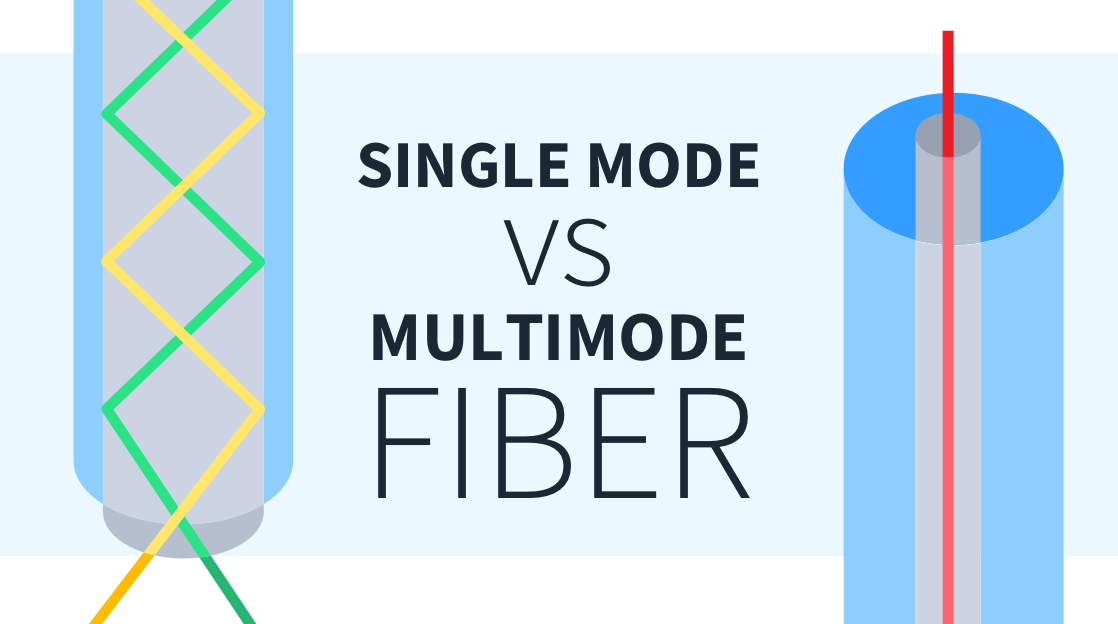
Other important factors include durability (resistance to dust, moisture, and physical damage), repeatability (consistent performance after multiple connects/disconnects), and compatibility with different fiber types (single-mode vs. multimode).
The Most Common Types of Fiber Optic Cable Connectors
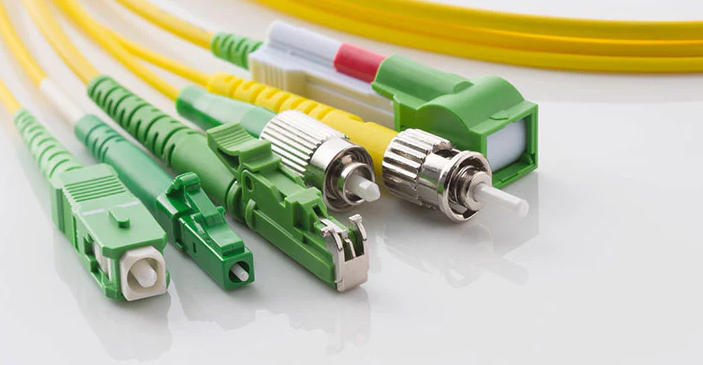
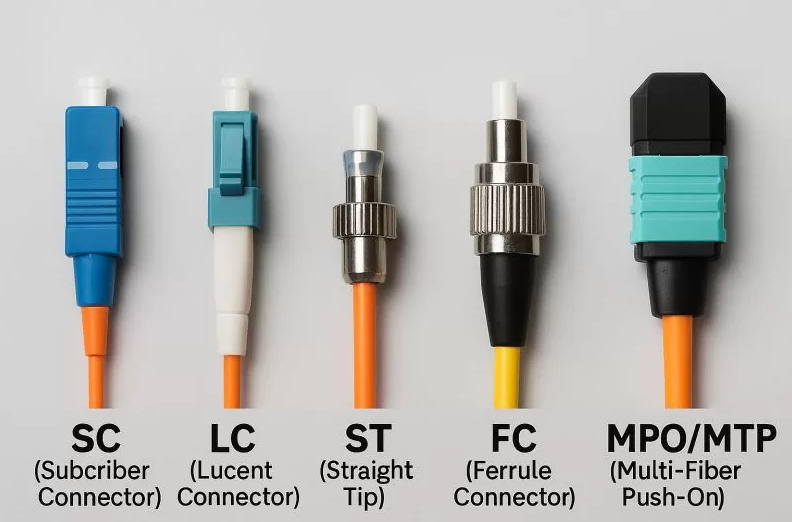
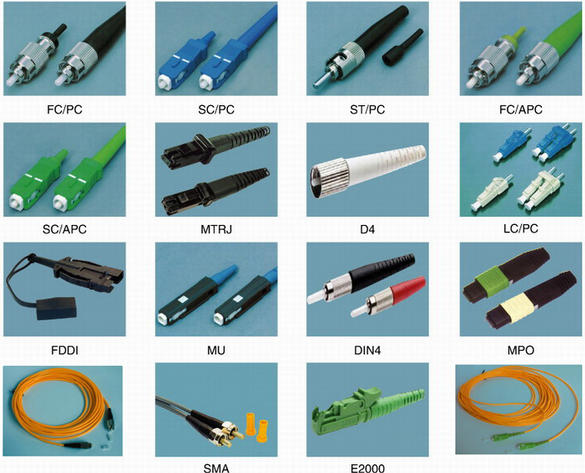
There are over 100 types of fiber optic connectors on the market, but only a handful are industry standards, used globally across various applications. Below is a breakdown of the most popular types, their features, and where they’re most commonly used—as these are the types users most frequently query:
1. LC Connector (Lucent Connector)
Developed by Lucent Technologies, the LC connector is the most widely used fiber optic connector in modern networks—especially in high-density environments. It’s a small form factor (SFF) connector with a 1.25mm ceramic ferrule, roughly half the size of older connectors like SC or FC. Key features include a modular jack (RJ-45) mechanism for easy push-pull installation, low insertion loss (as low as 0.1dB), and high density—making it ideal for tight spaces like data center racks.
Common Applications: Data centers (SFP/SFP), 5G, enterprise networks, and high-speed fiber-to-the-home (FTTH) setups. It’s the go-to choice for 10G, 40G, and 100G networks due to its compact size and reliable performance.
2. SC Connector (Square Connector)
The SC connector is a cost-effective, user-friendly option with a square plastic housing and a 2.5mm ceramic ferrule. It uses a push-pull coupling mechanism, meaning no tools are required for installation—simply plug and lock. While it’s larger than the LC connector (lower density), it’s durable, affordable, and widely compatible with both single-mode and multimode fibers.
Common Applications: Fiber-to-the-home (FTTH) installations, local area networks (LANs), fiber optic modules, and telecom networks. It’s a popular choice for residential and small business internet setups, as well as legacy network systems.
3. FC Connector (Ferrule Connector)
The FC connector is one of the oldest industry standards, known for its rugged, threaded metal housing and 2.5mm ceramic ferrule. It uses a screw-on coupling mechanism, which provides exceptional stability and resistance to vibration—making it ideal for harsh environments. However, it’s larger than LC and SC connectors, takes longer to install, and has lower density.
Common Applications: Test equipment, optical line terminals (OLTs), long-haul telecom networks, and industrial environments where vibration is a concern (e.g., oil and gas monitoring, power systems). It’s also used in (CATV) networks and legacy setups.
4. ST Connector (Straight Tip Connector)
Developed by AT&T, the ST connector is a round, bayonet-style connector with a 2.5mm ceramic ferrule and a half-twist locking mechanism. It’s easy to install, affordable, and provides reliable connectivity, but it’s less dense than LC connectors and can loosen over time if not secured properly.
Common Applications: Campus networks, enterprise LANs, fiber, and legacy multimode fiber systems. It’s often used in older buildings and military applications due to its simple design and durability.
5. MTP/MPO Connector (Multi-Fiber Push-On/Pull-Off)
The MTP/MPO connector is a high-density, multi-fiber connector that can handle 12, 24, or even 48 fibers in a single connector. It’s designed for high-speed parallel optical communication, with precision alignment that ensures minimal loss across all fibers. While it’s more expensive and complex to install than single-fiber connectors, it’s essential for data centers and networks requiring 40G, 100G, or 400G speeds.
Common Applications: Data center high-speed, 40G/100G/400G, and large-scale telecom networks. It’s also used in cloud computing facilities where space is at a premium and high bandwidth is required.
Fiber Optic Connector Endface Polishing Types
The endface of a fiber optic connector (the part that contacts the other fiber) is polished to reduce insertion and return loss. There are three main polishing types, each suited to different applications:
- PC (Physical Contact): A basic polish with a slight spherical curve, ensuring physical contact between fiber cores. Used in low-cost, low-performance applications (e.g., residential FTTH).
- UPC (Ultra Physical Contact): An upgraded polish with a smoother, more precise curve, reducing insertion loss to 0.1dB or lower. Common in data centers, enterprise networks, and high-speed applications. Identified by a blue endface.
- APC (Angled Physical Contact): Polished at an 8° angle, which redirects reflected light away from the source, improving return loss (up to 60dB+). Used in high-performance networks like CATV, long-haul telecom, and 5G infrastructure. Identified by a green endface.
Global Applications of Fiber Optic Cable Connectors
Fiber optic connectors are used worldwide, but their applications vary by region—critical for GEO optimization (targeting users in specific countries or continents). Below are key regional use cases, aligned with global search trends:
- North America & Europe: Focus on high-density data centers (LC and MTP/MPO connectors), 5G infrastructure, and enterprise networks. Demand for low-loss, high-speed connectors is driven by cloud computing and remote work adoption. Key search terms: “fiber optic connectors for data centers,” “LC connector North America.”
- Asia-Pacific (APAC): Leading in FTTH deployment (SC and LC connectors) and 5G rollouts. Countries like China, Japan, and South Korea use MTP/MPO connectors in large-scale data centers and smart city projects. Key search terms: “FTTH fiber connectors China,” “MPO connector Asia.”
- Latin America & Africa: Growing demand for telecom infrastructure (FC and ST connectors) and rural broadband expansion. Focus on durable, cost-effective connectors that can withstand harsh environmental conditions. Key search terms: “affordable fiber connectors Africa,” “FC connector Latin America.”
How to Choose the Right Fiber Optic Connector
Selecting the right fiber optic connector depends on four key factors—avoiding common mistakes that lead to poor network performance:
- Network Density: High-density environments (data centers, server racks) require small form factor connectors like LC or MTP/MPO. Low-density setups (residential, small offices) can use SC or FC connectors.
- Transmission Speed: 10G+ networks need LC or MTP/MPO connectors with UPC or APC polishing. Legacy networks (1G or lower) can use SC, FC, or ST connectors.
- Environment: Vibration-prone environments (industrial, outdoor) need FC or ST connectors with secure locking mechanisms. Indoor, stable environments (offices, data centers) can use LC or SC connectors.
- Budget: SC connectors are the most cost-effective, while MTP/MPO connectors are the most expensive. LC connectors offer a balance of performance and affordability for most applications.
Maintenance Tips for Fiber Optic Connectors
Proper maintenance extends the lifespan of fiber optic connectors and ensures consistent performance. Follow these best practices:
- Keep Connectors Clean: Dust, dirt, or oil on the endface can cause insertion loss. Use a lint-free wipe and fiber optic cleaning solution to clean connectors regularly. Avoid touching the endface with bare hands.
- Handle with Care: Ceramic ferrules are fragile—avoid dropping connectors or bending the fiber cable near the connector. Use protective caps when connectors are not in use to prevent damage.
- Test Regularly: Use an optical power meter or OTDR (Optical Time-Domain Reflectometer) to measure insertion and return loss. Replace connectors that exceed recommended loss thresholds.
- Use Compatible Components: Ensure connectors, adapters, and fiber cables are compatible (e.g., single-mode connectors with single-mode fiber). Mixing incompatible components leads to signal degradation.
Future Trends in Fiber Optic Connectors
As 5G, IoT, and AI continue to drive demand for faster, more reliable connectivity, OUFU fiber optic connectors are evolving to meet new challenges. Key trends to watch in 2026 and beyond include:
- Smaller Form Factors: Miniaturized connectors (e.g., CS, SN) are being developed for even higher density data centers, reducing space and improving efficiency.
- High-Speed Compatibility: MTP/MPO connectors are being optimized for 800G and 1.6T networks, supporting the growing demand for cloud computing and big data.
- Smart Connectors: Connectors with built-in sensors to monitor performance (e.g., temperature, loss) in real time, enabling predictive maintenance and reducing downtime.
- Specialized Environments: Ruggedized connectors for extreme conditions (high temperature, radiation, moisture) are being used in aerospace, military, and industrial applications.
Conclusion
Fiber optic cable connectors are the backbone of modern connectivity, enabling the fast, reliable transmission of data across global networks. From the compact LC connector used in data centers to the rugged FC connector for industrial environments, each type serves a unique purpose—understanding their features, performance metrics, and applications is key to building and maintaining high-performance networks.
Whether you’re upgrading your home internet, building a data center, or expanding a telecom network, choosing the right fiber optic connector will ensure your network is efficient, durable, and ready for the future of connectivity.