Coaxial cable utilizes copper wiring to transmit signals, while fiber optic cable uses strands of glass to transmit data via light. Both cables assist in transmitting internet, TV, and phone signals, but they do so differently. Coaxial cables are the ones that tend to pop up in homes for cable TV and legacy broadband, with reliable sprints over short distances. Fiber optic cables, in newer networks, transmit data far more rapidly and with less degradation over long distances. Most individuals now view fiber optic as the newer option for speedier and dependable internet. Some locations still use coaxial where they haven’t installed fiber yet. Knowing how both work can help pick the right one for home or work needs. The rest of the article goes into more details and comparisons.
Coaxial cables have been traditionally used for TV and internet services, providing dependable performance over shorter distances and legacy systems.
Fiber optic cables utilize light, delivering faster speeds, increased bandwidth, and longer distance transmission, which is perfect for today’s data demands.
Fiber optic networks are more scalable and future-proof. Coaxial cables can become bottlenecks as demand for speed increases.
Installing fiber optic cables may be more challenging and expensive initially. Reduced maintenance and enhanced performance frequently lead to savings over time.
Fiber is more secure and less prone to interference than coax, which can be important depending on the data.
While weighing your options, factor in your need for speed, your budget, how much you need the connection to be reliable, and what is available in your area.
Understanding Coaxial Cable
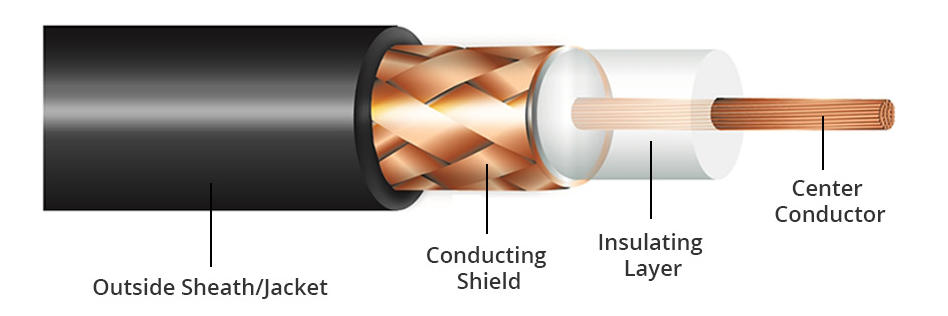
Coaxial cable is an electrical cable designed to transmit signals quickly and with little interference. Its design consists of a central conductor wire surrounded by insulation, which is then encased in a metal shield and covered with an outer plastic jacket. This configuration maintains the integrity of the signal as it travels. We see coaxial cable behind our TVs or running to our internet modem. They’re chosen for cable TV, high-speed internet, and even the occasional CCTV system. They operate by transmitting data as electrical signals over copper conductors at speeds ranging from 10 Mbps to well over 100 Mbps and are capable of transmitting up to 500 meters without significant attenuation.
Key benefits of coaxial cable shielding:
Blocks out interference from other devices
Cuts down on signal loss over longer runs
Keeps data private by stopping signal leaks
Makes the cable last longer and safe to use
Its Structure
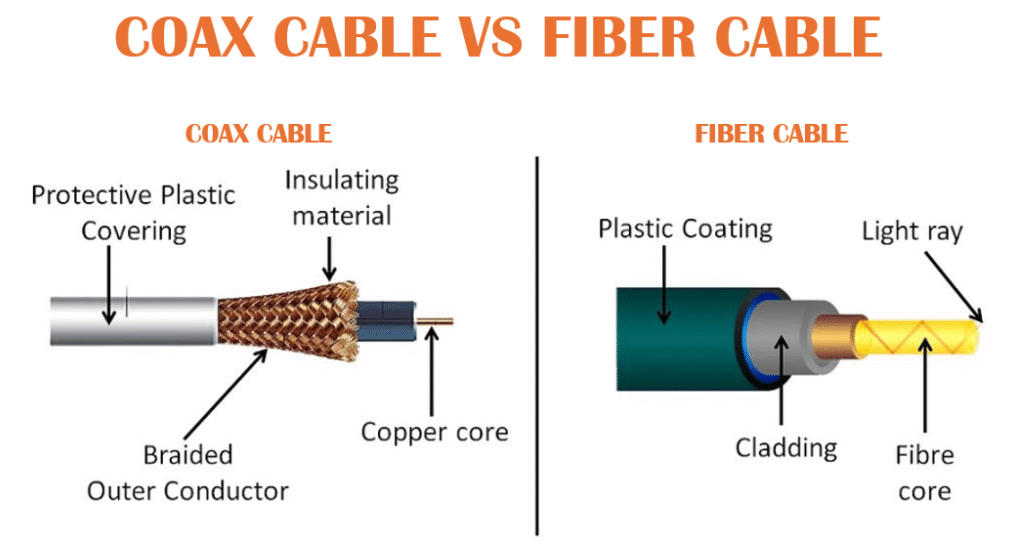
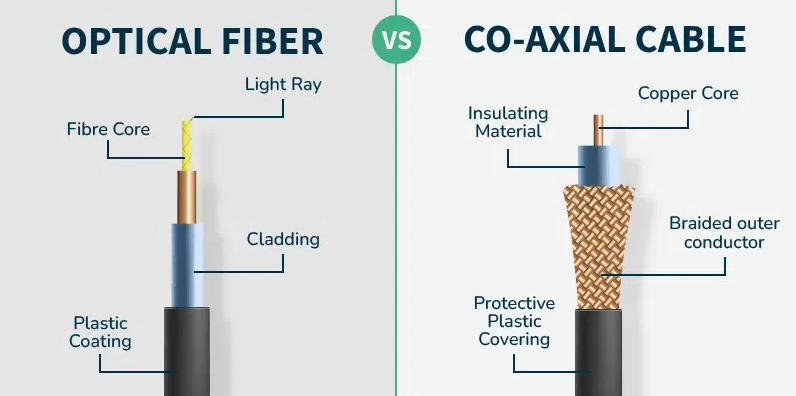
Coaxial cables have four primary layers that work together to ensure effective signal transmission. The center piece is a copper conductor, which is essential for transmitting the signal. Surrounding this center conductor is a layer of plastic, known as a dielectric, which contains the signal and prevents it from leaking out. Then you have a braided or foil shield of metal that protects the cable from external noise. The final layer is a plastic jacket that safeguards everything from the elements and abrasion, making it crucial for maintaining cable internet connections.
The core of coaxial cables is made of copper because it is an excellent conductor. The plastic insulator keeps the core centered while providing additional protection. Each coaxial cable type, such as RG59 and RG6, employs these components but can differ in thickness and shielding density. The cable’s diameter and its impedance, typically 75 ohms for TV and 50 ohms for data, influence its effectiveness and application. Thicker cables and tighter shields are designed for longer runs or higher quality signals, which is vital for achieving optimal internet speeds.
Its Function
Coaxial cable carries radio frequency signals for numerous applications, including cable internet and television. They’re behind cable TV, delivering reliable picture and sound to millions. For internet connections, these cables link homes and offices to internet providers, hooking up modems and routers for convenient access. A coaxial cable could carry a large bandwidth, some 750 MHz, much more than twisted pair cables. This extra bandwidth allows more data to move simultaneously, enabling faster internet speeds. However, the longer the cable, the more the signal can attenuate, which is why cable providers establish caps, typically up to 500 meters for secure connections.
In contrast, fiber optic cables operate by transforming electrical information into light waves, which can achieve remarkable fiber speeds. These light beams propagate at high speed through the cable’s core, reflecting off the cladding and reaching speeds as high as 800 Gbps. Since the light doesn’t degrade or get interfered with by external signals as much, fiber internet is great for long-distance connections. This also means that fewer signal boosters are required, significantly reducing costs for large networks. Fast internet, huge data centers, and sleek new technology all depend on these optical fiber cables. They underpin 10 Gigabit links, typically in locations where rapid, secure data flow is crucial, such as inter-server communications within a data center or broadcasting across undersea cables.
Understanding Fiber Optic Cable
Fiber optic cable, or optical fiber cable, consists of extremely thin strands of glass or plastic that transmit information in pulses of light. Each cable can hold multiple fibers within. These cables are special for transferring information at light speeds and across great distances, making them superior to traditional coaxial cable speed. This unique capability allows fiber internet providers to deliver data more efficiently than older types like coaxial cable.
Its Structure
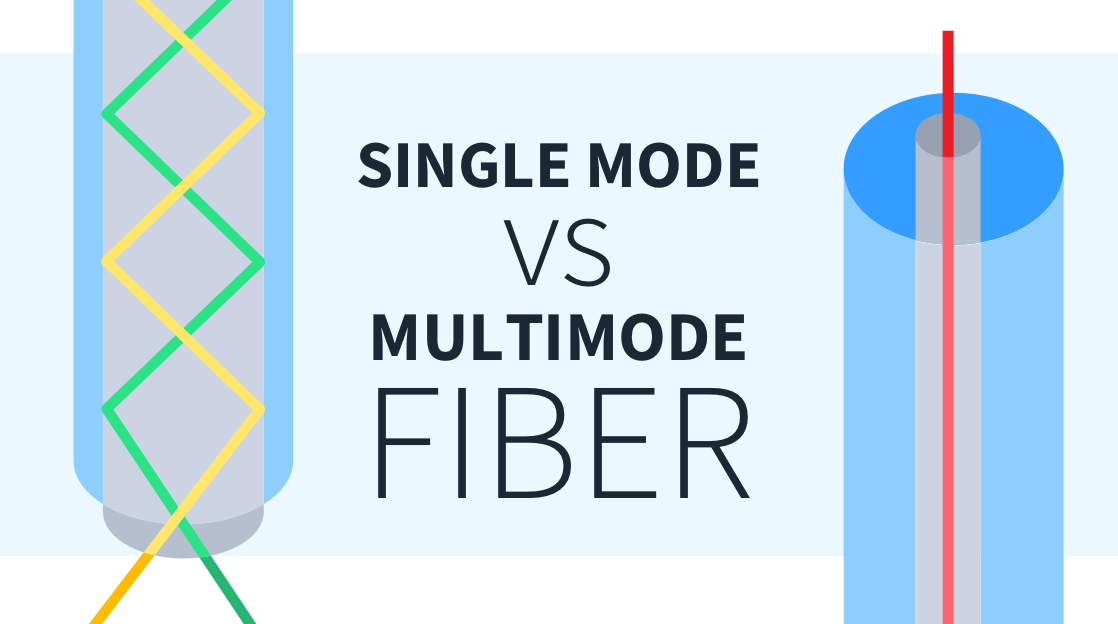
There are three primary components to a fiber optic cable. The core is the center, typically composed of glass, where light propagates. Encircling the core is the cladding, possessing a distinct refractive index that prevents light escape, propelling it through the core via total internal reflection. The outside is just a protective coat for the cable against water, heat or physical damage. Single-mode fiber employs a very thin core, approximately 8 to 10 microns in width. This allows a single light mode to propagate directly down the fiber, reducing loss and enabling signals to travel up to 100 km with minimal degradation. Multi-mode fiber has a broader core, so multiple light trajectories can propagate simultaneously, but this can weaken the signal over longer distances. Multi-mode cables are great for short runs such as in data centers. How the cable refracts light depends on the refractive index, which describes the ability of the cladding to bend light back to remain contained in the core. Fiber optics are lighter, thinner and impervious to electromagnetic noise than coaxial cables.
Its Function
An optical transceiver at each end converts light back into the electronic bits computers read. Leading makers like Oufu, based in China, build custom fiber optic cables for many needs, from short jumps under 10 meters to long-haul runs up to 100 kilometers. The demand for high bandwidth and reliable connections continues to grow, making fiber internet providers increasingly essential in today’s digital landscape.
Coaxial Cable vs Fiber Optic Cable
Coaxial and fiber optic cable networks determine the way we connect to the internet, operating very differently. Understanding the practical distinctions between cable internet and fiber internet allows consumers and companies to choose what suits them most. Below, a side-by-side table provides a snapshot of how these compare for speed, reliability, and cost.
Feature | Coaxial Cable | Fiber Optic Cable |
|---|---|---|
Speed | 10–100 Mbps | Up to 10 Gbps or more |
Reliability | Moderate, EMI-susceptible | High, EMI-resistant |
Cost | Lower upfront, higher upkeep | Higher upfront, lower upkeep |
1. Performance
Fiber optic cables have raised the standard for internet service, transporting data at blistering speeds of 10 Gbps and beyond, thanks to light pulses. In contrast, coaxial cable internet, still prevalent for many, typically maxes out around 100 Mbps, though a few high-end configurations can go slightly higher. The divide is wide, particularly when you consider what is achievable for streaming, gaming, or professional requirements.
Bandwidth is a key difference between fiber internet and coaxial connections. Fiber can carry massive bandwidth at once, hundreds of GHz, allowing more users to share the same line without bogging it down. While coaxial is a significant upgrade from twisted pair cables, it still can’t match fiber’s flexibility and performance.
When many users go online simultaneously, coaxial networks often experience congestion, leading to slower speeds. Fiber internet providers can manage this issue more effectively, maintaining consistent speeds for a larger number of users.
Distance is important. Fiber can send a signal in clean for up to 100 kilometers. Coaxial drops after a few hundred meters and requires boosters for longer runs.
2. Reliability
Coaxial cables may experience signal loss and are susceptible to interference from close proximity electronics. This can result in speed or connection drops, particularly in congested locations.
Fiber cables don’t have this issue. They’re immune to electromagnetic interference, so the signal remains robust, even across distance.
Weather, temperature, and even rodents can impact both cables. Fiber is less susceptible to issues from these.
For business, where seconds matter, the consistent reliability of fiber can be a smart decision.
3. Security
Fiber optic cables utilize light, which makes it difficult to tap or intercept data. That translates to high security for private data.
Coax is easier to tap and can pick up outside noise, which is a risk for sensitive data.
Whether you’re at home or on the job, secure cables keep your personal and business information protected.
Cable security builds trust for a family’s video calls or a bank’s records.
4. Cost
Coaxial is inexpensive to deploy. That’s a major factor in its continued popularity. Eventually, it requires more repairs and enhancements.
Fiber is more expensive on the front end. Labor, specialized tools, and expensive materials all add up. It breaks less and requires fewer repairs, thus saving you money over the long term.
Better performance translates to less lag and less lag means fewer interruptions and downtime, which saves time and money.
Internet prices vary by provider, and fiber plans can be more expensive per month. The advantages typically compensate for that.
5. Scalability
Fiber grows along with you. As data demands increase, fiber can accommodate more users or quicker speeds with less fuss.
Coaxial struggles when we all want more data. Upgrades are more difficult and can’t keep up with fiber.
Upgrading to faster speeds or installing new lines is easier with fiber. It is made for change.
For businesses, fiber means they won’t outgrow their network as they grow.
Practical Applications
Coaxial and fiber optic cable networks have clearly defined roles in connecting homes, businesses, and cities, with fiber internet providers often offering higher bandwidth options. It usually just comes down to what is fastest, what is farthest, and what is already there.
Coaxial Scenarios
Most homes still run on coaxial cables for your cable TV or broadband internet. Most configurations operate one coax line from the wall to a modem and then to a router. It’s easy, dependable, and excellent for streaming, surfing, and video calls. Coax in these cases supports downloads of up to 1 Gbps but has slower uploads, which can hinder swarthy content creators or massive file sharing.
Satellite dishes and antennas use coax because it can transmit signals further than twisted pair cables with less loss. You’ll frequently observe coaxial cables strung all the way from rooftop antennas to televisions or receivers within the household. For example, in commercial buildings, coax cables connect video cameras to monitoring stations. Their ruggedness and shielding allow them to combat interference in hectic corporate settings.
Niche uses for coaxial cables include:
Security systems in old buildings
Amateur radio setups
Older elevators’ emergency phones
Point-of-sale video feeds in retail
Legacy systems and older infrastructures still opt for coax because retrofitting with fiber is expensive and disruptive. It’s simpler to support in locations where the existing wiring is hard-wired in walls or ceilings.
Fiber Optic Scenarios
Fiber optic cables are now the backbone of superfast networks, running at speeds of over 100 Gbps. Businesses use fiber for enterprise-level internet, powering hundreds of users or heavy cloud workloads. Cities are utilizing fiber networks to enhance connectivity and create the digital backbone for smart cities.
High-speed internet for universities and schools
Connecting metro rail systems for real-time monitoring
Data centers connect thousands of servers with short fiber runs of less than 10 meters.
Hospitals using fiber for instant imaging data transfers
Industrial sites automating systems with low-latency fiber links
Fiber can transmit data over 100 kilometers without lag. This backs cloud services, streaming, and online gaming, where bandwidth and low latency are key. Medical and industrial fields rely on fiber for crucial information, from robotic surgery streams to factory management.
The Unseen Comparison
The hidden tradeoff between coaxial cable internet and a fiber optic cable network isn’t merely about selecting a faster solution; the contrasts extend deeper, encompassing installation, maintenance, environmental impact, and long-term viability of internet providers.
Installation Realities
Coaxial cable is notable for its easy installation, making it a popular choice among cable internet providers. You’ll require basic tools — cutters, strippers, and compression tools. Hardwired, the cable is pliable and can be tugged through most spaces without much difficulty. It’s frequently routed along walls or ceilings, and splices utilize regular connectors. Labor rates remain low, typically charged by the meter, as artisan efforts aren’t necessarily needed. Home installs can be completed in hours, while large buildings may take a day or two.
In contrast, a fiber optic cable network requires an artisan’s touch and specialized tools. The core, no thicker than a human hair, requires cautious treatment to prevent fractures. Splicing optical fibers requires fusion splicers or precision cleavers. To make it even more complicated, the cable is buried to a meter-plus depth. Commercial gigs can extend for weeks, pushing up labor costs. The cable itself costs one to three dollars per meter versus fifty cents for coaxial. Still, the end result is a fiber connection capable of up to 96 Tbps, a future-proof asset.
Maintenance Demands
Coaxial systems require periodic inspections. Over long distances, signal loss accumulates, roughly 0.5 dB per 100 meters at 1 GHz. You’ll need to check connectors, replace sections, and occasionally amplify signals with amplifiers every 500 meters. Outages pop up from wear or weather.
Fiber requires far less maintenance. The glass core is corrosion resistant, and the signal doesn’t weaken as fast. Tampering is easy to detect, due to clear indication that the signal is lost. Both require periodic examinations to detect harm before it’s too late, particularly after a storm or construction.
Environmental Footprint
Feature | Coaxial Cable | Fiber Optic Cable |
|---|---|---|
Core Material | Copper/Aluminum | Silica Glass/Plastic |
Energy Use | Higher (signal boosting) | Lower (no amplifiers) |
Lifespan | 15–20 years | 30+ years |
Recyclability | Moderate | High |
Fiber triumphs on sustainability, particularly when considering the fiber optic cable network’s efficiency. It takes less power to transmit information, and underground optical fiber cables endure better than traditional copper cables. The materials used—glass and plastic—are simpler to recycle than metals in coaxial cable, making fiber internet a smart pick for greener networks everywhere.
Which Cable Is For You?
Ultimately, choosing between coaxial cable and a fiber optic cable network comes down to aligning your needs with what each has to offer. The key is to see what you do online. For someone who primarily surfs web pages, watches video, or listens to email, coaxial cable may check all the boxes. Its download speeds are lightning fast for most homes, and its upload speeds, while slower than fiber, are more than ample for video calls or sharing files. A lot of people choose cable internet because it frequently has a lower initial price. Watch the small print. Don’t forget, most cable internet deals look cheap initially, but prices can skyrocket after the initial year or two.
If you work from home, upload tons of large files, or have a house bursting at the seams with streamers and gamers, fiber internet may be a better bet. Fiber can support much higher speeds both ways and is less likely to bottleneck when everyone is online in the evening. A few fiber internet providers offer plans for $20 or $30 a month, but the majority are going to be closer to $40 or $55. The speed and reliability boost may be worth it if you require more bandwidth or intend to continue to litter your home with new gadgets.
It’s critical to see what’s offered in your area. Where you live, you may only have one or two options. Cable is everywhere; fiber is still new in tons of places with service switching from neighborhood to neighborhood. This can mean your choices and rates will vary a great deal based on your location. Local cable provider coverage will influence both your cost and your speed.
Looking forward, fiber is designed to accommodate greater data demands. With the world moving towards better video, larger downloads and increased smart devices, fiber can keep pace and improve over time. Cable will begin to lag as the needs increase.
Conclusion
To choose between coaxial and fiber optic, consider speed, expense, and your requirements. Fiber delivers rapid speeds and crystal-clear signals. It is great for locations that require high bandwidth such as offices or large homes. Coaxial still performs well for many homes, with convenient setup and lower cost. Both have their merits. Fiber may be new, but coaxial remains popular for a reason. A small shop might stay with coax, while a large outfit could opt for fiber to keep up with the demand. Each type suits a different need. Need to install a new network or patch up an old one? Consider what is important to you, then make the decision that suits your space and lifestyle.
Frequently Asked Questions
What is the main difference between coaxial and fiber optic cables?
Coaxial cables utilize copper to send electrical signals, while fiber optic cable networks use strands of glass or plastic to communicate data through light signals, offering fiber speeds that are faster and have more bandwidth.
Which cable is better for high-speed internet?
Fiber optic cable networks surpass coaxial cable internet for high-speed internet, providing faster data transfer and higher reliability with less signal loss.
Are fiber optic cables more expensive than coaxial cables?
Yes, fiber optic cable networks are generally more expensive to purchase and install, but they offer better performance and future-proofing for most internet providers.
Can I use coaxial cable for long distances?
Coaxial cable internet can transmit data over moderate distances, but fiber internet is far superior for long-distance data transmission due to its high bandwidth capabilities.
Is fiber optic cable safer than coaxial cable?
Fiber optic cables, known for their high bandwidth capabilities, are immune to electromagnetic interference, making them safer for data privacy and less susceptible to signal loss than coaxial cable internet.
Can I upgrade my existing coaxial network to fiber optics?
Sure, you can upgrade from coaxial cable internet to a fiber optic cable network. This typically involves new cable installation and equipment, delivering superior internet speeds.
Which cable is easier to install at home?
Coaxial cable internet is easier and less expensive to install in most homes, while a fiber optic cable network may require special equipment and expert installation.