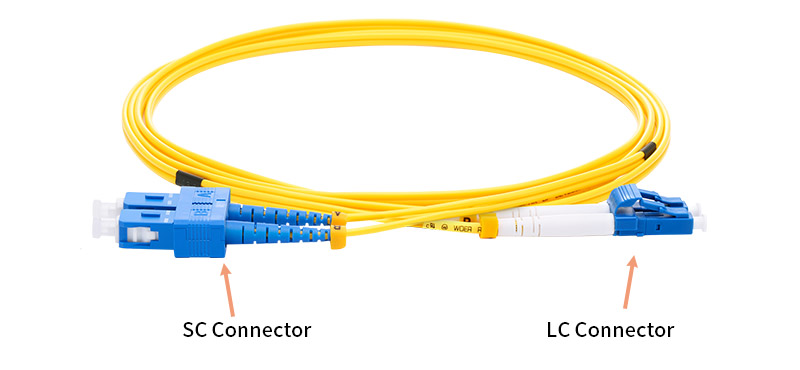
Differences between SC and LC connectors stem from their dimensions, design, and fiber optic cable connection mechanism. SC connectors are push-pull and square, so they’re very easy to plug and unplug. LC connectors are compact and have latches and slim profiles, so they work well in cramped quarters and dense panels. SC connectors tend to appear in legacy installations or environments where space is not a major concern. LC connectors now dominate newer data centers and telecom networks because they’re space-saving. Understanding how each connector functions is useful when selecting the appropriate one for work. The following section provides these assertions with easy-to-understand examples and straightforward explanations.
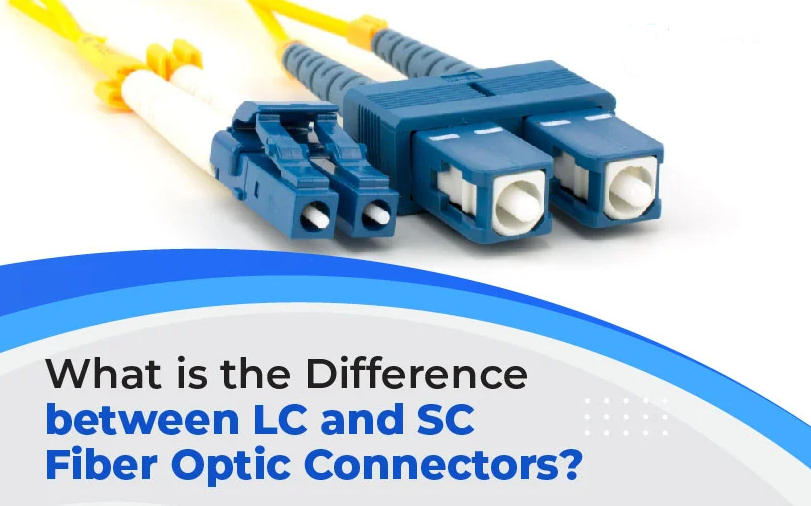
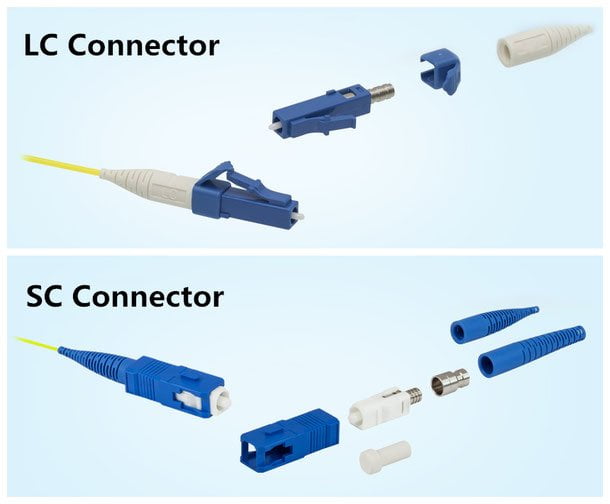
SC connectors are larger in size with a push-pull coupling mechanism, while LC connectors are smaller in size with a latch mechanism. This allows them to be used in denser network environments.
With an even smaller ferrule diameter than SC connectors, the LC connector enables higher port density and better cable management for today’s space constrained data centers.
Insertion loss and return loss are the best indicators of connector quality. LC connectors typically yield slightly better results than SC for high-speed data applications.
Consider SC vs. LC connectors based on your infrastructure, budget and durability requirements.
Installation and ongoing maintenance are less painful when connectors have easy-to-use form factors and exposed ends that can be cleaned, keeping networks humming.
By keeping current on new fiber optic connector trends, you ensure your network solutions stay efficient, scalable and prepared for the future.
Key Differences Between SC and LC Connectors
SC and LC connectors are both crucial in fiber optic networks, yet where they differ can define how well a network suits a space’s needs. Understanding these distinctions aids in smarter decisions regarding cable management, installation, and overall network efficiency.
SC connectors are larger with a ferrule diameter of about 2.5mm, while LC connectors have a diameter of only 1.25mm.
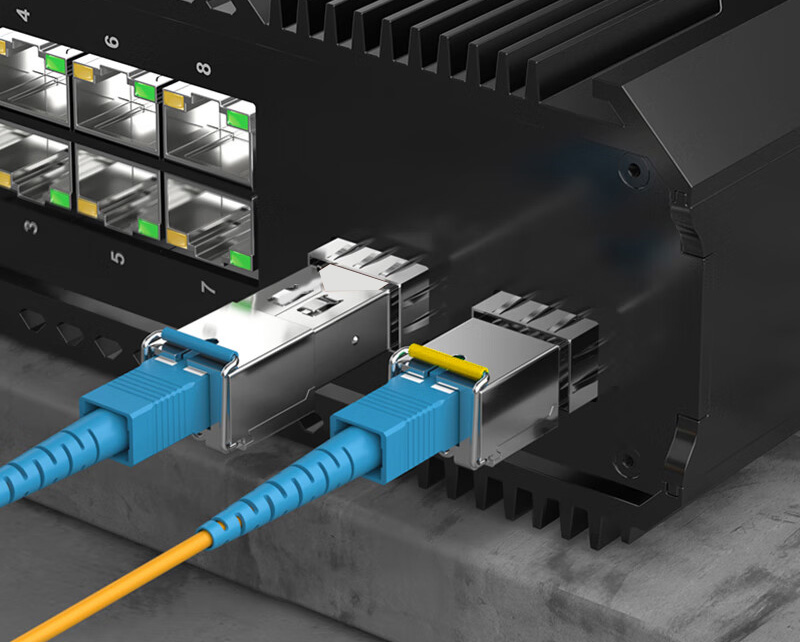
SC connectors have a push-pull locking mechanism, so they can be installed and removed very quickly. LC connectors have a latch mechanism, which grips more firmly in installations susceptible to shifting.
SC connectors are bulkier because of their square housing. LC connectors feature a rectangular compact design which saves space.
SC connectors are good for around 1000 mating cycles. LC connectors get up to 500 cycles.
Both provide comparable insertion loss, usually in the range of 0.25 to 0.5 dB.
SC suits general networks and LC excels in dense data centers.
SC connectors often cost less than LC connectors.
SC and LC each follow their respective IEC specs. The spec for SC is 61754-20 and the spec for LC is 61754-4.
1. Physical Size
SC connectors occupy more space, which makes it difficult to fit a high number of connectors on a panel. For big jobs where space is at a premium, LC connectors are your friend. Their smaller size, half that of SC, allows you to pack in twice as many in the same space. This size advantage makes LC a favorite for data centers, where every inch counts. Smaller connectors translate into easier cable routing and less mess behind racks!
2. Locking Mechanism
SC’s push-pull mechanism is simple and user-friendly, perfect for rapid swaps or troubleshooting. In locations where cables may get bumped, LC’s latch provides a superior hold. That latch keeps connections secure even if someone accidentally pulls on a cable. SC connectors unplug quicker, saving time in repairs.
3. Ferrule Diameter
It’s the ferrule that holds the fiber. SC’s 2.5mm ferrule is durable, while LC’s 1.25mm ferrule allows manufacturers to create smaller connectors. Both maintain low insertion loss, and LC’s slim ferrule is better for cramped quarters. Compatibility matters too: some legacy gear only fits SC, so watch for that.
4. Connector Housing
SC connectors feature a square, rugged shell. This makes them durable and bulky. LC connectors utilize a rectangular, slimmed-down housing to make more fibers fit into a patch panel. In a hot server room, more compact connectors can assist airflow and cooling. Both parties use plastic, occasionally with a metal overlay for additional robustness.
5. Typical Density
LC connectors allow you to double your port count in the same rack space. SC connectors restrict density, potentially hampering network expansion if you need to scale. Greater density reduces install time and simplifies new line additions. For large networks, higher density equates to lower costs and quicker upgrades. If you need help picking the right connector for your setup, reach out to oufu, a trusted global fiber optic cable maker.
How Performance Metrics Compare
Connector performance defines the backbone of ultra high-speed data flow in fiber optic networks. Two performance metrics, insertion loss and return loss, establish the standard for SC and LC connector functionality. These figures inform us of how much signal we retain or lose and assist us in selecting the appropriate components for each network requirement. Below is a quick view comparing SC and LC connectors:
Metric | SC Connector | LC Connector |
|---|---|---|
Insertion Loss | <0.3 dB | <0.2 dB |
| Return Loss | >50 dB (single-mode) | >55 dB (single-mode) | | Ferrule Size | 2.5 mm | 1.25 mm |
| Mating cycles | 1000 | 500 | | Price | Less | More |
Insertion Loss
Insertion loss indicates the amount of signal lost when light passes through the connector. The lower the insertion loss, the better the connection. LC connectors, featuring a petite 1.25mm ferrule, boast a minimal insertion loss that is typically under 0.2dB. SC connectors, with a 2.5mm ferrule, tend to have an insertion loss just under 0.3dB. That little difference adds up in ultra-high-speed links like 40G+, where any loss, however small, can bog things down or reduce your network’s distance.
If you’re running long lines or stacking lots of connections, even minuscule losses accumulate. Maintaining low insertion loss translates to fewer dropped packets and cleaner signals. Careful cleaning and proper alignment at install can reduce loss even more, ensuring you wring every last drop of speed from your network.
Return Loss
Return loss indicates the amount of signal that bounces back at the connector and can interfere with data transmission. The higher the return loss, the less signal returns, which is good. LC connectors tend to outperform SC here, hitting over 55dB, with SC at around 50dB (both single-mode). That 5dB advantage lets LC connectors excel in the cramped, high-speed environments found in data centers.
Return loss is most critical when you require high, consistent speeds. If too much signal reflects, you risk errors and slower speeds, particularly in difficult areas with numerous connectors. For networks driving speeds from gigabit to terabit, the LC’s return loss advantage matters.
Real-World Impact
Insertion and return loss put you on a path for network uptime and speed. LC connectors, with their smaller form factor and less loss, suit dense racks and scale better as needs expand. They reduce total cost of ownership by as much as 30 percent over five years in active data centers, even if their initial cost is higher. SC’s rugged construction and easy push-pull coupling score points for field work and locations where convenient handling beats density.
Selecting between LC and SC is a matter of loss metrics, network size, cost, and long-term aspirations. In one global bank’s data center, switching to LC connectors helped increase speeds and minimize downtime, demonstrating that choosing the right connector delivers real-world benefits.
Which Connector Is Right for You?
When deciding between SC and LC connectors, it comes down to your requirements, your existing infrastructure, and the space available. Both connectors work best in different locations. Understanding your needs makes the choice clear.
High-Density Needs
LC connectors are great when you need to space a bunch of cables in a tight area like a data center or server room.
Assuming you want to plan for future growth, you will want to select connectors with high port density.
Keep cable management simple for easier changes or fixes.
Ensure connectors are compatible with gear, for example, SFP or SFP+ transceivers.
LC connectors are optimal in high density areas. They’re smaller, meaning you can fit more ports in the same space. This is huge in data centers where every millimeter and ounce of weight matters. The catch is that smaller connectors may be more difficult to plug or unplug in crowded racks. For those looking to conserve space and prepare for even more expansion, LC connectors are the way to go.
Legacy Systems
SC connectors still count in legacy environments. A lot of telecom and cable TV systems use them, and they work great in locations where you’re not space-constrained. It’s not simple to migrate to LC connectors in these systems. Adapters come to the rescue, but mis-matching connectors risks performance degradation or even more downtime. Upgrading signifies new hardware and occasionally rewiring, which contributes to expense. If you want to hold on to old gear, SC is your connector for the time being.
Budget Constraints
Cost is always in the equation. SC connectors can be less expensive up front, particularly for elementary installs. LC connectors may be expensive at first, but they save money over time by placing more lines into less space. That can reduce the need for racks and panels and future upgrades. If every dollar matters, consider the near-term cost of SC versus the longer-term savings of LC.
Durability Demands
Outdoor sites, industrial plants and other rough environments demand more rugged connectors. SC connectors have a bigger shell and can be locked in place or sealed against dust. LC connectors, although more compact, may be less robust in rough spots. Choosing the correct one reduces repair and keeps networks live. Align the connector to where it will be used and how.
The Hidden Costs of Your Choice
About: The Secret Costs of Your Selection Outwardly, SC connectors may appear to be more expensive than LC. The true cost lies in the long term. Although LC connectors were a reduced size — half that of SC — they opened up the possibilities for dense network arrangements. For locations such as data centers, this size edge translates into being able to fit more connections into the same rack, thereby saving space and typically money on real estate. Having more ports in one location equates to less necessity for accessory equipment, cables, or cabinets.
Maintenance is another one that gets missed. LC connectors provide space for roughly 1000 mating cycles, which is twice as many as the 500 cycles offered by SC connectors. That translates into less time for replacements, less disruption, and less labor. Over a number of years, that variance adds up, particularly in frantic circuit networks where connectors get unplugged and replugged constantly. Consider a server room where techs are constantly swapping cables. LC’s extended lifespan might just save you a lot of inconvenience.
Installation and daily use come with hidden costs. LC connectors utilize a pull-push mechanism, making them easier and faster to work with in tight spaces. SC connectors use a latch lock, which can be tricky in crowded panels. If a network team wastes less time playing with connectors, that’s a labor saving and reduced risk of accidental damage.
Performance impacts your bottom line as well. LC and SC have comparable insertion loss, which is approximately 0.25 to 0.5 dB. However, LC occasionally beats SC in lower typical loss. That can help keep data flowing with fewer errors, leading to less troubleshooting and better reliability. It is a minor point, but it can be salient in large, hectic networks.
What you choose today determines your network’s destiny. LC’s tiny ferrule (1.25mm) suits newer, high-density equipment. SC’s bigger ferrule (2.5mm) is more typical for older, all-purpose configurations. Planning for LC connectors can keep your network more upgrade-ready and save you expensive revamps down the road.
Installation and Maintenance Realities
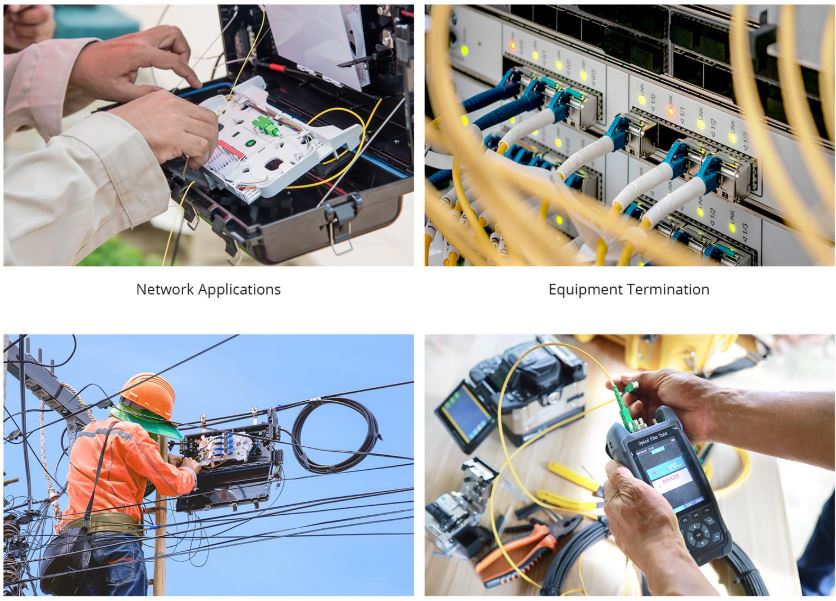
Installers and network managers encounter a real-world maze when selecting SC versus LC connectors. The risks are high not just at installation but throughout the network’s life. SC connectors, with their bigger size and push-pull design, hold up well to rough, dusty, or gloved environments. LC connectors, preferred for their small size, are popular in high-density data centers and office environments. LC’s miniature latch can snap more readily, particularly during frenzied field work. Both are rated for 500 to 1000 mating cycles, but their shape and latch systems can tip the scale in particular environments. It’s not just training; whether it’s one or the other, technicians have to treat them both like sensitive cargo or risk expensive errors or downtime. From a maintenance standpoint, teams discover that hybrid networks mixing SC and LC are now the standard, with pervasive use of SC/APC for outdoor fiber and LC for indoor, high-density racks.
Ease of Use
Checklist for Connector Selection: * Evaluate panel density requirements (LC for high-density, SC for legacy).
Consult about installation and maintenance realities – do technicians wear gloves or work outside in the cold frequently.
Check latch mechanisms durability for field use.
Verify patch cord compatibility (hybrid SC-LC if required).
Think about training time for employees.
Ensure connector compatibility with existing hardware.
LC’s flexible latch mechanism allows for convenient release in tight spaces. It’s not as durable as SC’s push-pull tab. In big installations, the convenience of plugging and unplugging can make or break timelines.
Easy latch mechanisms reduce training and mistakes. Installation and maintenance realities intuitive interfaces, such as color-coded boots or clicks you can feel, help rookie techs prevent errors.
Cleaning Access
SC connectors feature a larger ferrule, so end-face cleaning is easier, which is a benefit in dusty or industrial environments. LC’s slender frame requires smaller cleaning instruments, which can be fiddly on location. Cleanliness matters: dirt or oil on connectors leads to signal loss and higher return loss numbers, hurting network speed and uptime. Installation and maintenance realities: best practice is regular use of one-click cleaners and inspection scopes, regardless of connector. In these mixed environments, cleaning tools need to accommodate both 2.5mm (SC) and 1.25mm (LC) ferrules.
Field Termination
Field termination of SC connectors is more forgiving. Bigger parts, easier handling, and less risk of latch damage are advantages. LC connectors require surgeon-like skill and specialized tools. Even experienced field techs can have problems with the small ferrule and latch. LC terminations require special kits and cleavers, which further increases the time and cost of a project. Project deadlines can slip if connectors fail or latches snap, particularly in outdoor or ad-hoc setups. Dependable termination is the foundation of network uptime, so the proper equipment and instruction make all the difference.
The Future of Fiber Connectivity
Fiber is evolving rapidly as the world demands new speeds and new forms of connectivity. Currently, high-speed internet demand is huge and it will continue to grow as more devices become connected online. To keep pace, connector designs have to change, too. Smaller, smarter and easier-to-manage connectors take center stage. In many new installations, LC connectors are leading because their compact size allows more ports in less space. This is crucial in data centers where every centimeter counts. Meanwhile, SC connectors remain quite popular, particularly for legacy installations, video equipment and networks that never transitioned.
Hybrid LC-SC patch panels are becoming more common. These allow network teams to deploy a mix of new and legacy connectors at one location. They can do upgrades incrementally rather than ripping it all out. Duplex connectors, with two plugs side-by-side, remain prevalent for hooking up a bunch of devices easily. The evolution of MPO connectors is another change. MPOs simplify the management of multiple fibers simultaneously, which reduces clutter and accelerates operations in large-scale networks.
Trend/Technology | Impact on Connector Design |
|---|---|
High-density connectors (LC, MPO) | More ports in less space, easy upgrades |
Hybrid patch panels | Backward compatibility, smooth transitions |
Modular systems | Flexible layouts, easier changes |
Improved fiber management | Less clutter, lower costs |
5G readiness | Need for low-latency, faster speeds |
Fiber will be the backbone for 5G, which requires speedy, dependable connections to support streaming, gaming, and smart cities. The modular push means you can swap parts and expand your network without a complete replacement. Staying current on these trends matters. Tech-savvy network planners will be prepared for what’s next, saving money and staying ahead.
Conclusion
If you’re trying to decide between SC and LC connectors, check out what your network requires. SC connectors are well suited for straightforward installations and have lower initial costs. LC connectors perform best in cramped areas and high-density racks. Both have advantages that influence how your system operates, from performance to maintenance. For instance, in a packed data center environment, LC frequently reduces space and simplifies cable mess. In a small office, SC just keeps it clean and easy to exchange. Consider your space, budget, and future plans. Request a real-world demo or consult peers who operate networks similar to yours. Be inquisitive and continue to experiment to discover what suits your labor.
Frequently Asked Questions
What is the main difference between SC and LC connectors?
SC connectors are bigger and use a push-pull mechanism. LC connectors are more compact and latch into place. LC connectors are ‘space savers,’ which makes them great for high-density networks.
Which connector type is better for high-density installations?
LC connectors rock for high-density installations. They are smaller, so they can fit more connections in the same panel space which is optimal in data centers and telecom rooms.
Do SC and LC connectors have different performance levels?
Both SC and LC connectors can provide comparable optical performance. Performance is about quality and installation, not just connector type. So always check manufacturer specs.
Are SC connectors more durable than LC connectors?
SC connectors are more robust primarily because they are larger. LC connectors are still dependable if treated cautiously. Select according to your network’s management and maintenance requirements.
Can I mix SC and LC connectors in the same system?
Yes, you’ll need adapters or hybrid cables to connect them. Directly mixing them without the appropriate components can lead to attenuation or damage.
Which connector is more cost-effective in the long run?
LC connectors can save money in high-density environments because you can fit more on a panel. The initial cost difference is small. Think beyond short term – maintainability and scalability.
Are SC or LC connectors easier to install and maintain?
SC connectors are larger and thus easier to handle, which makes installation a breeze. LC connectors need a bit more care when you install them, but these days specialized tools assist with either type.