In the rapidly evolving landscape of global telecommunications, the demand for high-speed, reliable connectivity has never been higher. As 5G networks expand and rural broadband initiatives gain momentum, network engineers and project managers face a critical decision: underground or aerial deployment? While buried cables offer aesthetic appeal, the aerial fiber optic cable remains the workhorse of long-distance transmission and rapid network rollouts. This comprehensive guide explores everything you need to know about overhead fiber solutions.
1. What is an Aerial Fiber Optic Cable?
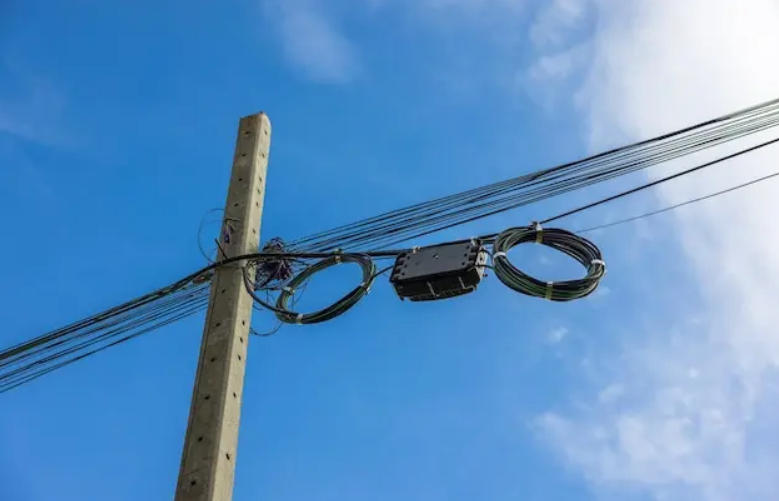
An aerial fiber optic cable is a specialized type of communication cable designed specifically for installation above ground. Unlike standard indoor cables, these are suspended between utility poles, towers, or other support structures. They are engineered to withstand harsh environmental conditions, including ultraviolet (UV) radiation, extreme temperature fluctuations, high winds, ice loading, and mechanical stress.
The primary function of an aerial fiber optic cable is to bridge long distances without the need for expensive trenching or ducting. By utilizing existing infrastructure, such as telephone poles or electricity pylons, service providers can significantly reduce deployment time and costs.
2. Key Types of Aerial Fiber Optic Cables
Selecting the right type of cable is crucial for the longevity and performance of the network. Here are the most common varieties of aerial fiber optic cable:
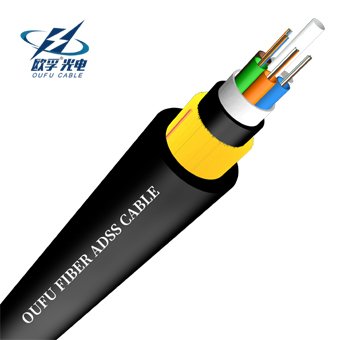
A. ADSS (All-Dielectric Self-Supporting) Cable
The ADSS cable is a game-changer for high-voltage environments. Made entirely of non-metallic materials (usually aramid yarn or fiberglass strength members), it is immune to electromagnetic interference (EMI) and lightning strikes.
- Best For: High-voltage power lines, long spans (up to 1km), and areas prone to lightning.
- All-Dielectric Self-Supporting cable specifications.
B. Figure-8 Cable (GYTC8A/GYTC8S)
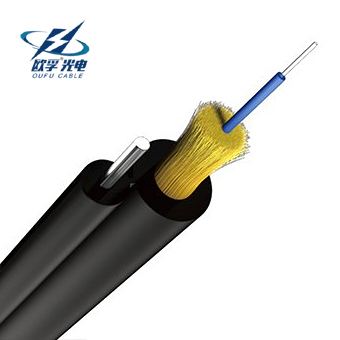
Easily recognizable by its cross-section resembling the number “8,” this cable features a messenger wire (steel or dielectric) integrated with the fiber core. The messenger wire bears the tension, making installation straightforward.
- Best For: Medium-distance distribution, urban and suburban networks, and general broadband deployment.
- Figure 8 fiber optic cable installation guide.
C. OPGW (Optical Ground Wire)
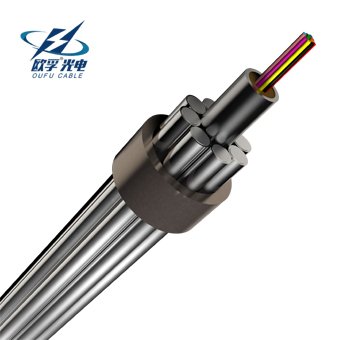
Used primarily by electrical utilities, OPGW cable replaces the traditional ground wire on transmission towers. It serves a dual purpose: protecting the line from lightning and providing a high-speed communication channel.
- Best For: Power grid communication, smart grid applications, and monitoring systems.
- OPGW cable vs ADSS cable.
D. ASU (Aerial Self-Supporting Unit)
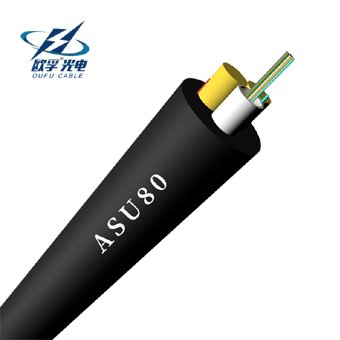
A compact, lightweight option often used for shorter spans in urban or rural settings. It features a central loose tube design.
- Best For: Cost-effective deployments where extreme tensile strength is not the primary concern.
3. Aerial Fiber Optic Cable vs. Underground: A Detailed Comparison
When planning a network, the choice between overhead fiber optic cable and underground installation depends on budget, geography, and timeline.
| Feature | Aerial Fiber Optic Cable | Underground Fiber Optic Cable |
|---|---|---|
| Installation Cost | Low (Reuses existing poles) | High (Requires trenching/excavation) |
| Deployment Speed | Fast (4-5 km per day possible) | Slow (Permits and digging required) |
| Maintenance | Easy (Visual inspection, easy access) | Difficult (Requires locating and digging) |
| Durability | Moderate (Exposed to weather) | High (Protected by earth) |
| Lifespan | ~25 Years | 30+ Years |
| Aesthetics | Visible (Can be considered clutter) | Invisible (Preserves landscape) |
| Best Use Case | Rural broadband, disaster recovery, 5G backhaul | Dense urban cores, high-security areas |
Verdict: For rapid expansion and cost-efficiency, the aerial fiber solution is often superior. For long-term urban infrastructure, underground is preferred.
4. Installation Guide: Best Practices for Aerial Deployment
Proper installation is vital to prevent “micro-bending” and signal loss. Here is a step-by-step overview of aerial fiber optic cable installation:
- Pre-Installation Survey: Assess pole conditions, span lengths, and clearance requirements (power lines, roads).
- Stringing the Messenger (if applicable): For lashed or Figure-8 cables, ensure the messenger wire is properly tensioned.
- Cable Pulling:
- Moving Reel Method: The reel is on a truck moving forward.
- Stationary Reel Method: The reel stays put while a winch pulls the cable.
- Crucial Tip:Never exceed the cable’s maximum tensile strength (usually around 600 lbs for standard aerial cables) to avoid damaging the fibers.
- Lashing: If using a non-self-supporting cable, a steel wire (lashing wire) is wrapped around the cable and the messenger to bind them together.
- Sag Adjustment: Ensure the cable has the correct sag to accommodate thermal expansion and ice loading without snapping.
- Termination: Use weatherproof enclosures to protect splice points from moisture and UV rays.
5. Market Trends and Future Outlook
The global market for self-supporting aerial optical cables is robust. Valued at approximately US350 million by 2031. The driving forces behind this growth include:
- Rural Broadband Initiatives: Governments worldwide are funding projects to connect remote areas where underground costs are prohibitive.
- 5G Backhaul: The need for dense small-cell networks requires massive fiber backhaul, often deployed aerially on existing streetlights and poles.
- Grid Modernization: Power companies are increasingly using OPGW and ADSS cables to digitize the power grid for better monitoring and control.
6. Frequently Asked Questions (FAQ)
Q: Is aerial fiber optic cable reliable?
A: Yes. While exposed to the elements, modern aerial fiber cables are designed with UV-resistant jackets and high-tensile strength members. They have a design life of 25 years and are easier to repair than buried cables.
Q: Can I install aerial fiber on existing power poles?
A: Generally, yes. This is one of the main cost-saving benefits. However, you must check for “pole loading” capacity and ensure compliance with local regulations regarding clearance from power lines.
Q: What does “All-Dielectric” mean?
A: It means the cable contains no conductive metal components. This makes ADSS cables safe to install on live high-voltage power lines without the risk of short circuits or induction burns.
Conclusion
The aerial fiber optic cable is an indispensable asset for modern connectivity. Its ability to deliver high-speed data quickly and affordably across challenging terrains makes it a top choice for ISPs and utility companies alike. By understanding the different types—from ADSS to Figure-8—and adhering to strict installation standards, you can build a resilient network that stands the test of time and weather.
Whether you are planning a rural FTTH rollout or upgrading a utility grid, the overhead approach offers a blend of performance and economy that is hard to beat.