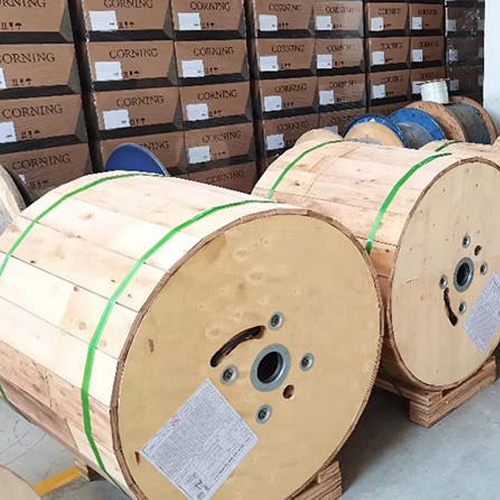
ADSS (All-Dielectric Self-Supporting) Fiber Optic Cable
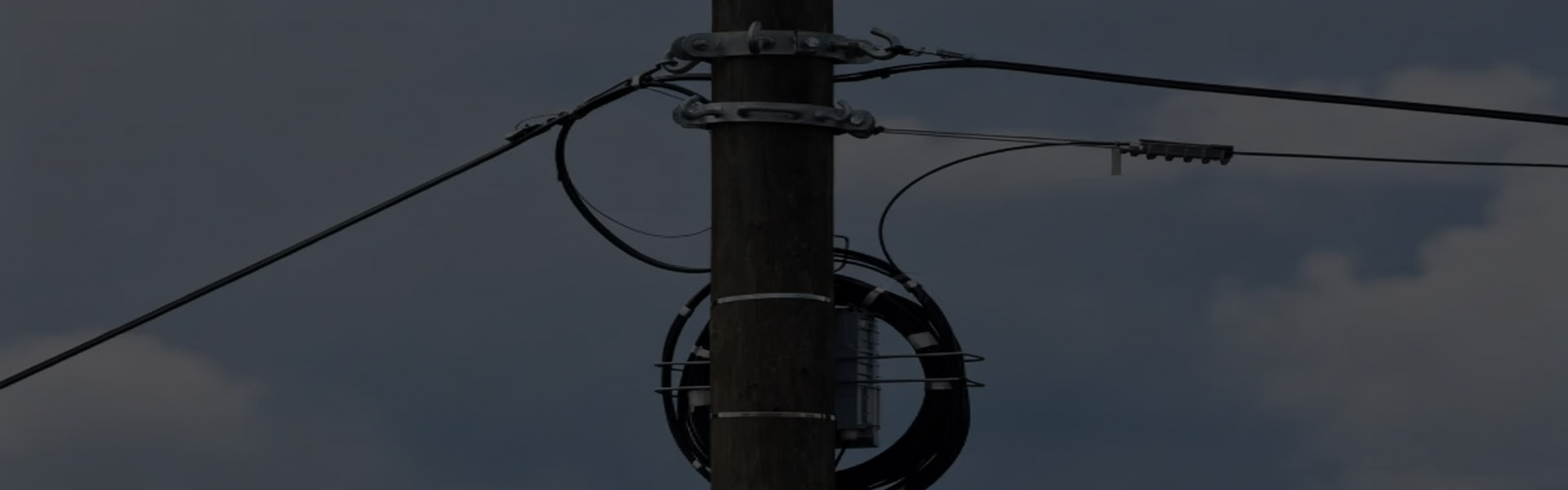
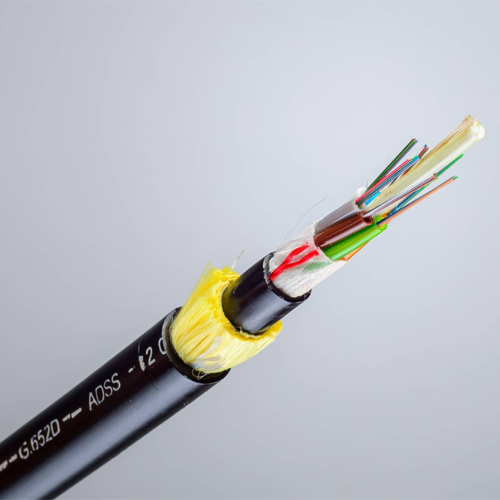
ADSS (All-Dielectric Self-Supporting) fiber optic cable is designed for aerial installation on high-voltage power towers without additional messenger wire. It features non-metallic structure, high tensile strength, strong weather resistance and long service life, widely used in power communication, backbone transmission, smart grid and 5G networks.
The Problem of Large-Span Distance
We use high-modulus aramid yarn strength members with precise tension & sag design. The ADSS cable resists creep and tension, maintaining stable performance even in long spans, strong wind and ice areas.
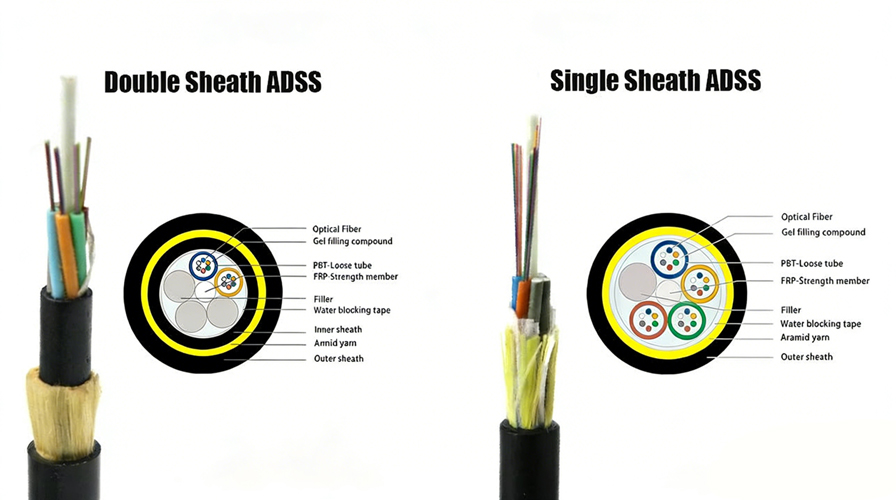
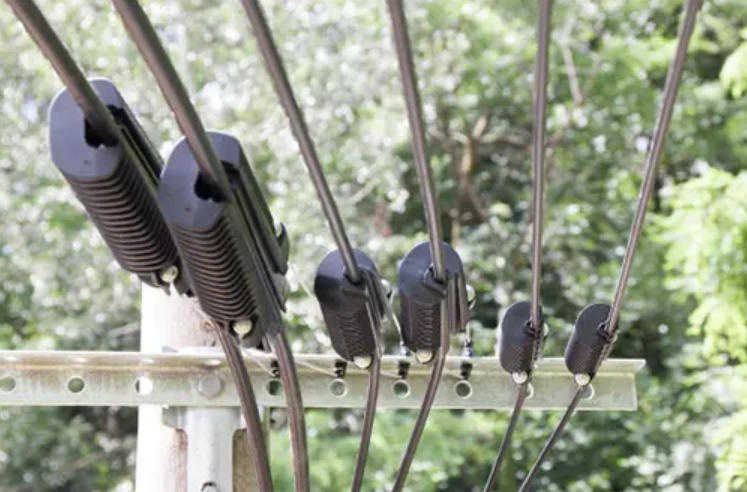
The Problem of Installation
We supply complete ADSS cable fittings (suspension, tension clamps, vibration dampers etc.) with professional installation drawings and guidance, simplifying construction and reducing failure risks.
Your Leading ADSS Fiber Optic Cable Manufacturer in China
ADSS fiber optic cable is entirely made of non-metallic materials. ADSS cable does not contain metal conductors or armor layers, thus possessing excellent anti-electromagnetic interference (EMI) and lightning protection capabilities. It is highly suitable for use in high-voltage power transmission channels and in strong electromagnetic environments.
ADSS fiber optic cable solution provided by “Oufu” can enhance your business development. We can customize the jacket material, core brand, span, etc. of the ADSS cable to meet your project requirements. “Oufu” combines experience and professional skills to meet your technical needs and help you achieve your long-term goals.
Welcome to visit our factory. Feel free to contact us at any time!
ADSS Cable Specifications
| Fibre Type | Attenuation(+20℃) | Bandwidth | Numerical Aperture | Cable Cut-off Wavelength | ||||
| @850nm | @1300nm | @1310nm | @1550nm | @850nm | @1300nm | |||
| G.652 | ≤0.36dB/km | <022dB/km | ≤1260nm | |||||
| G.655 | ≤0.40dB/km | ≤0.23dB/km | ≤1450nm | |||||
| 50/125μm | ≤3.3dB/km | ≤1.2dB/km | ≥500MHz.km | ≥500MHz ·km | 0.200±0.015 NA | |||
| 62.5/125μm | ≤3.5dB/km | ≤1.2dB/km | ≥200MHz ·km | ≥500MHz ·km | 0.275±0.015NA | |||
| Fiber Count | 2 – 288 Core |
| Fiber Type | G652D, G657A1, G657A2 |
| Jacket Material | PE, AT |
| Color | black |
| Strength Member | FRP |
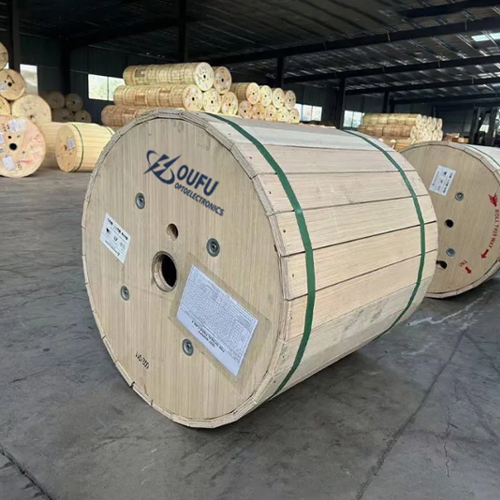
| Length | 1km, 2km, 3km, 4km, customizable |
Various Types of ADSS Fiber Optic Cable
OUFU can customize various types of adss fiber optic cables for you. Please customize the adss cable according to your needs.
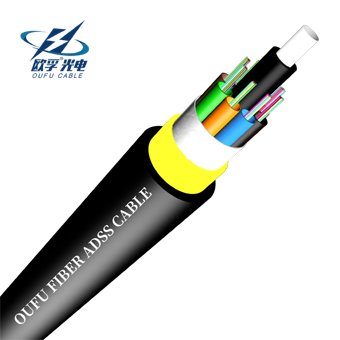
Fully non-metallic structure, resistant to strong electromagnetic interference.
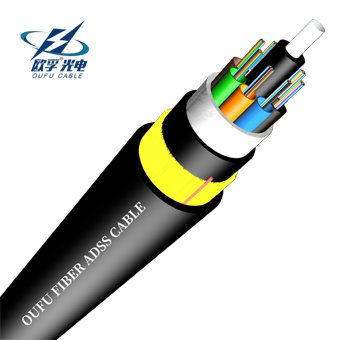
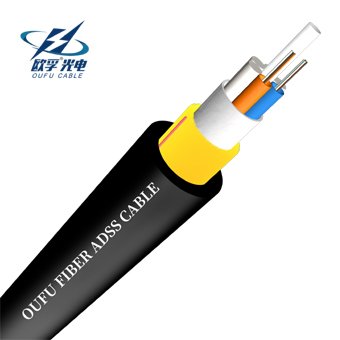
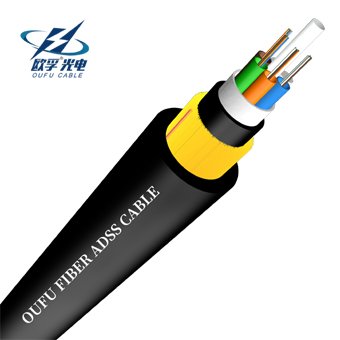
Can be erected while energized, allowing for non-power-off construction.
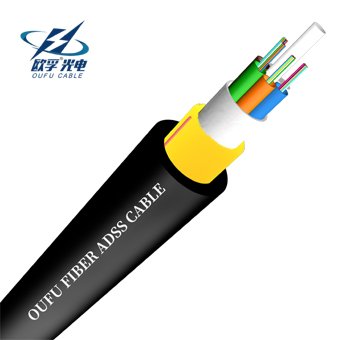
Electrical-arc resistant / Weather-resistant sheath, with extremely long service life.
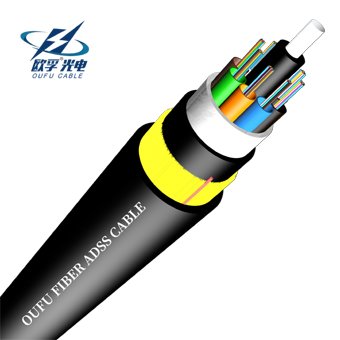
Excellent transmission performance, high bandwidth and low loss.
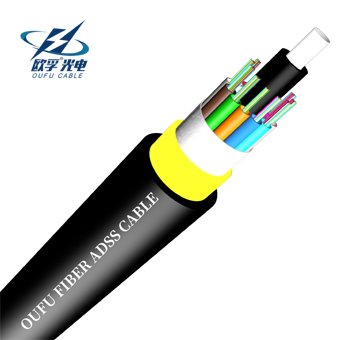
Fully dry-type waterproof, moisture-proof and corrosion-resistant.
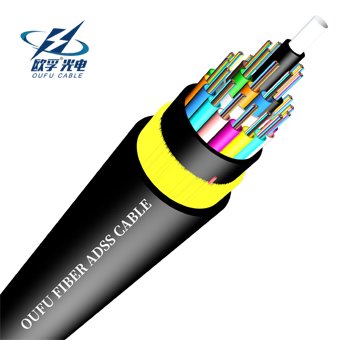
Overall cost is optimized and it meets the engineering requirements.
Why Choose OUFU ADSS Fiber Optic Cables
OUFU services and quality are worthy of your choice. We have a 18,000m² factory and export fiber cable products to over 50 countries in Europe,Africa, Asia and America. Let’s realize our dreams together with OUFU!

ADSS cable is completely unaffected by electromagnetic interference and radio frequency interference. It is suitable for laying in high-voltage power transmission channels, electrified railway lines fields.

ADSS cable can be directly suspended between poles or transmission towers without the need for additional steel strands for support. This shortens the construction period, and reduces project investment.

ADSS cable can withstand extreme temperatures ranging from minus 40 degrees Celsius to plus 70 degrees Celsius, and also resist wind, rain, ultraviolet radiation and chemical corrosion. It can meet different span requirements.

With its sturdy structure and corrosion-resistant properties, ADSS cables have a long service life and require very little daily maintenance, which reduces the long-term operation and maintenance burden of communication networks.

OUFU is renowned for offering high-quality and cost-effective products. As a professional manufacturer of adss fiber optic cables, we can provide you with high-quality armored optical cables at discounted prices.

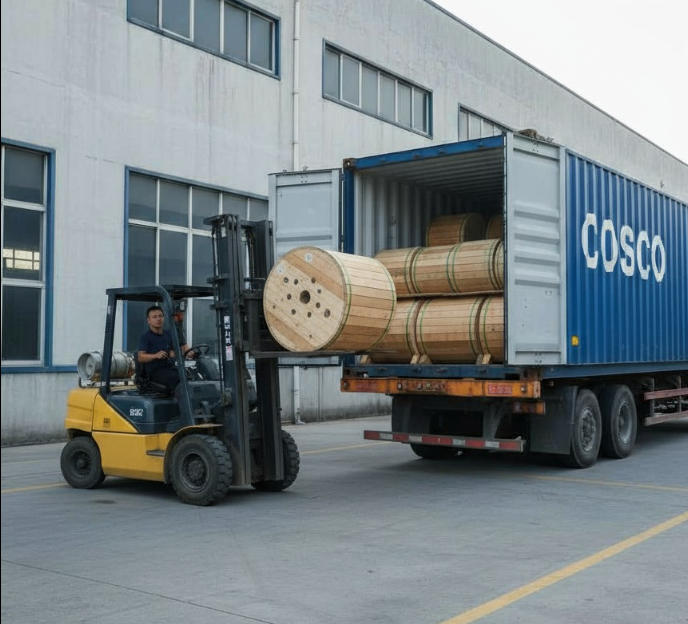
We have a team of experienced technical professionals who can provide a complete range of services from production to transportation. You only need to wait for the goods to arrive.

Our factory has obtained ISO 9001 certification, and the optical fiber cables have also passed the CE and ROHS、UL、TLC certification tests. The quality of our products will be the primary reason for your future purchases.

Don’t worry about the product quality. We offer a 10-year warranty service and guarantee that if there is any quality issue with the cable, we will replace it for you.
OUFU Offers Professional Customized ADSS Fiber Optic Cable
Based on the application scenarios and technical requirements of ADSS cables, such as the voltage level of transmission lines, the span of erection, and environmental characteristics, OUFU will provide appropriate solutions.
We design the solutions according to customer needs, including the structure of the optical cable, material selection, performance indicators, etc., and provide detailed technical parameters and drawings.
Application Scenarios of ADSS Fiber Optic Cables
The application scenarios of ADSS fiber optic cables cover three dimensions: the construction environment, power facilities, and climatic conditions.
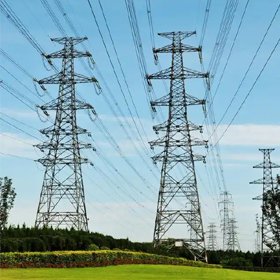
110kV and above high-voltage and ultra-high-voltage transmission lines are erected on the same tower. ADSS cable are used to meet the spacing requirements of transmission towers with large spans (500-1000 meters) for the tensile strength.
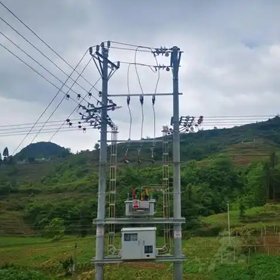
For the erection of 10kV/35kV medium and low voltage distribution lines, ADSS cables can meet the insulation requirements with ordinary PE sheathing; the span is relatively small, ranging from 100 to 300 meters, and the core count is mainly 6 to 24 cores.
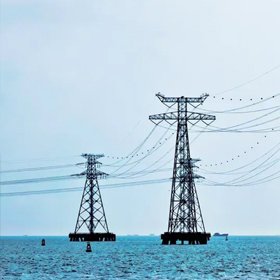
Applied to power transmission lines in coastal cities and islands, the ADSS cable uses moisture-proof and mold-proof sheaths to enhance its resistance to salt fog corrosion; the aramid yarn protective layer is thickened to improve its ability to withstand sea wind loads.
Customer Review
We used 40km ADSS cables in the mountain project in the Philippines, with a span of 100 meters and wind speeds exceeding 120 km/h.
The strength of the FRP of this fiber optic cable is very reliable, and the installation is also very simple.
It is very suitable for outdoor overhead deployment and is truly a product that can withstand harsh weather conditions. PhilippinBonifacio
The sunlight in Mexico is very intense. We previously used cables from another supplier, and the ADSS cables started to age within one year.
The ADSS outer sheath of OUFU is very reliable.
After 18 months, it is still as good as new, without any cracks. MexicoMartínez
The outdoor environment in Nigeria is harsh, with high temperatures and long rainy seasons.
This ADSS Cable performed perfectly during the 6-month testing period, without any moisture or disconnections.
Its durability far exceeded that of the products we had used before. NigeriaSimon
The voltage level directly determines the outer sheath material of the ADSS cable. For lines with voltages of 10 – 35 KV, the ordinary PE sheath is sufficient to meet the requirements; for lines with voltages of 110 KV and above, an AT sheath with anti-abrasion properties must be used. This sheath can resist the corrosion of electric arcs and surface leakage currents, and its anti-electric corrosion ability is 8 times that of the ordinary PE sheath. Using cables with incompatible sheath materials will cause the sheath to age and crack rapidly.
Generally, standard ADSS cables can be used for spans less than 300 meters. When the span is between 300 and 600 meters, the structure needs to be optimized, such as increasing the number of aramid yarn bundles and adding a central reinforcement. For spans exceeding 600 meters, custom design is required and achieved through finite element simulation calculations, such as using a high-density aramid yarn and FRP central rod composite scheme to keep the tension within a safe range.
Yes. Special materials and structural designs enable them to adapt to harsh environments. For mountainous areas with temperatures as low as -40°C, low-temperature-resistant sheaths are used to prevent brittleness. For coastal areas, double-layer waterproof sheaths and anti-corrosion coatings are used to resist saltwater erosion. In areas with heavy ice and snow, high-strength aramid yarns are used to ensure that the cables will not break due to the weight of the ice layer.
The installation is relatively simple because it has self-supporting properties and no additional guy wires are needed. Usually, it is installed between towers or poles, and is installed through tensioning and suspension hardware. The key points to note are: Control the constant tension during the traction process to avoid excessive tension that damages the optical fiber core; Ensure that the bending radius of the cable when passing through the pulley does not exceed the limit value; And keep the traction direction straight to prevent local stress concentration at the tower location.
Apart from poor cable quality, it is mainly caused by improper construction operations. For instance, if the tension machine applies excessive tension, if the bending radius of the cable channel is too small, or if ADSS cable is forcibly pulled when passing through obstacles, all these factors can lead to fiber breakage. If multiple fibers break at the same location, it is usually because the cable has been overly bent. Additionally, incorrect pre-winding operation of the tension clamp can also cause the cable to break near the connector.
There are mainly two situations. On one hand, during the production process, excessive tension when the aramid yarn is wound or excessive compression ratio of the sheath mold can cause the optical fibers to be subjected to stretching or lateral pressure, thereby leading to an increase in loss at the 1310 nanometer wavelength. On the other hand, if the cable is overly bent during construction or the bending radius of the cable roll is too small during storage, due to the micro-bending of the optical fibers, the loss at the 1550 nanometer wavelength will increase. This loss can be detected through OTDR testing.