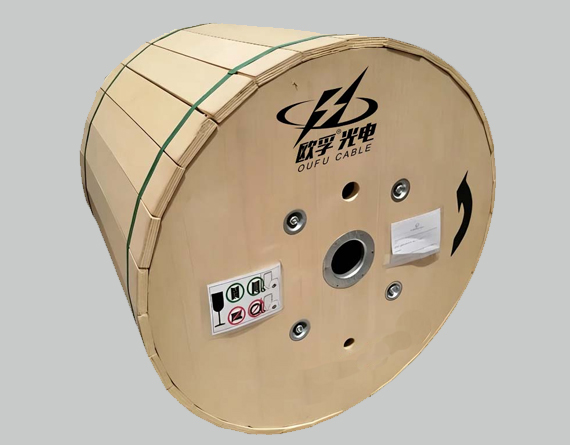
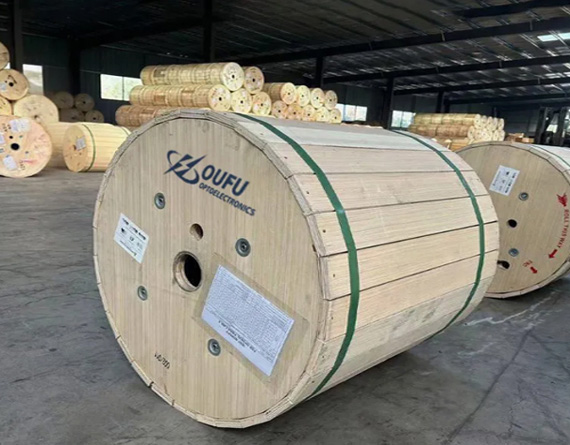
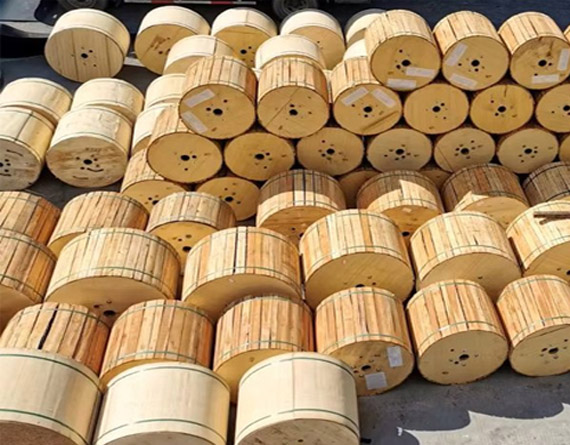
ASU Cable 2-24 Core Span 80M 100M
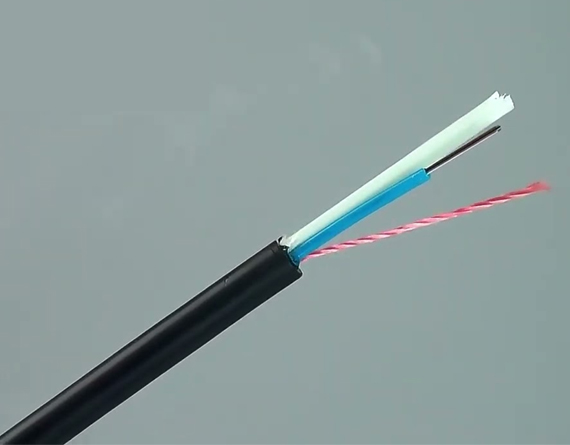
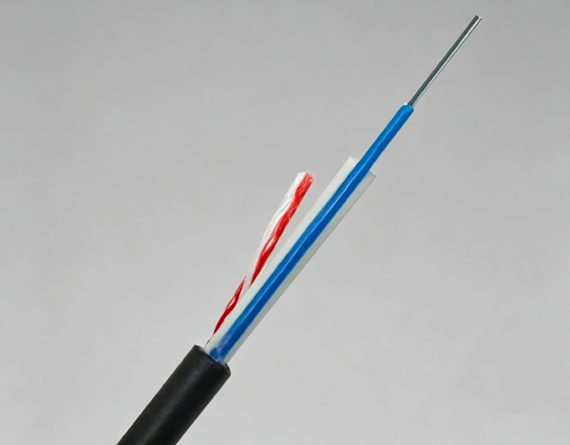
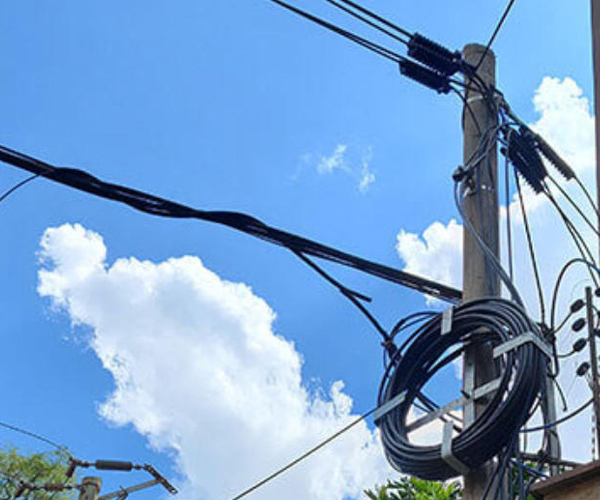
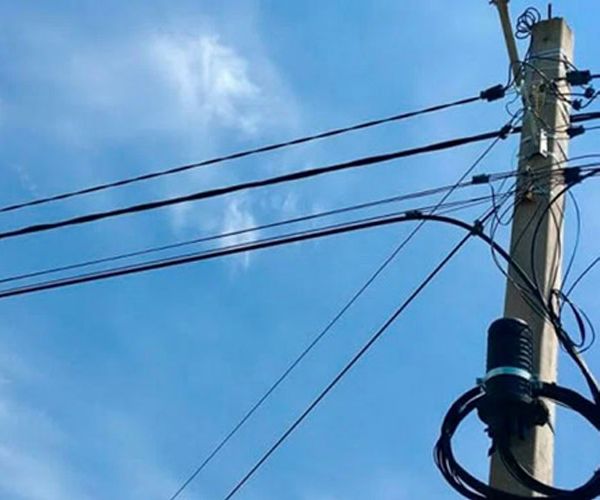
ASU Cable is an all-dielectric, self-supporting outdoor fiber optic cable designed primarily for aerial telecommunications networks. It is often considered a compact and economical alternative to ADSS cable for short- and medium-span installations.
The typical ASU cable consists of a central loose tube, optical fibers, FRP strength members, water-blocking material, ripcord, and an outer PE/HDPE sheath. Because the cable contains no metallic components, it does not require grounding and provides good resistance to electromagnetic interference.
ASU cable is particularly popular in FTTH access networks, FTTx deployments, telecom distribution networks, campus networks, rural broadband projects, and aerial communication systems.
ADSS Cable Specifications
| Fiber Count | 2 – 24 Core |
| Fiber Type | G652D, G657A1, G657A2 |
| Jacket Material | PE |
| Color | black |
| Strength Member | FRP |
| Length | 1km, 2km, 3km, 4km, customizable |
| Ref. outer diameter mm | Ref. weight kg/km | Rec. daily max. working tension kN | Max allowable working tension kN | Break strength kN | Strength member CSA mm² | Module of elasticity kN/mm² | Heat expansion coefficient ×106/K | Suitable span (NESC Standard,m) | ||||
| PEsheath | A | B | C | D | ||||||||
| 11.8 | 117 | 1.5 | 4 | 10 | 4.6 | 7.6 | 1.8 | 160 | 100 | 140 | 100 | |
| 12 | 121 | 2.25 | 6 | 15 | 7.6 | 8.3 | 1.5 | 230 | 150 | 200 | 150 | |
| 12.3 | 126 | 3 | 8 | 20 | 10.35 | 9.45 | 1.3 | 300 | 200 | 290 | 200 | |
| 12.6 | 133 | 3.6 | 10 | 24 | 13.8 | 10.8 | 1.2 | 370 | 250 | 350 | 250 | |
| 12.8 | 138 | 4.5 | 12 | 30 | 14.3 | 11.8 | 1 | 420 | 280 | 400 | 280 | |
| 13.1 | 145 | 5.4 | 15 | 36 | 18.4 | 13.6 | 0.9 | 480 | 320 | 460 | 320 | |
| 13.5 | 155 | 6.75 | 18 | 45 | 22 | 16.4 | 0.6 | 570 | 380 | 550 | 380 | |
| 13.8 | 163 | 7.95 | 22 | 53 | 26.4 | 18 | 0.3 | 670 | 460 | 650 | 460 | |
| 14.4 | 177 | 9 | 26 | 60 | 32.2 | 19.1 | 0.1 | 750 | 530 | 750 | 510 | |
| 14.6 | 182 | 10.5 | 28 | 70 | 33 | 19.6 | 0.1 | 800 | 560 | 800 | 560 | |
| 14.8 | 195 | 12.75 | 34 | 85 | 40 | 20.1 | 0.1 | 880 | 650 | 880 | 650 | |
Main Advantages of ASU Cable
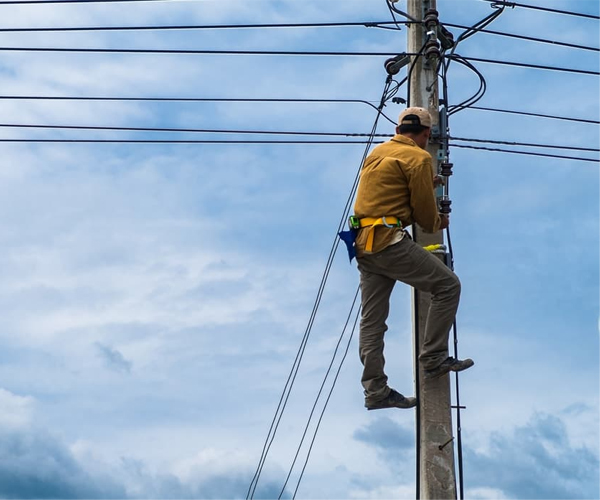
Lightweight Design
One of the most important advantages of ASU cable is its compact and lightweight construction.
Compared with larger aerial cables, its central loose-tube design can significantly reduce cable diameter and weight. This makes transportation, handling and installation easier.
All-Dielectric Construction
ASU cable contains no metallic strength member.
This means it:
- Does not conduct electricity
- Does not require grounding
- Has good electromagnetic interference immunity
- Can be installed in environments with electrical interference
This is especially useful for aerial telecom networks.
Self-Supporting
ASU is designed as a self-supporting aerial cable, meaning it does not require a separate metallic messenger wire in its intended span range.
This can simplify aerial deployment and reduce installation hardware and labor requirements.
Cost-Effective
ASU cable uses a relatively simple structure compared with many full-size aerial cable designs.
Its small diameter, lightweight construction and reduced material consumption can help lower:
- Cable cost
- Transportation cost
- Installation labor
- Supporting hardware requirements
For suitable short-span networks, ASU can therefore be an economical alternative to ADSS.
Easy Installation
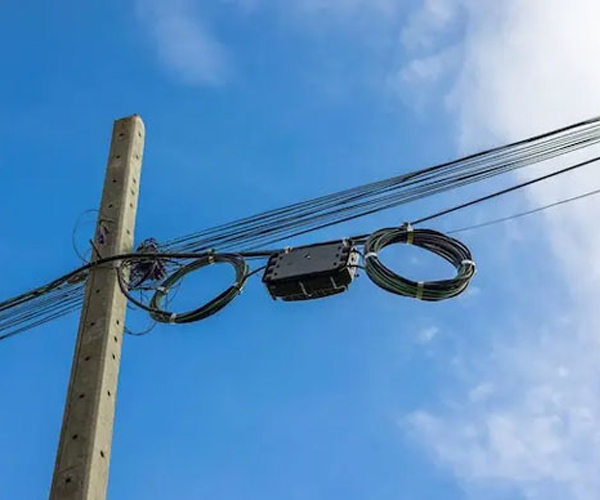
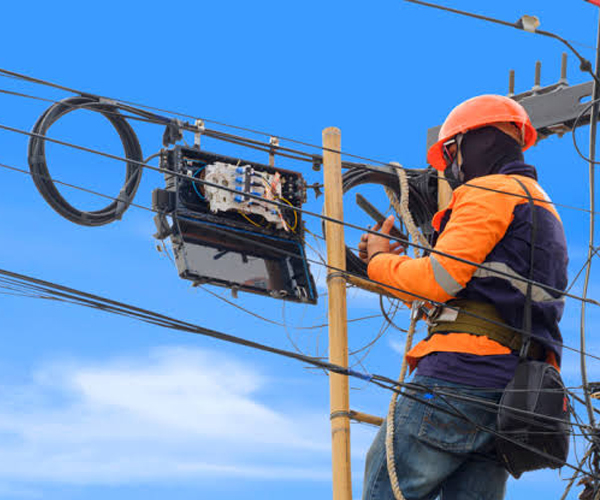
The compact construction makes ASU cable easy to handle and install.
It can be used for aerial deployment and, depending on the specific construction and project requirements, some ASU designs can also be installed in ducts.
ASU refers to a type of all-dielectric self-supporting outdoor fiber optic cable commonly used for aerial telecom networks.
No. Both are all-dielectric self-supporting cables, but ASU generally uses a more compact structure and is commonly used for shorter aerial spans and access/distribution networks.
Yes. ASU can be used in outdoor FTTH and FTTx distribution networks, particularly where aerial self-supporting installation is required.
Common configurations include 2, 4, 6, 8, 12 and 24 fibers, although manufacturers can offer customized fiber counts.
ASU cables can incorporate gel filling or water-blocking materials to provide water resistance. The exact waterproof performance depends on the cable construction and specification.
A properly designed ASU cable is self-supporting within its specified installation conditions, so a separate messenger is generally not required.
Some ASU constructions are suitable for both aerial and duct applications, but this must be confirmed against the manufacturer’s datasheet and installation requirements.
G.652D is a common choice for standard single-mode telecom applications. G.657A1 or G.657A2 can be considered when bending performance is more important.