GYXTW fiber optic cable is one of the most widely used central loose tube, steel tape armored, aerial or duct optical fiber cables in modern telecommunications networks. It is especially popular in outdoor backbone networks, FTTH feeder lines, and metro communication systems due to its strong mechanical protection, stable transmission performance, and cost-effectiveness.
1. What is GYXTW Fiber Optic Cable?
GYXTW is a type of outdoor fiber optic cable with central loose tube structure and steel tape armored protection, typically used for medium-distance and backbone communication networks.
The name “GYXTW” can be broken down as:
- GY: Outdoor fiber optic cable (Chinese standard naming)
- X: Central loose tube structure
- T: Filled tube (gel-filled for water blocking)
- W: Steel tape armor + water blocking material
In simple terms, GYXTW is a robust outdoor fiber cable designed for harsh environments, offering both mechanical strength and stable optical performance.
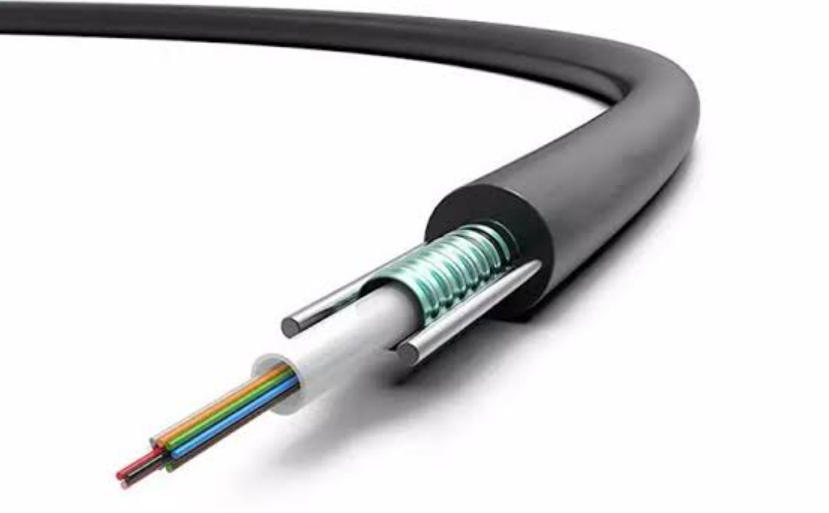
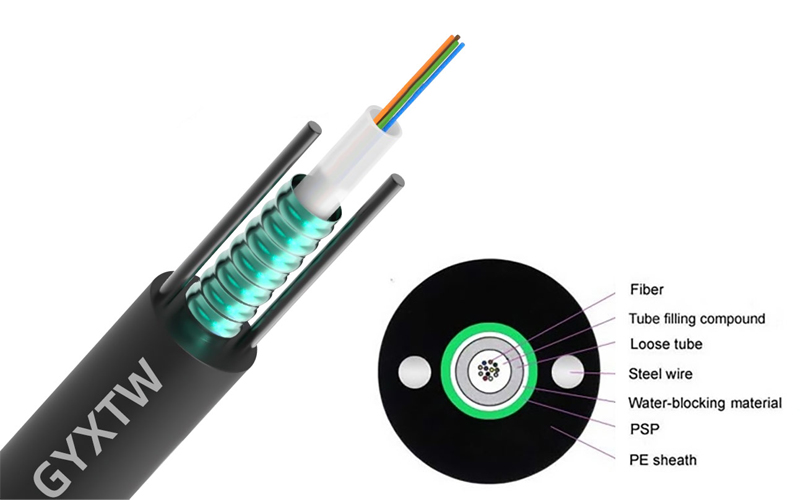
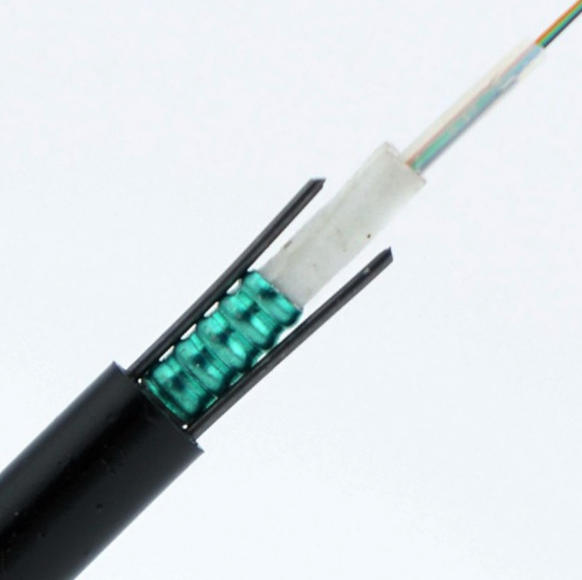
2. GYXTW Cable Structure Explained
Understanding the structure is key to understanding why GYXTW is so widely used.
2.1 Central Loose Tube Design
At the center of the cable is a loose tube containing optical fibers. The fibers are protected inside a gel-filled tube, allowing:
- Thermal expansion resistance
- Reduced micro-bending loss
- Long-term mechanical stability
2.2 Water Blocking Gel
Inside the loose tube, a water-blocking compound (gel) protects fibers from moisture intrusion. This is critical for outdoor installation where humidity and rain exposure are common.
2.3 Steel Tape Armor Layer
One of the most important features of GYXTW cable is its corrugated steel tape armor.
This layer provides:
- Crush resistance
- Rodent protection
- Mechanical durability
- Burial suitability
2.4 Outer PE Sheath
The outer layer is typically made of black polyethylene (PE) material, which provides:
- UV resistance
- Weather protection
- Chemical corrosion resistance
2.5 Strength Members (FRP or Steel Wire)
Alongside the structure, two parallel steel wires or FRP rods run along the cable to increase tensile strength, making it suitable for aerial or duct installations.
3. Key Features of GYXTW Fiber Optic Cable
GYXTW cable stands out due to its balanced performance between durability and cost.
3.1 High Mechanical Strength
The steel tape armor significantly improves:
- Crush resistance
- Impact resistance
- Pulling strength
This makes it suitable for rugged outdoor environments.
3.2 Excellent Water Resistance
The combination of gel-filled loose tube and water-blocking materials ensures:
- No water migration
- Long-term fiber stability
- Protection in humid environments
3.3 Rodent Protection
Steel tape armor acts as a strong barrier against rodents, making it ideal for:
- Underground duct systems
- Rural deployments
- Industrial environments
3.4 Stable Optical Performance
GYXTW ensures low attenuation and stable transmission even under temperature fluctuations.
3.5 Cost-Effective Design
Compared to fully armored or more complex cables, GYXTW offers:
- Lower material cost
- Easy installation
- High performance-to-price ratio
4. Technical Specifications of GYXTW Cable
Typical specifications may vary by manufacturer, but general parameters include:
- Fiber count: 2 to 24 cores (commonly 2–12 cores)
- Attenuation:
- 1310 nm: ≤ 0.36 dB/km
- 1550 nm: ≤ 0.22 dB/km
- Tensile strength:
- Short term: up to 1500N
- Long term: ~600N
- Crush resistance: 1000–3000 N/100mm
- Operating temperature: -40°C to +70°C
5. Advantages of GYXTW Fiber Optic Cable
5.1 Ideal for Outdoor Networks
GYXTW is specifically engineered for:
- Duct installation
- Aerial installation (with support messenger)
- Direct burial (limited conditions)
5.2 Easy Installation
Its relatively lightweight structure allows:
- Faster deployment
- Reduced labor cost
- Simplified splicing
5.3 Long Service Life
With proper installation, GYXTW cables can last 15–25 years in field conditions.
5.4 Strong Environmental Adaptability
It performs well in:
- High humidity
- High UV exposure
- Temperature extremes
6. Applications of GYXTW Fiber Optic Cable
GYXTW is widely used in multiple communication scenarios:
6.1 Telecom Backbone Networks
Used by telecom operators for:
- Regional data transmission
- Metro ring networks
- Backbone interconnection
6.2 FTTH Network Feeder Lines
GYXTW often serves as:
- Feeder cable from central office to distribution points
- Intermediate layer in FTTH architecture
6.3 CATV (Cable TV) Systems
Used for:
- Signal distribution networks
- Long-distance video transmission
6.4 Railway and Highway Communication
Installed along:
- Rail transit systems
- Smart highway monitoring systems
6.5 Industrial and Campus Networks
Suitable for:
- Industrial parks
- University campuses
- Private enterprise networks
7. GYXTW vs Other Fiber Optic Cables
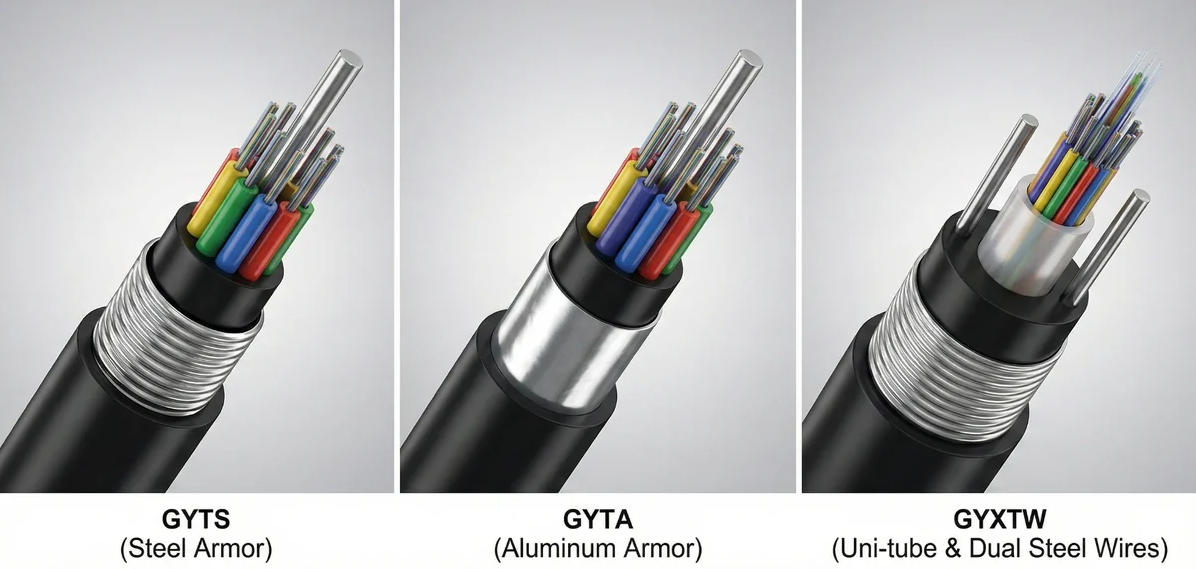
7.1 GYXTW vs GYTA
| Feature | GYXTW | GYTA |
|---|---|---|
| Armor | Steel tape | Aluminum tape |
| Strength | Medium-high | Higher |
| Cost | Lower | Higher |
| Use case | Duct/aerial | Direct burial heavy duty |
7.2 GYXTW vs ADSS Cable
- GYXTW: requires support in aerial installation
- ADSS: self-supporting for power lines
7.3 GYXTW vs GYFTY
- GYFTY: non-metallic, used near power lines
- GYXTW: metallic armor, better mechanical protection
8. Installation Methods of GYXTW Cable
8.1 Duct Installation
Most common method:
- Pulled through HDPE ducts
- Used in urban telecom networks
8.2 Aerial Installation
Requires messenger wire support:
- Suitable for short to medium spans
- Cost-effective for rural deployment
8.3 Direct Burial (Limited Use)
In some cases:
- Extra protection recommended
- Used in industrial or private networks
9. Buying Guide: How to Choose GYXTW Cable
When selecting GYXTW cable, consider the following factors:
9.1 Fiber Count
- 2–6 cores: small networks
- 8–12 cores: FTTH feeder
- 24 cores: backbone expansion
9.2 Environmental Conditions
- High rodent area → ensure strong armor
- High humidity → check water blocking quality
9.3 Manufacturer Quality
Look for:
- IEC / ITU-T compliance
- Stable attenuation performance
- Reliable PE sheath quality
9.4 Customization Options
Good suppliers can offer:
- Custom fiber count
- Branding sheath printing
- Messenger wire integration
10. Common Problems and Solutions
10.1 Signal Loss
Caused by:
- Poor splicing
- Excessive bending radius
Solution:
- Use fusion splicing
- Maintain minimum bend radius
10.2 Water Ingress
Cause:
- Damaged sheath during installation
Solution:
- Use proper sealing and duct protection
10.3 Rodent Damage
Solution:
- Ensure proper steel tape armor thickness
- Add extra conduit protection if necessary
11. Future Trends of GYXTW Cable
Although newer cable types are emerging, GYXTW remains relevant due to:
- Strong cost-performance ratio
- Wide compatibility with legacy systems
- Continued FTTH expansion in developing regions
Future improvements may include:
- Better micro-bending resistance
- Eco-friendly sheath materials
- Higher fiber density designs
12. FAQ About GYXTW Fiber Optic Cable
Q1: Is GYXTW suitable for direct burial?
It can be used in limited direct burial conditions, but duct installation is recommended for longer lifespan.
Q2: What is the maximum fiber count of GYXTW?
Typically up to 24 cores, depending on manufacturer design.
Q3: Can GYXTW be used for FTTH?
Yes, it is commonly used as a feeder cable in FTTH networks.
Q4: What is the difference between GYXTW and ADSS cable?
GYXTW requires support wires for aerial installation, while ADSS is self-supporting.
Conclusion
GYXTW fiber optic cable is a versatile, durable, and cost-effective outdoor communication cable widely used in telecom, FTTH, CATV, and industrial networks. Its steel tape armored structure, water-blocking gel, and central loose tube design make it a reliable solution for medium and long-distance fiber optic transmission.
For projects requiring a balance between performance, durability, and cost, GYXTW remains one of the most practical choices in the fiber optic industry today.