Aerial Fiber Optic Cable is a type of outdoor optical cable designed to be installed above the ground, usually attached to utility poles, towers, or other overhead structures. Unlike underground fiber optic cables that require trenching and duct systems, aerial fiber cables are installed in open-air environments, making them a cost-effective and efficient solution for long-distance communication networks.
With the rapid expansion of fiber broadband, 5G networks, smart cities, and rural internet infrastructure, aerial fiber optic cables have become one of the most widely used solutions for telecom operators, Internet Service Providers (ISPs), and network contractors worldwide.
An aerial fiber optic cable is engineered to withstand harsh outdoor conditions, including wind, rain, ice loading, UV exposure, temperature fluctuations, and mechanical stress. Depending on the application requirements, aerial fiber cables can be designed with different structures, such as ADSS (All-Dielectric Self-Supporting) cable, OPGW cable, figure-8 cable, ASU cable, and traditional loose tube aerial cables.
In this complete guide, we will explain everything you need to know about aerial fiber optic cable, including:
- What aerial fiber optic cable is
- Different types of aerial fiber cable
- Cable structure and materials
- Applications
- Installation methods
- Specification selection
- Price factors
- Buying considerations
- Frequently asked questions
This guide helps network engineers, distributors, contractors, and buyers choose the right aerial fiber optic cable for their projects.
1. What Is Aerial Fiber Optic Cable?
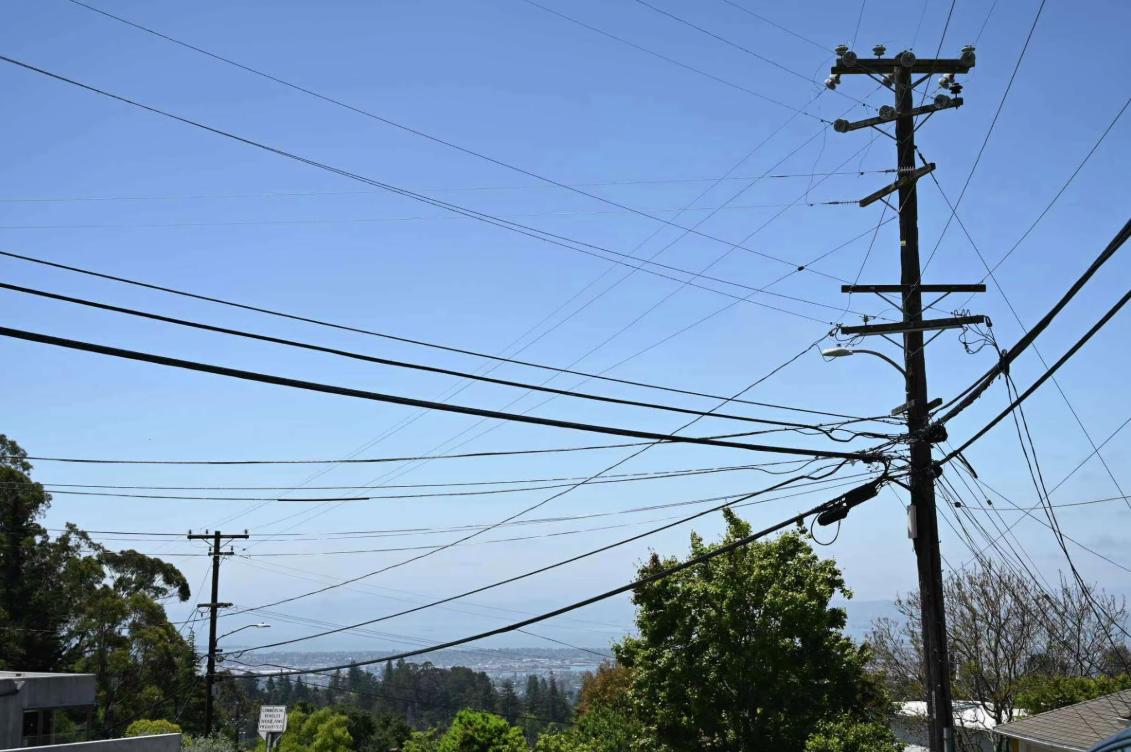
Aerial fiber optic cable refers to an outdoor fiber optic cable that is installed above the ground using poles, towers, or existing overhead infrastructure.
Unlike direct burial or duct fiber cables, aerial cables are designed with special mechanical reinforcement to support their own weight and resist environmental forces.
The main characteristics of aerial fiber optic cable include:
- High tensile strength
- Strong weather resistance
- UV-resistant outer jacket
- Long installation span capability
- Lightweight design
- Easy maintenance
- Lower construction cost
Aerial fiber cables are commonly used in:
- Telecommunications networks
- FTTH broadband deployment
- Rural broadband projects
- 5G backhaul networks
- Power utility communication systems
- Industrial communication networks
The biggest advantage of aerial installation is that it eliminates expensive underground construction. In many regions, especially rural areas and developing markets, aerial fiber deployment provides the fastest way to expand high-speed internet access.
2. Why Choose Aerial Fiber Optic Cable for Outdoor Networks?
When building outdoor fiber networks, engineers usually choose between aerial, underground, and direct burial solutions.
Aerial fiber optic cable offers several important advantages.
2.1 Lower Installation Cost
One of the biggest benefits of aerial fiber cable is reduced construction cost.
Underground fiber installation requires:
- Excavation
- Trenching
- Underground ducts
- Road restoration
- Additional permits
These processes significantly increase project expenses.
Aerial installation uses existing poles or towers, reducing labor requirements and construction time.
For large-scale broadband projects, aerial fiber deployment can reduce total installation costs by a significant margin.
2.2 Faster Network Deployment
Aerial fiber optic cable can be installed much faster compared with underground systems.
Installation mainly involves:
- Installing supporting hardware
- Pulling the cable along poles
- Fixing suspension or tension clamps
- Testing the optical performance
This makes aerial fiber cable ideal for:
- Emergency network restoration
- Rapid broadband expansion
- Rural connectivity projects
2.3 Excellent Outdoor Durability
Outdoor environments expose cables to many challenges:
- Strong wind
- Heavy rain
- Snow and ice
- Sunlight
- Temperature changes
- Mechanical vibration
High-quality aerial fiber optic cables are manufactured with:
- HDPE outer sheath
- UV-resistant materials
- Strong tensile members
- Water-blocking technology
These features ensure long-term network reliability.
3. Types of Aerial Fiber Optic Cable
There are several types of aerial fiber optic cables available depending on installation conditions and network requirements.
3.1 ADSS Fiber Optic Cable (All-Dielectric Self-Supporting Cable)
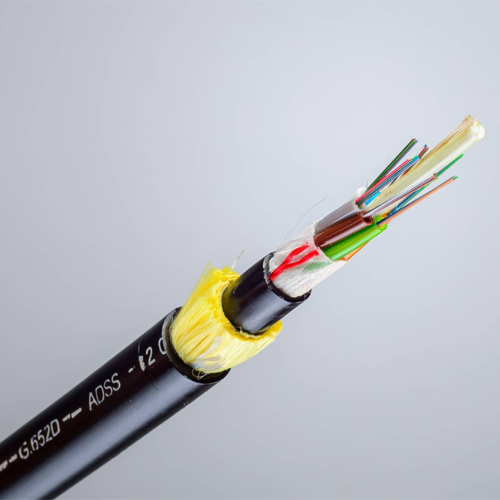
ADSS cable is one of the most popular aerial fiber optic cable designs.
ADSS stands for:
All-Dielectric Self-Supporting
This means the cable contains no metal components and can support its own weight without requiring a messenger wire.
ADSS cable structure usually includes:
- Optical fibers
- Loose tubes
- Central strength member
- Aramid yarn reinforcement
- PE outer sheath
Advantages of ADSS Cable:
- No grounding required
- Lightweight
- Suitable near high-voltage power lines
- Excellent electrical safety
- Long span capability
ADSS cable is widely used by:
- Electric utilities
- Telecom operators
- Broadband providers
Typical ADSS specifications:
- Fiber count: 2–288 cores
- Span distance: 50m–1500m
- Fiber type: G652D, G657A1, G657A2
- Installation: Pole-to-pole aerial deployment
3.2 OPGW Fiber Optic Cable
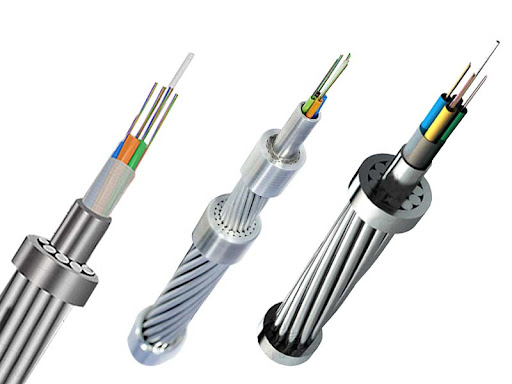
OPGW stands for:
Optical Ground Wire
OPGW cable combines:
- Power transmission grounding function
- Optical communication function
It is installed on high-voltage transmission towers.
Applications include:
- Smart grid communication
- Power system monitoring
- Utility communication networks
Advantages:
- High mechanical strength
- Excellent lightning protection
- Long-distance communication capability
3.3 Figure-8 Fiber Optic Cable
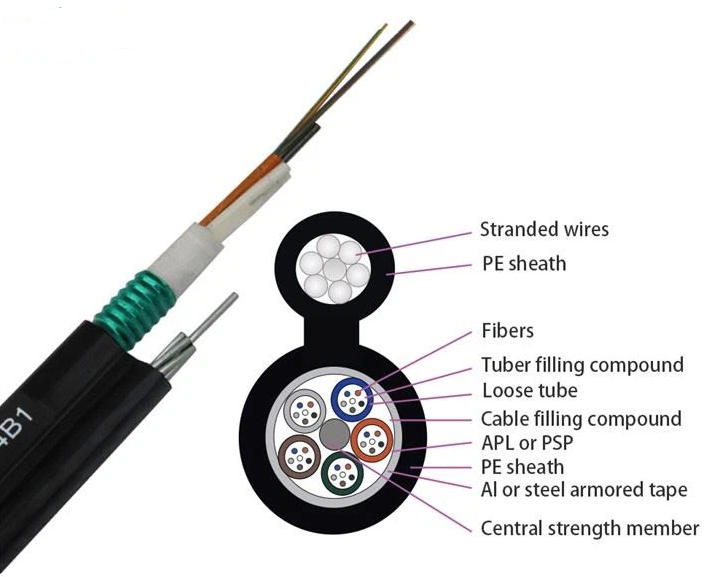
Figure-8 fiber cable contains an integrated steel messenger wire.
The cross-section looks like the number “8”, which gives the cable its name.
Structure:
- Fiber cable section
- Steel supporting messenger wire
Advantages:
- Simple installation
- Low cost
- Suitable for access networks
Common applications:
- FTTH networks
- Last-mile broadband
- Small aerial deployments
3.4 ASU Fiber Optic Cable
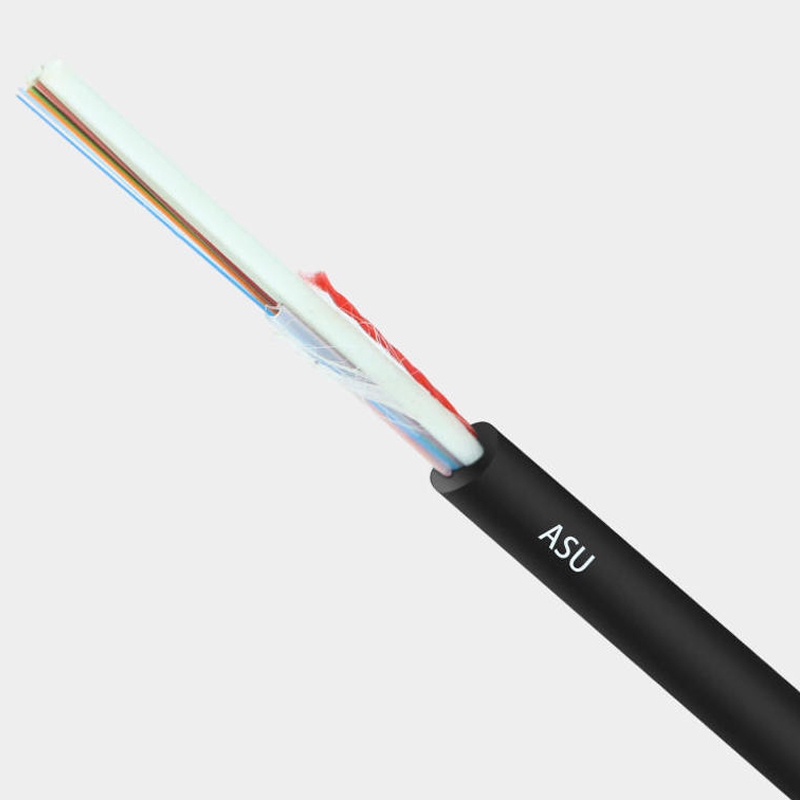
ASU cable is a compact aerial fiber optic cable commonly used in South America, Africa, and emerging markets.
Features:
- Lightweight design
- Simple structure
- Low installation cost
- Self-supporting capability
ASU cable is often used for:
- Rural broadband
- Metropolitan networks
- Access networks
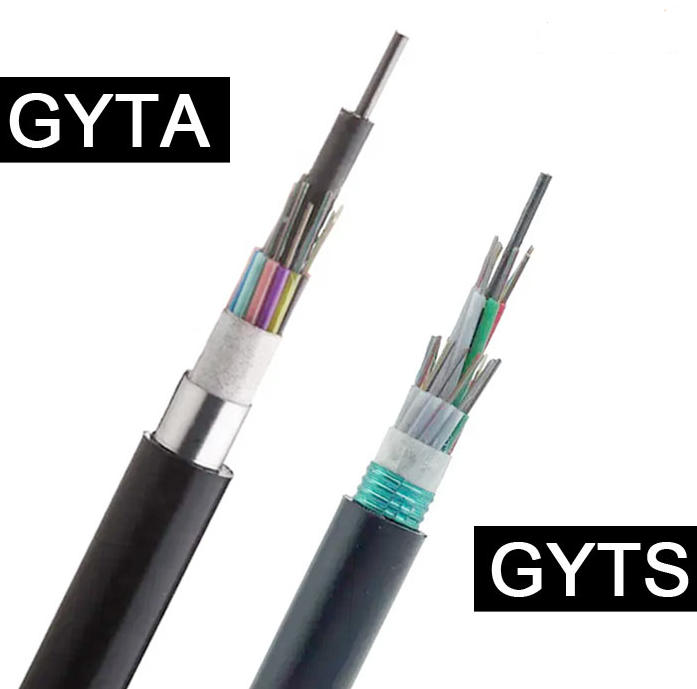
3.5 GYTS Fiber Optic Cable/GYTA Fiber Optic Cable
GYTS and GYTA are traditional outdoor loose tube fiber optic cables.
They usually include:
- Loose tube design
- Steel tape armor (GYTS)
- Aluminum tape armor (GYTA)
Applications:
- Aerial installation
- Duct installation
- Outdoor backbone networks
Advantages:
- High fiber capacity
- Strong protection
- Cost-effective
4. Aerial Fiber Optic Cable Structure Explained
Understanding the cable structure helps buyers select the correct product.
4.1 Optical Fiber
The optical fiber is the core transmission component.
Common fiber types:
G652D Fiber
Used for:
- Long-distance backbone networks
- Telecom infrastructure
G657A1 Fiber
Used for:
- FTTH applications
- Access networks
G657A2 Fiber
Used where:
- Small bending radius is required
4.2 Loose Tube
Loose tubes protect optical fibers from:
- Moisture
- Mechanical stress
- Temperature changes
The tube is usually filled with waterproof gel or dry water-blocking materials.
4.3 Strength Member
Strength members provide tensile resistance.
Common materials:
- FRP (Fiber Reinforced Plastic)
- Aramid yarn
- Steel wire
4.4 Outer Jacket
The outer sheath protects the cable from environmental damage.
Common materials:
- HDPE
- MDPE
- LSZH
Functions:
- UV resistance
- Moisture protection
- Mechanical protection
5. Aerial Fiber Optic Cable Applications
Aerial fiber optic cable is widely used in modern communication infrastructure.
5.1 Telecom Networks
Telecom operators use aerial fiber cables for:
- Backbone networks
- Distribution networks
- Access networks
5.2 FTTH Deployment
Fiber-to-the-Home networks require reliable last-mile connections.
Aerial fiber cable is popular because:
- Installation is fast
- Cost is lower
- Maintenance is simple
5.3 5G Backhaul Networks
5G networks require high-capacity fiber connections.
Aerial fiber cables provide:
- High bandwidth
- Low latency
- Reliable transmission
5.4 Rural Broadband
Many rural areas lack underground infrastructure.
Aerial fiber allows operators to quickly provide:
- High-speed internet
- Digital services
- Remote education
- Telemedicine
5.5 Power Utility Networks
Electric companies use ADSS and OPGW cables for:
- Smart grids
- Substation communication
- Monitoring systems
6. Aerial Fiber Optic Cable Installation Guide
Proper installation is critical for cable performance.
Step 1: Route Survey
Before installation, engineers check:
- Pole condition
- Span distance
- Environmental conditions
- Cable route
Step 2: Select Installation Hardware
Common accessories include:
- Suspension clamps
- Dead-end clamps
- Pole brackets
- Anchoring devices
Step 3: Cable Stringing
The cable is installed along poles using proper tension control equipment.
Avoid:
- Excessive pulling force
- Sharp bending
- Cable twisting
Step 4: Cable Fixing
The cable must be properly secured according to:
- Span distance
- Wind load
- Ice load
Step 5: Testing
After installation, technicians perform:
- OTDR testing
- Optical loss testing
- Mechanical inspection
7. Aerial Fiber Optic Cable Specifications Guide
When purchasing aerial fiber cable, buyers should consider:
Fiber Count
Common options:
- 2 Core
- 4 Core
- 12 Core
- 24 Core
- 48 Core
- 72 Core
- 96 Core
- 144 Core
- 288 Core
Fiber Type
Choose according to application:
| Fiber Type | Application |
|---|---|
| G652D | Backbone network |
| G657A1 | FTTH |
| G657A2 | High bending requirement |
Span Distance
Span distance determines cable design.
Typical:
- Short span: 50–100m
- Medium span: 100–300m
- Long span: 300–1500m
8. Aerial Fiber Optic Cable Price Guide 2026
The price of aerial fiber optic cable depends on many factors.
Main pricing factors include:
8.1 Fiber Count
Higher fiber counts increase cable cost.
Example:
12-core cable is cheaper than:
144-core cable
8.2 Cable Structure
ADSS, OPGW, and armored cables have different costs.
8.3 Fiber Brand
Fiber manufacturers influence pricing.
8.4 Order Quantity
Large-volume orders usually receive better pricing.
8.5 Custom Requirements
Customized options may affect price:
- Printing
- Jacket color
- Special span length
- OEM design
9. How to Choose the Right Aerial Fiber Optic Cable?
Before purchasing, consider:
1. Installation Environment
Ask:
- Is there electricity nearby?
- What is the weather condition?
- What is the span distance?
2. Required Fiber Capacity
Select fiber count based on:
- Current demand
- Future expansion
3. Mechanical Requirements
Consider:
- Tensile strength
- Wind load
- Ice load
4. Budget
Balance:
- Initial cost
- Maintenance cost
- Network lifespan
10. ADSS vs OPGW vs Aerial Fiber Cable Comparison
| Feature | ADSS | OPGW | Figure-8 |
|---|---|---|---|
| Installation | Poles | Power towers | Poles |
| Metal Parts | No | Yes | Yes |
| Cost | Medium | High | Low |
| Application | Telecom | Power grid | Access network |
| Span Distance | Long | Very long | Medium |
11. Common Problems When Buying Aerial Fiber Optic Cable
Many buyers face problems such as:
Choosing Wrong Cable Type
Different environments require different structures.
Ignoring Mechanical Requirements
Insufficient tensile strength may cause cable failure.
Poor Quality Materials
Low-quality jackets may reduce cable lifespan.
Lack of Certification
Professional suppliers should provide:
- Test reports
- Quality certificates
- Factory inspection records
12. International Standards for Aerial Fiber Optic Cable
High-quality aerial fiber optic cables usually comply with:
- ITU-T G.652
- ITU-T G.657
- IEC standards
- Telcordia GR-20
- ISO9001
- RoHS
Compliance ensures:
- Reliable performance
- International compatibility
- Long service life
13. Why Choose a Professional Aerial Fiber Optic Cable Manufacturer?
Working with an experienced manufacturer provides:
OEM Capability
Customized:
- Cable structure
- Printing
- Packaging
Quality Control
Professional factories provide:
- Fiber testing
- Tensile testing
- Temperature testing
Competitive Pricing
Direct factory supply reduces:
- Distributor costs
- Delivery time
Technical Support
Experienced suppliers help customers choose:
- Correct cable type
- Suitable accessories
- Installation solutions
14. Frequently Asked Questions About Aerial Fiber Optic Cable
Q1: What is aerial fiber optic cable?
Aerial fiber optic cable is an outdoor cable installed above ground on poles or towers for communication networks.
Q2: What is the most common aerial fiber optic cable?
ADSS cable is one of the most widely used aerial fiber optic cable types.
Q3: How long does aerial fiber optic cable last?
High-quality aerial fiber cable can typically operate for more than 25 years under proper installation conditions.
Q4: Is ADSS cable suitable near power lines?
Yes. ADSS cable is fully dielectric and suitable for areas with electrical interference.
Q5: What fiber count is available for aerial cable?
Common options range from 2 cores to 288 cores.
Q6: How much does aerial fiber optic cable cost?
The price depends on fiber count, structure, materials, order quantity, and customization requirements.
Q7: Can aerial fiber cable be used for FTTH?
Yes. Many FTTH networks use aerial drop cables and ADSS cables.
Q8: What is the difference between aerial and underground fiber cable?
Aerial cable is installed on poles, while underground cable requires ducts or trenches.
Conclusion: Aerial Fiber Optic Cable Is the Future of Outdoor Fiber Networks
Aerial fiber optic cable has become a critical solution for global broadband expansion because it offers:
- Lower installation cost
- Faster deployment
- High reliability
- Excellent outdoor protection
- Flexible network expansion
Whether for telecom operators, ISPs, power utilities, or rural broadband projects, selecting the right aerial fiber optic cable design is essential for long-term network performance.
By understanding cable types, specifications, installation requirements, and pricing factors, you can make better decisions and build reliable fiber optic networks for the future.