Fiber optic networks are becoming the backbone of modern communication infrastructure, supporting broadband internet, 5G networks, data centers, smart cities, industrial automation, and enterprise connectivity. When deploying underground fiber optic networks, one of the most important decisions engineers and network planners must make is choosing between direct burial fiber optic cable and duct fiber optic cable.
Both cable types are designed for underground installation, but they have significant differences in construction, installation methods, protection level, maintenance requirements, and long-term cost.
Choosing the wrong underground fiber cable can result in:
- Higher installation costs
- Difficult maintenance
- Shorter cable lifespan
- Unexpected network downtime
- Expensive replacement projects
This guide provides a complete comparison of:
- What is direct burial fiber optic cable?
- What is duct fiber optic cable?
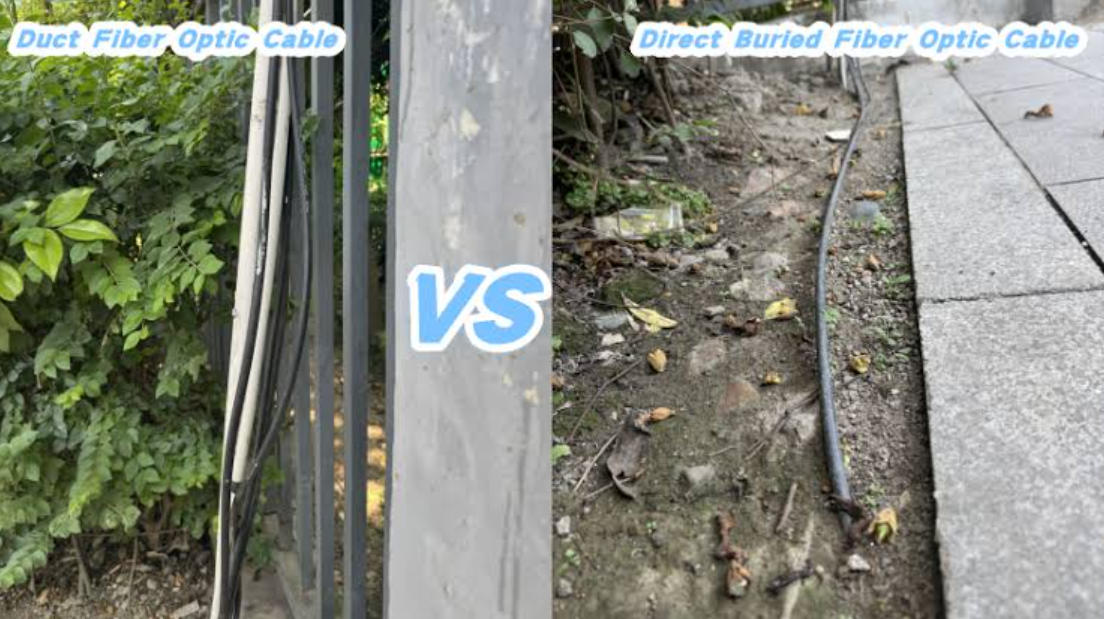
- Direct burial vs duct cable differences
- Installation methods
- Cost comparison
- Application scenarios
- How to select the right underground fiber cable
What Is Direct Burial Fiber Optic Cable?
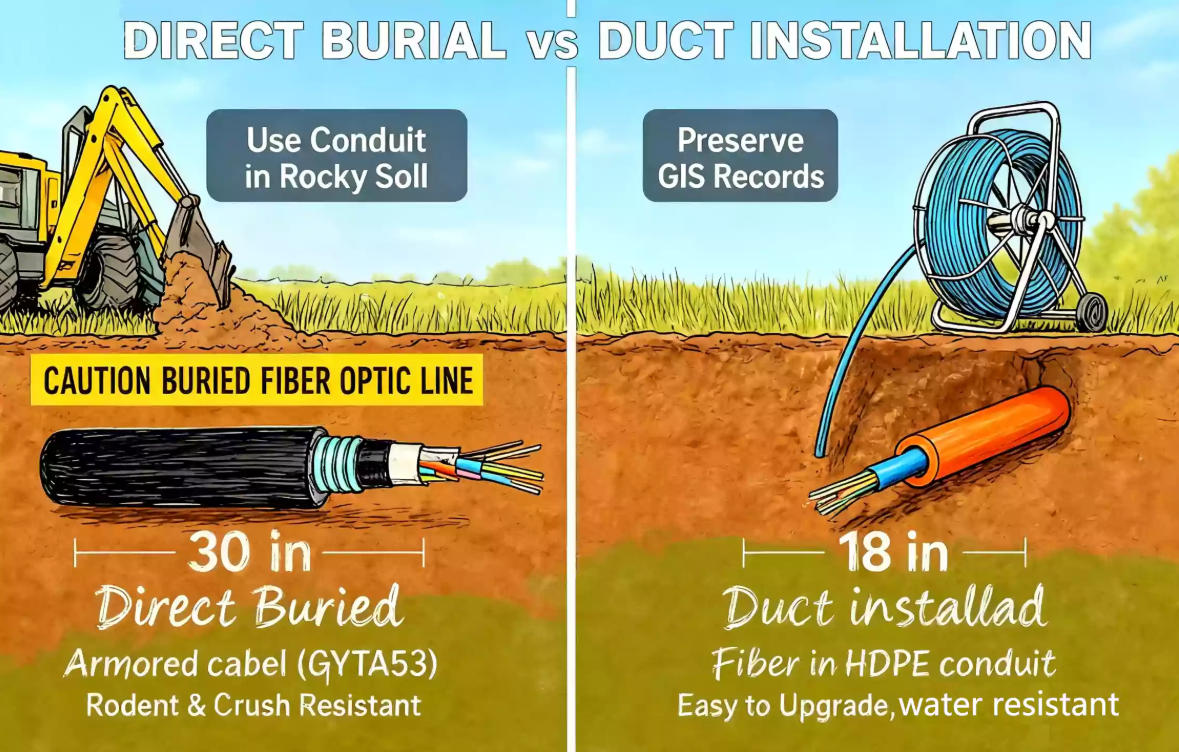
Direct burial fiber optic cable is a specially designed underground fiber cable that can be installed directly into the soil without additional protective conduit or duct.
It is engineered to withstand harsh underground environments, including:
- Soil pressure
- Moisture
- Rodent attacks
- Temperature changes
- Mechanical stress
Unlike standard outdoor fiber cables, direct burial cables usually have reinforced structures such as:
- Steel tape armor
- Aluminum tape armor
- Double sheath layers
- Water blocking materials
- Strength members
Common direct burial fiber cable models include:
- GYTA armored fiber optic cable
- GYTS armored fiber cable
- Armored ADSS cable
- Underground armored fiber optic cable
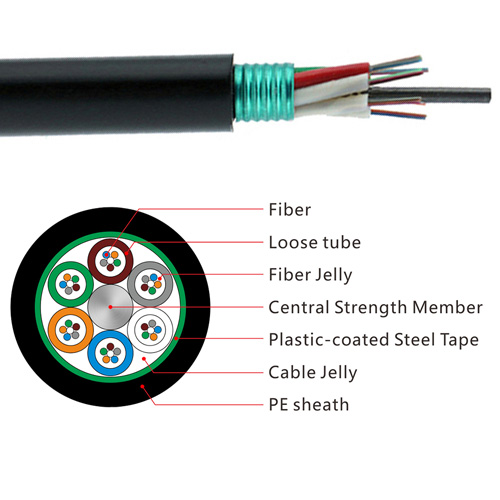
Direct Burial Fiber Cable Structure
A typical direct burial fiber optic cable includes:
1. Optical Fiber
The optical fiber is the core transmission component.
Common fiber types:
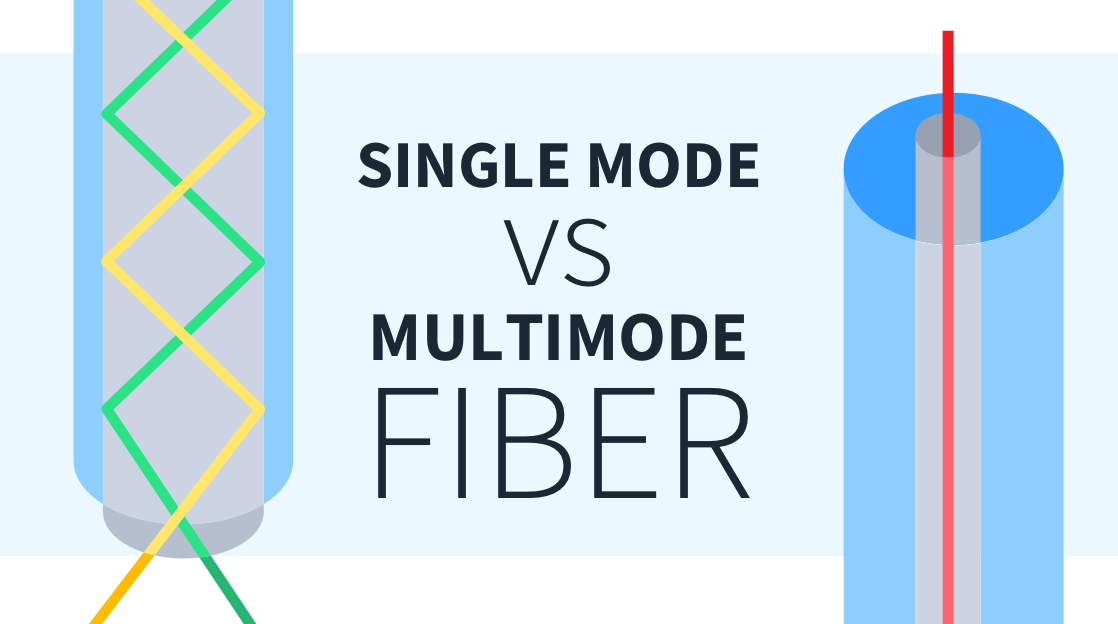
- Single mode G652D
- Single mode G657A1
- Single mode G657A2
- Multimode OM3/OM4
2. Loose Tube
Loose tubes protect optical fibers from:
- Water penetration
- Mechanical stress
- Temperature expansion
3. Strength Member
Usually made from:
- FRP
- Steel wire
- Aramid yarn
The strength member provides tensile resistance during installation.
4. Armor Layer
The armor layer protects the cable from:
- Rodents
- Rocks
- External impact
Common materials:
- Corrugated steel tape
- Aluminum tape
5. Outer Jacket
The outer sheath is commonly made from:
- HDPE
- PE
It provides:
- UV resistance
- Moisture protection
- Chemical resistance
Advantages of Direct Burial Fiber Optic Cable
1. No Additional Duct Required
The biggest advantage is simple installation.
The cable can be placed directly underground, eliminating:
- PVC conduit
- HDPE pipe
- Underground duct systems
This reduces initial construction work.
2. Lower Installation Cost in Certain Projects
For rural areas or long-distance fiber routes, direct burial cable can reduce:
- Material costs
- Labor costs
- Construction time
It is especially suitable for:
- Rural broadband
- Highway communication networks
- Utility networks
3. Strong Mechanical Protection
Armored construction provides excellent protection against:
- Digging damage
- Soil pressure
- Animals
4. Suitable for Harsh Environments
Direct burial cables perform well in:
- Frozen soil areas
- Desert environments
- Industrial areas
- Agricultural land
Disadvantages of Direct Burial Fiber Cable
Despite its advantages, direct burial cable has limitations.
1. Difficult Maintenance
Once buried underground:
- Cable location is fixed
- Repair requires excavation
- Future upgrades are difficult
2. Limited Future Expansion
If additional fibers are needed later, installing new cables requires new digging.
3. Higher Replacement Difficulty
Cable damage caused by:
- Construction work
- Earth movement
- Accidental excavation
can require expensive repair.
What Is Duct Fiber Optic Cable?
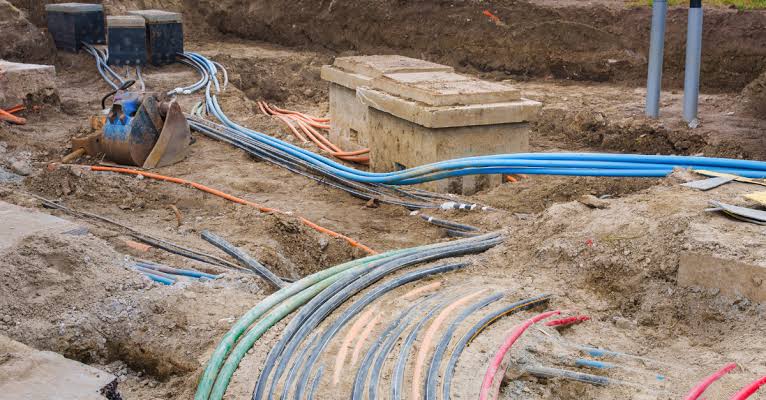
Duct fiber optic cable is designed to be installed inside underground ducts, conduits, or pipes.
The duct provides physical protection, while the cable itself focuses on:
- Fiber protection
- Installation flexibility
- Easy maintenance
Common duct fiber cable types include:
- GYTA fiber optic cable
- GYTS fiber optic cable
- Non-armored outdoor fiber cable
- Micro duct fiber cable
Duct Fiber Optic Cable Structure
Typical duct cables include:
Optical Fiber
Provides high-speed data transmission.
Loose Tube
Protects fibers from:
- Moisture
- Temperature changes
Water Blocking System
Includes:
- Water blocking gel
- Water blocking yarn
- Dry core technology
Outer Jacket
Usually:
- HDPE sheath
- PE sheath
Compared with direct burial cable, duct cable usually has lighter construction because the duct provides external protection.
Advantages of Duct Fiber Optic Cable
1. Easier Installation
Duct systems allow:
- Cable pulling
- Cable blowing
- Future replacement
2. Better Long-Term Scalability
A major advantage of duct installation is future expansion.
Additional cables can be installed without excavation.
This is important for:
- Telecom operators
- City networks
- Data centers
3. Easier Maintenance
If cable damage occurs:
- Remove old cable
- Install new cable
- Restore service faster
4. Better Protection Against External Damage
The duct protects against:
- Excavation accidents
- Soil movement
- Mechanical pressure
Disadvantages of Duct Fiber Cable
1. Higher Initial Investment
The project requires:
- Underground pipes
- Manholes
- Duct installation
The initial construction cost is usually higher.
2. More Complex Installation Planning
Engineers need to consider:
- Duct size
- Cable filling ratio
- Pulling distance
- Bending radius
Direct Burial vs Duct Fiber Optic Cable Comparison Table
| Feature | Direct Burial Cable | Duct Fiber Cable |
|---|---|---|
| Installation method | Direct underground burial | Installed inside duct |
| Protection | Cable armor | External duct protection |
| Initial cost | Lower | Higher |
| Maintenance | Difficult | Easy |
| Future expansion | Limited | Excellent |
| Installation speed | Faster | Slower |
| Mechanical strength | Very high | Medium |
| Cable replacement | Difficult | Easy |
| Best application | Rural networks | Urban networks |
Installation Guide: How to Install Direct Burial Fiber Optic Cable
Step 1: Route Planning
Before installation:
- Survey the route
- Check soil conditions
- Identify obstacles
Step 2: Trenching
Typical burial depth depends on:
- Local regulations
- Soil conditions
- Traffic environment
Step 3: Prepare Cable Bedding
Use:
- Fine sand
- Cable protection materials
Avoid sharp rocks contacting the cable.
Step 4: Cable Installation
Important factors:
- Maintain pulling tension
- Avoid excessive bending
- Protect cable jacket
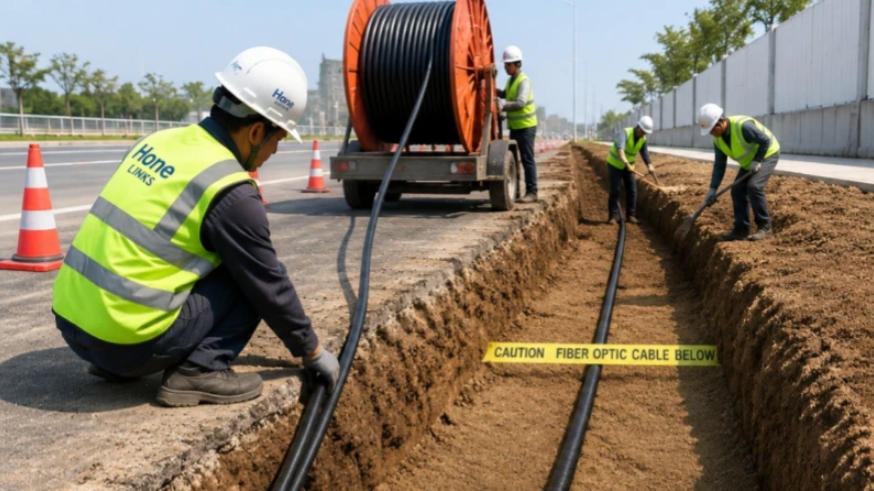
Step 5: Warning Tape Installation
Install warning markers above the cable route to prevent accidental excavation.
Installation Guide: How to Install Duct Fiber Optic Cable
Step 1: Install Underground Duct
Common duct materials:
- HDPE pipe
- PVC conduit
- Micro duct
Step 2: Inspect Duct Condition
Check:
- Blockages
- Water accumulation
- Pipe damage
Step 3: Cable Pulling or Blowing
Methods:
Cable Pulling
Suitable for:
- Traditional fiber cables
Air Blown Installation
Suitable for:
- Micro cables
- High-density networks
Step 4: Splicing and Testing
Perform:
- OTDR testing
- Optical loss testing
- Fiber inspection
Direct Burial vs Duct Fiber Cable Cost Analysis
The total project cost includes:
- Cable price
- Installation labor
- Equipment
- Maintenance
- Future expansion
Direct Burial Cost
Lower initial cost because:
No duct required.
However:
Future repairs may cost more.
Duct Cable Cost
Higher upfront investment.
Advantages:
Lower lifecycle cost.
For large telecom networks, duct systems are often more economical over 20–30 years.
Which One Should You Choose?
Choose Direct Burial Fiber Cable When:
Recommended for:
✔ Rural broadband projects
✔ Long-distance fiber routes
✔ Low-density areas
✔ Temporary networks
✔ Limited expansion requirements
Choose Duct Fiber Cable When:
Recommended for:
✔ City fiber networks
✔ Data centers
✔ Telecom backbone networks
✔ Smart city projects
✔ Future network expansion
Direct Burial vs Duct Fiber Optic Cable for Different Applications
Telecom Networks
Duct cable is usually preferred because operators need future upgrades.
Rural Broadband
Direct burial is often more economical.
Industrial Networks
Depends on:
- Environment
- Expansion requirements
- Protection needs
Data Center Connectivity
Duct systems are preferred due to:
- High reliability
- Easy maintenance
- Future capacity upgrades
Common Mistakes When Choosing Underground Fiber Cable
Mistake 1: Selecting Based Only on Cable Price
The cheapest cable may create higher lifetime costs.
Mistake 2: Ignoring Future Expansion
Networks grow.
Always consider:
- Additional fibers
- New customers
- Higher bandwidth
Mistake 3: Choosing Incorrect Protection Level
Different environments require different cable structures.
FAQ: Direct Burial vs Duct Fiber Optic Cable
Q1: Can duct fiber optic cable be buried directly?
Usually no.
Duct cables require protective conduit unless specifically designed for direct burial.
Q2: Is direct burial fiber cable better than duct cable?
Not always.
Direct burial is better for low-cost projects, while duct cable is better for long-term network development.
Q3: Which cable has a longer lifespan?
Both can last 25–30 years when properly installed.
The installation environment is more important than cable type alone.
Q4: Is armored fiber optic cable suitable for direct burial?
Yes.
Armored fiber cables are commonly used for direct burial applications.
Q5: Which installation method is cheaper?
Direct burial usually has lower initial installation costs.
Duct installation may provide lower long-term costs.
Conclusion: Direct Burial or Duct Fiber Optic Cable?
The choice between direct burial fiber optic cable and duct fiber optic cable depends on project goals.
Choose direct burial fiber cable if you need:
- Lower installation cost
- Simple deployment
- Strong mechanical protection
Choose duct fiber cable if you need:
- Future expansion
- Easy maintenance
- Long-term network flexibility
For modern telecom infrastructure, duct systems are becoming increasingly popular because they provide better scalability. However, direct burial cables remain an excellent solution for rural broadband and cost-sensitive projects.
Understanding the differences between these two underground fiber optic solutions helps network designers build faster, more reliable, and more cost-effective fiber networks.