When utility engineers plan overhead fiber optic networks, three terms dominate the conversation: ADSS cable, ASU cable, and OPGW cable.
Each belongs to a specialized family of aerial fiber optic cables for power lines, yet their structures, applications, and cost profiles differ dramatically.
This guide explains what ADSS, ASU, and OPGW cables are, how they compare across multiple dimensions, and which option fits specific grid environments—from high‑voltage transmission towers to distribution poles and renewable energy sites.
1. What Are ADSS, ASU, and OPGW Cables?
ADSS Cable (All‑Dielectric Self‑Supporting Cable)
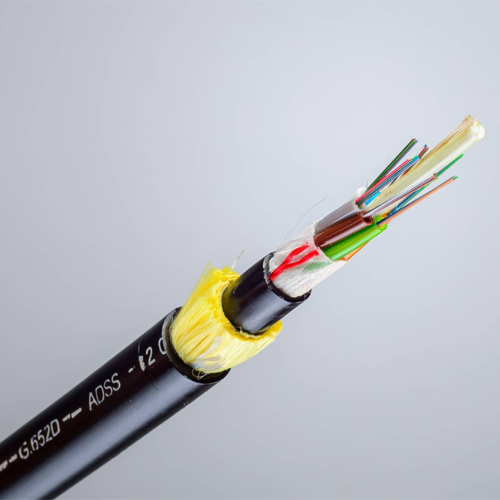
An ADSS fiber optic cable is a fully non‑metallic aerial cable designed to support itself between poles or towers.
It uses aramid yarn (Kevlar) as tensile strength members and polyethylene or AT (anti‑tracking) jackets to resist electrical erosion.
Best for:
- Live‑line installations
- Existing transmission and distribution lines
- Medium‑span applications
ASU Cable (All‑Dielectric Simplified Unit Cable)
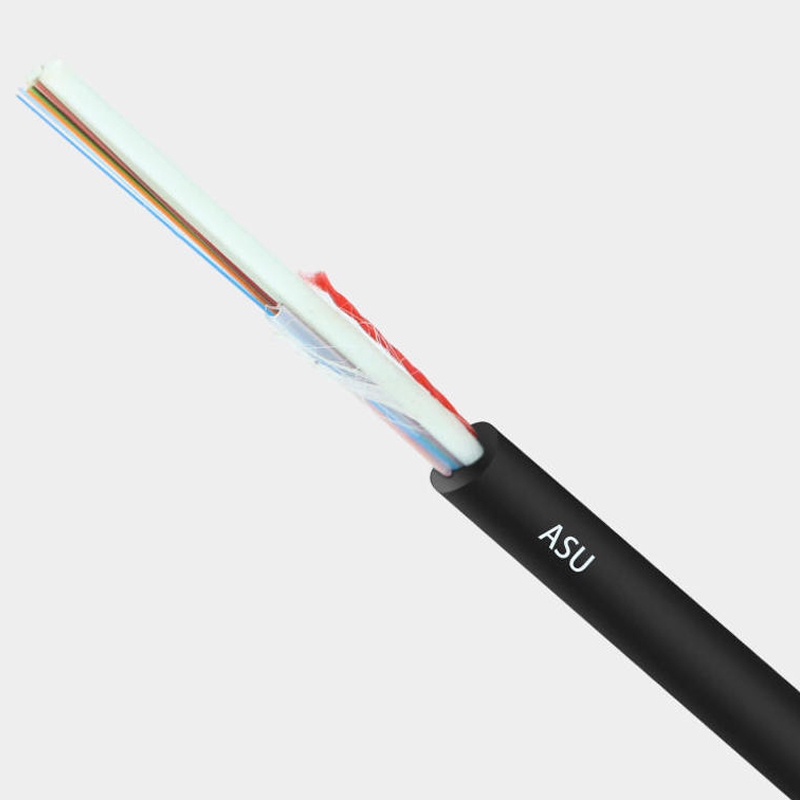
The ASU cable is often described as a lightweight, simplified version of ADSS.
While not always defined uniformly across regions, ASU typically refers to small‑span all‑dielectric self‑supporting cables used in distribution networks.
Best for:
- Short spans (<300 m)
- Low‑voltage distribution poles
- Budget‑sensitive projects
OPGW Cable (Optical Fiber Composite Overhead Ground Wire)
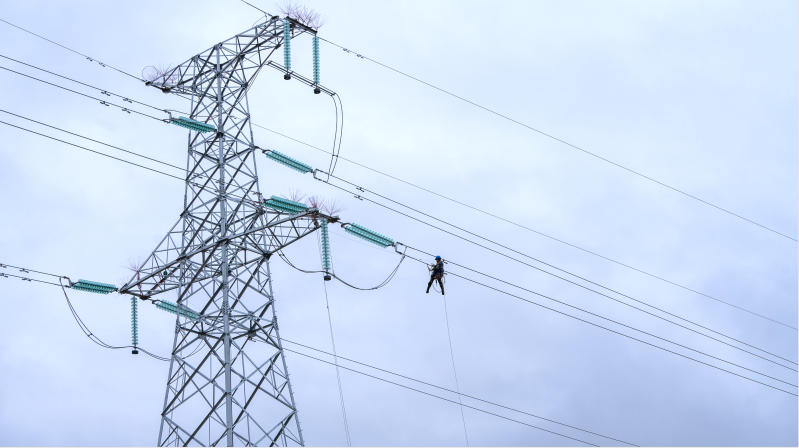
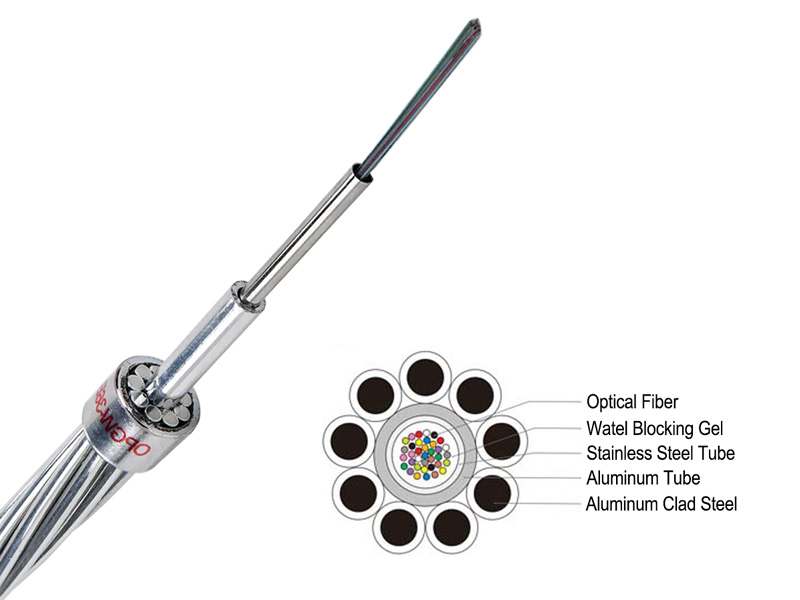
An OPGW cable replaces traditional ground wires on high‑voltage transmission lines.
It integrates optical fibers inside stainless steel tubes protected by aluminum‑clad steel or aluminum alloy strands.
Best for:
- New high‑voltage lines
- Lightning protection + communication
- Long‑span, heavy‑ice zones
2. Structural Differences Between ADSS, ASU, and OPGW
| Feature | ADSS Cable | ASU Cable | OPGW Cable |
|---|---|---|---|
| Metallic Components | None | None | Yes |
| Tensile Strength | High | Moderate | Very High |
| Outer Layer | PE / AT Jacket | PE Jacket | Aluminum Alloy / Steel |
| Fiber Location | Loose Tube | Loose Tube | Stainless Steel Tube |
| Self‑Support | Yes | Yes | Yes |
| Grounding Required | No | No | Yes |
Key takeaway:
- ADSS = flexible, non‑metallic, mid‑span.
- ASU = lighter, cheaper, short span.
- OPGW = structural, metallic, dual‑purpose.
3. Application Environments by Voltage Level
10kV–35kV Distribution Networks
- Preferred: ASU or ADSS
- Reason: No grounding required; easy installation on wooden or concrete poles.
66kV–132kV Transmission Lines
- Preferred: ADSS with AT sheath
- Reason: Higher electric field intensity requires anti‑tracking protection.
220kV–500kV+ Transmission Corridors
- Preferred: OPGW
- Reason: Combines lightning shielding with high‑capacity fiber backbones.
Renewable Energy Projects
- Solar Farms: ADSS for intra‑site links
- Wind Farms: OPGW on access transmission lines
4. Mechanical Performance and Span Length
| Cable Type | Typical RTS (Rated Tensile Strength) | Max Span |
|---|---|---|
| ADSS | 10–50 kN | Up to 1000 m |
| ASU | 5–15 kN | <300 m |
| OPGW | 40–120 kN+ | >1000 m |
Why it matters:
Span length determines tower loading.
Over‑engineering wastes budget; under‑engineering risks cable failure.
5. Electrical and Lightning Protection
| Factor | ADSS | ASU | OPGW |
|---|---|---|---|
| Lightning Protection | ❌ | ❌ | ✅ |
| Short‑Circuit Current Capacity | ❌ | ❌ | ✅ |
| Electric Field Resistance | AT Jacket Required ≥110kV | Rarely Needed | Inherent |
| Induced Voltage Risk | None | None | Managed via grounding |
6. Installation Requirements and Cost Comparison
| Aspect | ADSS | ASU | OPGW |
|---|---|---|---|
| Installation Method | Clamped to existing towers | Lightweight pole mounting | Replaces ground wire |
| Outage Required | No | No | Yes (unless new line) |
| Labor Complexity | Medium | Low | High |
| CAPEX | Medium | Low | High |
| OPEX | Low | Low | Very Low |
Rule of thumb:
- New lines → OPGW saves long‑term cost.
- Existing lines → ADSS avoids outages.
- Distribution upgrades → ASU minimizes spend.
7. FAQs on ADSS, ASU, and OPGW Selection
Q1: Can ADSS be installed on 220kV lines?
Yes—but only if the attachment point has low electric field strength and an AT sheath is used.
Q2: Is ASU suitable for long crossings?
No. ASU is optimized for short spans and light loads.
Q3: Why is OPGW more expensive?
Because it replaces a structural ground wire, requires precise sag/tension engineering, and must carry fault currents.
Q4: Which cable lasts longer?
OPGW generally exceeds 30 years. ADSS and ASU average 15–25 years depending on UV and pollution exposure.
Conclusion: Choosing the Right Cable for Your Grid
There is no universal winner among ADSS, ASU, and OPGW cables.
The right choice depends on voltage level, span length, outage constraints, and lifecycle cost goals.
- Choose OPGW when building new high‑voltage transmission infrastructure.
- Choose ADSS when upgrading live lines without service interruption.
- Choose ASU for cost‑effective distribution and short‑span deployments.
By aligning cable structure with environmental demands, utilities reduce risk, optimize budgets, and ensure reliable fiber connectivity across modern power systems.