Tactical Fiber Optic Cable, also widely named field deployable fiber optic cable, military tactical fiber or mobile rugged fiber optic cable, is a specialized tight-buffered optical cable engineered for temporary rapid deployment, repeated winding & recovery and ultra-harsh environmental communication, originally developed for global military field combat communication and later expanded into emergency rescue, outdoor broadcast, industrial exploration, petrochemical, large-scale event networking and disaster recovery industries. Unlike conventional indoor patch cord or underground buried aerial fiber cables designed for fixed long-term laying, tactical fiber cable prioritizes portability, mechanical ruggedness, all-weather environmental adaptability and reusable performance, complying with international military testing standards MIL-STD-810G, ICEA-596 and GR-20 industry specifications, becoming the mainstream temporary high-speed data transmission medium for mission-critical communication projects worldwide.
Part 1 Core Structural & Product Features of Tactical Fiber Optic Cable
The core design philosophy of tactical fiber optic cable focuses on “anti-damage, flexible bending, lightweight portable and repeated use”, each layer of structural configuration is optimized targeting field rough deployment environment, split into four core structural features as below:
1.1 Inner Core: 900μm Tight Buffered Optical Fiber Unit
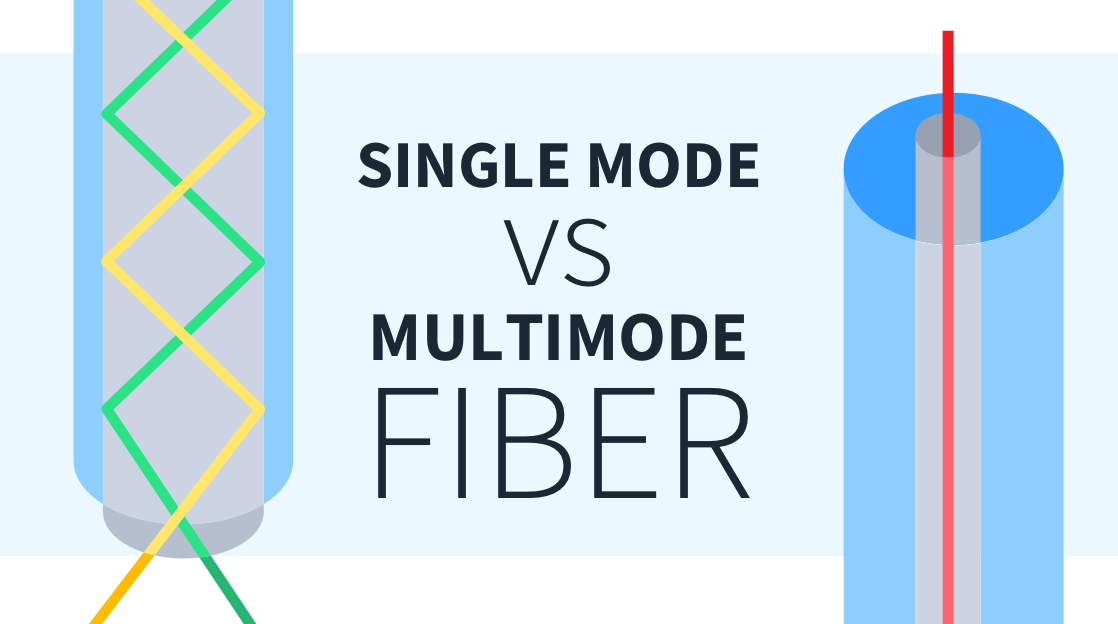
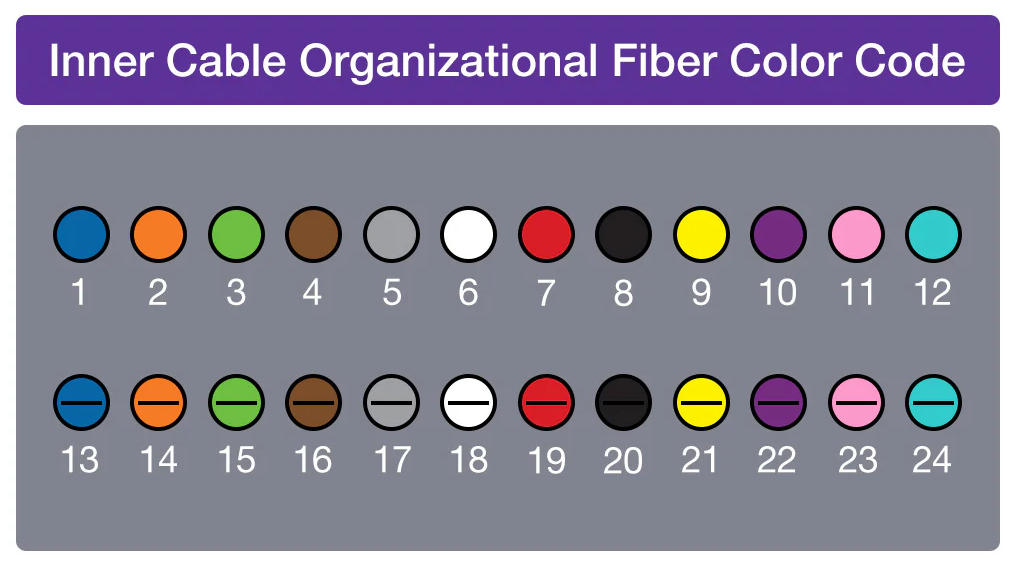
Different from loose tube structure of standard outdoor fiber cable, tactical fiber adopts 900μm tight-buffered single mode (G.652D/G.657A bend-insensitive fiber) or multimode fiber (OM2/OM3/OM4) as transmission core, fiber counts cover 2/4/6/8/12/24 cores, the most mainstream specifications are 2-core,4-core and6-core for short-to-medium distance field links. Tight buffer coating wraps each individual fiber independently, avoiding fiber extrusion damage during frequent coiling and dragging, supporting fast field direct termination without complex stripping equipment, greatly shortening on-site wiring construction cycle. Bend-insensitive fiber variant further optimizes anti-kink performance, allowing small-radius winding without obvious optical attenuation increment, solving fiber breakage pain points during rapid field layout.
1.2 Middle Reinforcement Layer: Full Aramid(Kevlar) Yarn Tensile Structure
Aramid fiber (Kevlar) serves as the primary strength member wrapped around tight buffer fiber core, forming all-dielectric non-metallic reinforcement design without any steel wire inside standard non-armored tactical fiber variants. Short-term tensile resistance reaches 1500N~3000N per 100mm cable length, long-term safe pulling load maintains above 600N, resisting strong pulling during artificial traction, vehicle rolling and heavy object extrusion on rugged terrain; aramid yarn also delivers natural anti-rodent bite performance, preventing field mouse, squirrel gnawing damage to internal fiber core, widely praised in wild mountain and woodland deployment projects. Optional spiral stainless steel armored tactical fiber adds thin helical steel tube between aramid and outer jacket for ultra-crush demand scenarios like construction site and heavy vehicle crossing, improving anti-impact capacity by over 10 times compared with conventional tactical fiber.
1.3 Outer Protective Jacket: High-performance TPU/PUR Thermoplastic Polyurethane Sheath
TPU/PUR is the universal outer sheath material for mainstream tactical fiber optic cable, replacing common PVC/LSZH jacket of civil fiber cable, realizing multi-environment resistant comprehensive protection. Key material features include excellent abrasion resistance, fuel/oil/chemical acid corrosion resistance, UV anti-aging and low-temperature flexibility: operational stable temperature range spans -40℃~+85℃, remaining soft without cracking under alpine minus 40 degrees cold or desert +70℃ high temperature; oxygen index of flame-retardant TPU variant meets military flame retardant standard, slowing fire spread in accidental open fire environment. Customizable jacket colors include military olive green, industrial black, safety orange per client demand for quick field identification.
1.4 Integral Physical Specification Feature: Ultra-light Compact Size & Reel-matched Design
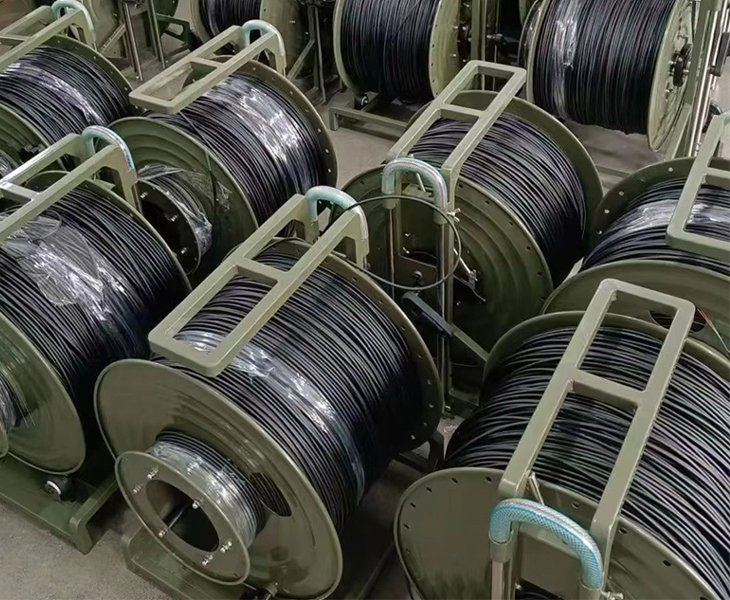
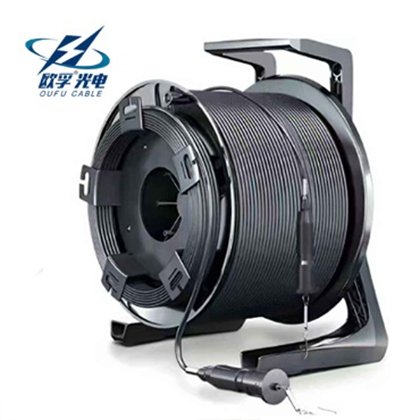
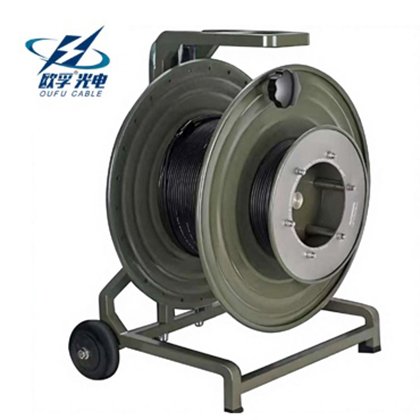
Finished tactical fiber outer diameter ranges 5.0mm~7.5mm based on core quantity, cable weight only 30~80kg per kilometer without reel, 70% lighter than same-core copper communication cable and 40% lighter than ordinary armored buried fiber. Complete sets are pre-terminated with ruggedized military-grade connectors (LC/SC/FC/Expanded Beam/MTP/MPO) on both ends, matched with lightweight portable plastic/metal cable reel; 500ft 2-core tactical fiber reel only weighs about 8lbs, single worker can carry and finish rapid laying within minutes, passing over 1000 times repeated winding-retraction industrial testing with extra fiber loss below 0.05dB after cyclic use, fully satisfying mobile frequent transfer requirements of tactical missions.
Part 2 Unique Competitive Advantages of Tactical Fiber Optic Cable
Compared with copper field communication cable and ordinary fixed-laying fiber optic cable, tactical fiber owns six irreplaceable core advantages covering transmission performance, environmental adaptability, economic cost and application flexibility, becoming preferred temporary communication medium for mission-critical industries:
2.1 Complete Anti-electromagnetic Interference & Anti-EMP Eavesdropping, Absolute Signal Security
Full all-dielectric non-metallic structure makes tactical fiber completely free from EMI/RFI electromagnetic interference generated by high-voltage power line, radar equipment, radio station and industrial high-frequency machinery, no signal distortion or data loss in complex electromagnetic dense environments such as military combat zone, power plant and heavy machinery factory. Optical signal transmission does not radiate electromagnetic wave outward, realizing anti-eavesdrop confidential communication; meanwhile fiber medium naturally resists EMP electromagnetic pulse damage from nuclear explosion or high-power electronic warfare weapon, core advantage for national defense military secure tactical backbone construction unavailable for copper cables.
2.2 Ultra-high Bandwidth & Low Optical Attenuation, Supporting Multi-service Concurrent High-speed Transmission
Single-mode tactical fiber features ultra-low transmission attenuation (<0.22dB/km@1550nm), supporting stable 10G/40G/100G high-speed data long-distance transmission up to dozens of kilometers; OM3/OM4 multimode tactical fiber satisfies short-range 10G~100G ultra-high bandwidth transmission within 550 meters, simultaneously bearing real-time 4K/8K HD video, drone sensor data, radar signal, voice communication and big data backhaul multi-service concurrent operation. For outdoor live broadcast, military field command center temporary networking, one single tactical fiber link replaces dozens of copper lines, greatly simplifying on-site wiring layout and reducing intermediate signal conversion equipment input cost.
2.3 Outstanding All-weather Environmental Tolerance, Adapt to Global Extreme Terrain & Climate
Validated per MIL-STD-810G environmental testing standards, tactical fiber stably operates across frigid polar alpine, high-temperature desert, humid tropical rainforest, coastal salt-fog seaside, muddy flood disaster area and chemical pollution industrial park without performance degradation. TPU outer jacket blocks rainwater, mud, seawater salt fog penetration for short-term shallow water crossing deployment; anti-UV formula prevents long-term outdoor sunlight aging cracking, suitable for long-time open-air placement without auxiliary conduit protection, cutting auxiliary pipeline construction expense required by conventional fixed fiber laying.
2.4 High Reusability Reduces Long-term Total Procurement Cost
Core design target of tactical fiber is cyclic repeated deployment and recovery, qualified products can realize dozens of field layout & recycling cycles without core fiber damage, unlike disposable temporary copper wire or ordinary cheap fiber discarded after single use. For frequent drill military troops, annual multi-session outdoor sports events, periodic field geological exploration teams, reusable tactical fiber drastically cuts repeated cable purchasing cost year by year; though unit price is higher than civil ordinary fiber initially, comprehensive use cost drops over 60% within 2~3 years of cyclic application, prominent cost advantage for long-term frequent deployment users.
2.5 Flexible Rapid Deployment, Diversified Laying Mode Choices
Thanks to ultra-flexible TPU jacket and optimized bending structure, static minimum bend radius reaches 10 times cable outer diameter, dynamic bend radius controlled within 20 times OD, supporting overhead suspension, ground direct pavement, temporary shallow burial, vehicle wiring, aerial quick dragging multiple laying methods without pre-laying pipeline or cable trench construction. Emergency rescue scenario realizes kilometer-level network deployment within half an hour, solving urgent temporary networking bottleneck after natural disaster infrastructure collapse.
2.6 Rich Customization Flexibility for Specialized Scene Matching
Manufacturers provide full customized service for tactical fiber: adjustable core count from 1~24 cores, hybrid tactical fiber (integrating copper power wire + optical fiber inside single sheath) for simultaneous power supply and data transmission of field remote equipment, customized expanded beam connectors for ultra-dusty muddy field connection, low-smoke zero-halogen LSZH-TPU jacket variant for indoor temporary fire-sensitive venues such as stadium and exhibition center; customizable length from 10m to 2000m pre-terminated finished cable per project requirement, fully matching differentiated specification demands of diversified subdivided industries.
Part3 Detailed Application Scenarios of Tactical Fiber Optic Cable
With mature technical iteration and cost optimization in recent years, tactical fiber optic cable has broken original single military application boundary, widely applied into 7 major segmented fields, detailed scene analysis as:
3.1 National Defense & Military Field (Core Original Application Scenario)
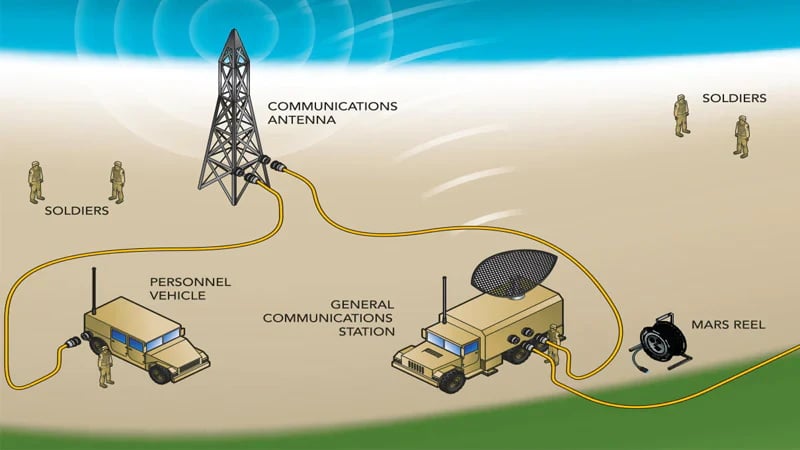
It remains the largest consumption market of global tactical fiber, covering field combat temporary command backbone, military field drill mobile communication, armored vehicle interconnection link, naval shore-ship temporary data connection, drone ground control station fiber backhaul, electronic warfare anti-interference encrypted communication. During field military maneuver exercise, troops rapidly deploy tactical fiber between forward observation post and rear command vehicle to build secure high-speed private network for real-time battlefield video, reconnaissance data transmission; military engineering unit uses armored tactical fiber for post-battle damaged communication infrastructure emergency repair, replacing damaged fixed trunk fiber temporarily. military tactical fiber optic cable for field maneuver, army drill deployable fiber assembly.
3.2 Emergency Rescue & Natural Disaster Recovery Communication
When earthquake, flood, wildfire, typhoon destroy municipal fixed optical fiber and copper communication trunk, rescue departments (fire brigade, civil defense, emergency management bureau) deploy portable reel tactical fiber as emergency temporary communication lifeline, connecting on-site rescue command post with municipal emergency center, realizing real-time rescue scheduling data, on-site live video backhaul. Flood inundated area shallow water-crossing waterproof tactical fiber lays across river to restore isolated village communication; wildfire high-temperature resistant flame retardant tactical fiber withstands ambient high temperature for mountain rescue networking,emergency disaster recovery tactical fiber optic cable for rescue mission.
3.3 Outdoor Broadcast & Live Production Industry (OB Outside Broadcast Core Cable)
TV station, live streaming media company, sports event broadcasting team adopt tactical fiber for outdoor live program production, sports match live broadcast, concert large-scale stage temporary signal transmission. Sports stadium World Cup, NBA tournament, Olympic events deploy thousands of meters tactical fiber between field OB van and commentary stand, camera position, score control room to transmit 4K/8K live HD video stably; outdoor reality show field shooting uses portable small-reel tactical fiber for mobile camera and live control room interconnection, quick dismantle and recycle after shooting wraps up, no residual cable waste on-site, outside broadcast OB tactical fiber cable for sports live.
3.4 Petroleum, Mining & Geological Exploration Industrial Field
Onshore oilfield drilling platform, offshore temporary oil exploration ship, underground coal mine roadway mobile monitoring system, mountain geological mineral exploration team widely select anti-oil corrosion, anti-crush tactical fiber. Oilfield construction site frequently changes drilling equipment position, reusable tactical fiber connects downhole monitoring sensor and ground control cabinet; open-pit mine heavy truck frequent rolling ground pavement armored tactical fiber avoids cable crush damage; field geological survey team carries small-reel tactical fiber for remote field detection equipment data backhaul, keywords: oil mining rugged tactical fiber optic cable for harsh mine environment.
3.5 Large-scale Events, Stadium & Temporary Exhibition Networking
International exhibition, large music festival, city marathon, temporary outdoor auto show build temporary high-speed internet using tactical fiber, connecting exhibition hall booth network, live streaming area, security monitoring room and central network control room. After event closing, all tactical fiber is recycled and stored for next activity reuse, greatly saving repeated cabling investment compared with disposable temporary network wire; indoor stadium temporary tournament adds LSZH low-smoke tactical fiber complying with fire protection standard to meet indoor fire safety specification, temporary event deployable tactical fiber for stadium exhibition network.
3.6 Rail, Port & Construction Engineering Temporary Monitoring
High-speed rail new line construction site, container port temporary loading monitoring system, large bridge building engineering use tactical fiber for temporary security monitoring, construction equipment data transmission. Engineering construction site frequent machinery movement requires repeatedly moving monitoring camera position, recyclable tactical fiber realizes quick disassembly wiring; port seaside salt-fog resistant TPU tactical fiber adapts coastal humid corrosive environment for temporary container yard monitoring networking.
3.7 Aerospace, Special Equipment & Robotics Mobile Link
Space rocket launch ground control temporary fiber connection, industrial robotic arm mobile wiring, unmanned vehicle test field data backhaul adopt customized mini-size tactical fiber, bend-resistant compact structure adapts narrow equipment internal wiring space, anti-vibration military grade specification satisfies long-time equipment jitter working condition.
Part4 Market Development Trend & Buying Reference Tips
Global tactical fiber optic cable market maintains steady annual growth driven by global military modernization, frequent natural disasters and rapid development of live broadcast industry; future product development trends focus on ultra-miniaturization lightweight design, hybrid fiber-copper integrated structure and bend-insensitive full G.657 fiber popularization, low-smoke halogen-free environmental TPU sheath gradually replaces conventional black TPU in indoor temporary scene applications.
For global purchasers, system integrators selecting tactical fiber optic cable follow three core standards:
first confirm deployment distance to choose single mode (long distance>2km) or multimode (short distance<2km);
second match environment: select standard TPU for general outdoor, armored spiral steel tactical fiber for heavy crush risk site, flame retardant LSZH variant for indoor fire requirement place; third confirm repeated use frequency, high cyclic deployment scenario prioritizes high-grade thick-wall TPU military-spec tactical fiber to extend service lifespan.
Conclusion
As irreplaceable rugged temporary transmission medium in harsh environment communication industry, Tactical Fiber Optic Cable gains sustained market favor relying on superior mechanical durability, anti-interference secure transmission, reusable economic benefit and all-scenario adaptability, expanding from original exclusive military consumption to multi-industry civil diversified demand. With continuous upgrade of global 5G temporary networking, emergency communication construction and outdoor live economy, market demand of customized tactical fiber variants will keep rising steadily. Mastering its structural features, core advantages and scene matching rules helps global buyers accurately pick up matching tactical fiber specification to reduce project construction risk and long-term operating cost.
Tactical Fiber Optic Cable FAQ
Q1: What is tactical fiber optic cable? How is it different from regular outdoor fiber cable?
A: Tactical fiber optic cable is a reusable, rugged tight-buffered field deployable fiber designed for temporary wiring, repeated roll-up & recovery under harsh conditions, also called military field fiber / OB broadcast rugged fiber. Standard outdoor loose-tube fiber is made for permanent buried/aerial fixed installation, one-time laying and long-term static use; tactical fiber uses 900μm tight buffer fiber, full aramid yarn tensile reinforcement and TPU/PUR outer jacket, focusing on flexibility, pull resistance and cyclic reuse, no need pipeline laying for field quick deployment.
Q2: What fiber types & core counts are available for tactical fiber cable?
A: Single mode (G.652D, G.657A bend insensitive fiber) and multimode (OM2, OM3, OM4) are mainstream fiber types. Standard fiber core options: 2/4/6/8/12/24 cores, 2-core & 4-core are best-selling for short&medium field links. Custom hybrid tactical fiber (fiber+copper power wire inside one cable) is available for sites needing both data transmission and equipment power supply.
Q3: What outer jacket material options do you supply? Difference between TPU, PUR, LSZH?
A: 3 mainstream jacket materials:
- Black/Olive Green TPU: Standard grade, abrasion resistant, -40℃~+85℃ working temp, most used for military drill, outdoor construction, general emergency rescue;
- PUR: Superior oil/chemical/salt fog resistance, preferred for offshore oilfield, coastal port deployment, chemical industrial field;
- LSZH Low Smoke Zero Halogen TPU: Flame retardant, low toxic fume, for indoor stadium, exhibition hall, indoor temporary live broadcast per fire protection regulation.
Q4: Is tactical fiber pre-terminated with fiber connectors? What connector types optional?
A: Most finished tactical fiber cables are pre-terminated both ends with ruggedized connectors before delivery, matching portable cable reels. Available connectors: LC, SC, FC, ST, Expanded Beam, MTP/MPO. Expanded Beam connector is specially recommended for dusty, muddy construction/mining sites with frequent plug&pull; LC/SC are common for broadcast, emergency communication projects. Custom bare-end unfinished cable is acceptable per client request.
Q5: Can tactical fiber bear heavy pulling, vehicle rolling and animal biting outdoors?
A: Standard tactical fiber adopts full aramid(Kevlar) yarn surrounding fiber core as strength member, tensile load 600N–3000N to resist artificial dragging and moderate tension; aramid itself improves anti-rodent performance against field mice/squirrel biting. For construction sites, mine roads with frequent truck rolling, spiral stainless steel armored tactical fiber is optional, greatly improving crush & impact resistance.
Q6: What is the operating temperature range of your tactical fiber optic cable?
A: Standard TPU tactical fiber stable working range: -40℃ ~ +85℃, suitable for alpine cold region, high-temperature desert, tropical rainy and coastal salt spray environment; flame retardant customized version can withstand short-time ambient open fire for wildfire emergency rescue scenarios.
Q7: How many times can tactical fiber be wound and reused? Service life?
A: Qualified military-grade tactical fiber passes over 1000 cycles of winding/unwinding test with negligible fiber attenuation increment (<0.05dB). With regular proper storage, service life reaches 5–8 years for cyclic repeated use; much lower comprehensive cost vs disposable temporary copper wire or cheap single-use fiber.
Q8: Main application industries & typical usage scenarios for tactical fiber?
A:
- Military: Field drill temporary command network, armored vehicle interconnection, battlefield emergency communication repair;
- Emergency rescue: Earthquake/flood/wildfire disaster recovery temporary backbone for fire & civil defense department;
- OB Broadcast: Sports games, concert, outdoor reality show 4K/8K live signal transmission;
- Industry: Oilfield drilling, open-pit mine monitoring, geological exploration field data backhaul;
- Event: Stadium matches, exhibition, outdoor festival temporary high-speed network setup.
Q9: Single mode or multimode tactical fiber, how to select according to transmission distance?
A:
- Multimode (OM3/OM4): ≤550m short distance, live broadcast, indoor event temporary networking, local equipment interconnection;
- Single mode G.652D/G.657A: Over 550m up to tens of kilometers, military long-distance field layout, cross-river disaster rescue, oilfield long-distance monitoring backhaul.
Q10: Can tactical fiber be used underwater or across rivers temporarily?
A: Standard TPU tactical fiber features waterproof outer jacket for short-time shallow water crossing (shallow river, flood inundated ground temporary submerged deployment). For long-term underwater sinking or deep water application, customized waterproof sealed connector + special water-blocking tactical structure is required.
Q11: Does tactical fiber resist electromagnetic interference (EMI/RFI)? Can it work near high voltage cables & radar?
A: Yes. Tactical fiber is all-dielectric non-metallic structure without conductive metal, completely immune to EMI/RFI from high voltage lines, radar station, heavy industrial machinery; meanwhile no electromagnetic leakage, supporting encrypted anti-eavesdrop confidential communication for military and security-sensitive projects.
Q12: What length options for finished reel tactical fiber? Can I customize cable length?
A: Standard finished reel lengths: 50m,100m,200m,300m,500m,1000m; customizable length from 10m up to 2000m as per customer project requirement. Equipped with lightweight plastic/metal portable cable reel for easy transport and quick field deployment.
Q13: Is OEM & custom color available for tactical fiber outer jacket?
A: Accept OEM customization. Regular colors: Military olive green, safety orange, industrial black; custom yellow/red/blue jacket color is available for special project identification demand, MOQ depends on customized specification.
Q14: What certifications your tactical fiber optic cable have?
A: Products comply with MIL-STD-810G military environmental test standard, GR-20, ICEA industry specification; can provide test report for tensile, low-temperature bending, abrasion resistance, flame retardant upon buyer’s demand, support third-party testing.
Q15: How to store tactical fiber to extend service lifespan after using?
A: After field use, clean mud, oil and dust on cable surface, neatly wind back on matched reel, store in dry, ventilated warehouse avoiding long-term direct sunlight exposure and extruding by heavy goods.
Q16: Lead time & MOQ for bulk order?
A: Standard stock specifications (2/4 core LC/SC TPU tactical cable) with short lead time 3–7 working days; customized core count, connectors, jacket material order lead time 12–18 working days; small trial order acceptable, MOQ flexible based on different specs.