In today’s hyper-connected world, fiber optic cable has become the backbone of modern communication—powering everything from high-speed internet and 5G networks to data centers, smart cities, and industrial automation. If you’re planning to buy fiber optic cable, understanding its structure, performance, and ideal use cases is critical to avoiding costly mistakes and ensuring long-term reliability. This guide breaks down the key factors to consider, with a focus on practical, Help you make an informed decision.
1. Understanding Fiber Optic Cable Basics
Before diving into purchasing, it’s essential to grasp what makes fiber optic cable unique. Unlike copper cables that transmit electrical signals, fiber optics use light pulses to carry data through thin strands of glass or plastic (called optical fibers). This design delivers three core advantages:
- Higher bandwidth: Supports massive data volumes (up to terabits per second) without signal degradation.
- Longer transmission distances: Can span 10–100x farther than copper without repeaters.
- Immunity to electromagnetic interference (EMI): Ideal for industrial or high-noise environments.
When you buy fiber optic cable, these fundamentals will shape your choice of type, material, and installation method.
2. Classifying Fiber Optic Cables by Core Structure & Mode
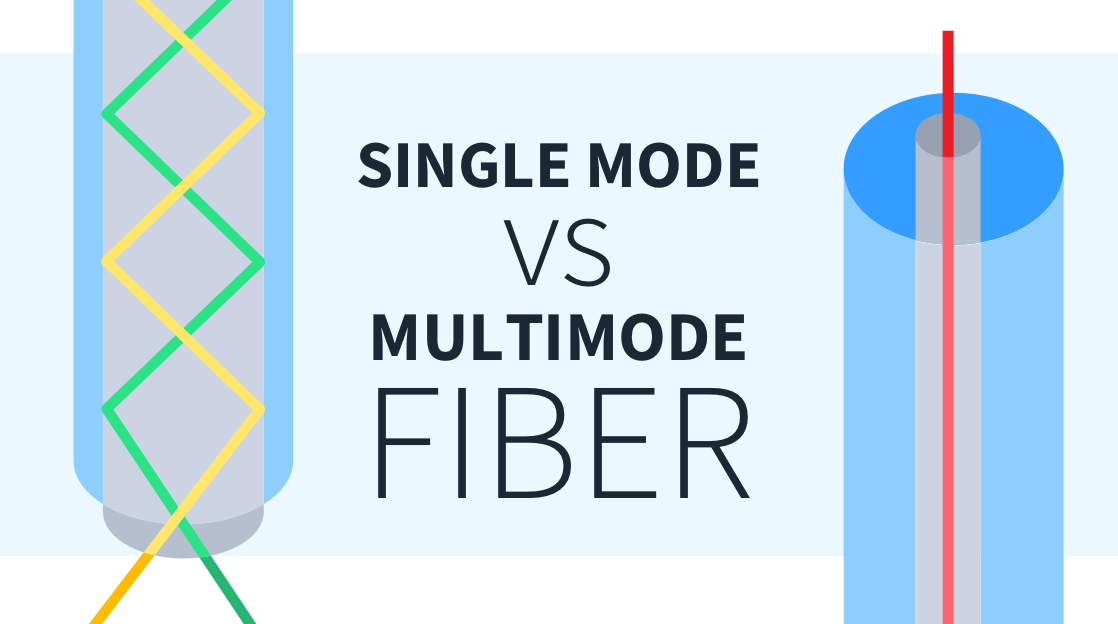
One of the first decisions when you buy fiber optic cable is selecting between single-modeand multimodefibers—a distinction based on how light travels through the core.
2.1 Single-Mode Fiber (SMF)
Single-mode fiber has an ultra-thin core (8–10 microns) that allows only one light mode (path) to propagate. This minimizes modal dispersion(signal spreading), enabling:
- Transmission distances up to 100+ km (with amplification).
- Bandwidths exceeding 100 Gbps (and scaling to 400 Gbps+ for next-gen networks).
Common types of single-mode fiber:
| Type | Description | Best For |
|---|---|---|
| G.652.D (Standard SMF) | Low water peak, compatible with most telecom systems. | Long-haul telecom, metro networks, submarine cables. |
| G.654.E (Cutoff-Shifted SMF) | Larger effective area, lower attenuation. | Ultra-long-haul (transoceanic) links, 5G fronthaul. |
| G.657.A1/A2 (Bend-Insensitive SMF) | Resists signal loss even when bent sharply (e.g., 90° turns). | Indoor FTTH (Fiber-to-the-Home) drops, tight-space installations. |
Multimode fiber has a larger core (50 or 62.5 microns) that supports multiple light modes. While this causes more dispersion (limiting distance), it’s cheaper to deploy and pairs well with affordable VCSEL (Vertical-Cavity Surface-Emitting Laser) transceivers.
Key multimode fiber categories:
| Type | Core/Cladding Size | Bandwidth (OM#) | Max Distance (10 Gbps) | Best For |
|---|---|---|---|---|
| OM1 | 62.5/125 µm | 200 MHz·km | 33 m | Legacy systems, short-run industrial sensors. |
| OM2 | 50/125 µm | 500 MHz·km | 82 m | Small office LANs, security cameras. |
| OM3 | 50/125 µm | 2000 MHz·km | 300 m | Data center interconnects, 10GBASE-SR. |
| OM4 | 50/125 µm | 4700 MHz·km | 550 m | High-density data centers, cloud storage. |
| OM5 | 50/125 µm | Wideband (850–953 nm) | 440 m (40 Gbps) | Next-gen data centers (SWDM4 technology). |
3. Classifying Fiber Optic Cables by Physical Construction
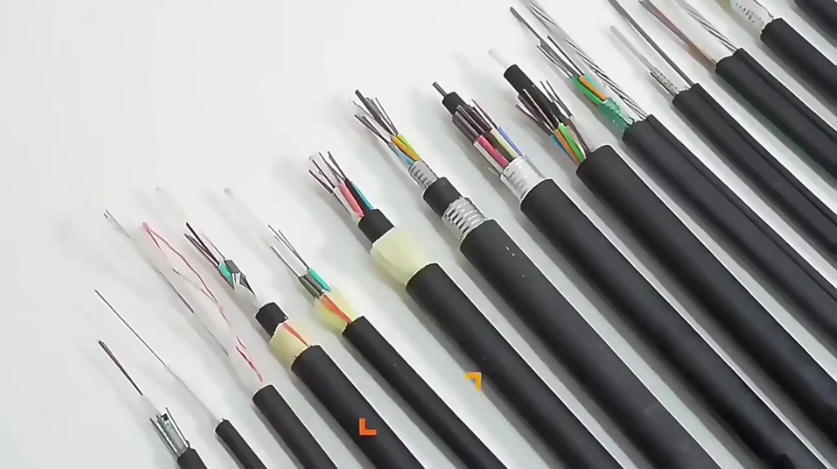
Beyond core mode, the cable’s physical designdetermines its durability and suitability for specific environments. Here are the most common types to consider when you buy fiber optic cable:
3.1 Loose Tube vs. Tight Buffered Cables
| Feature | Loose Tube Cable | Tight Buffered Cable |
|---|---|---|
| Structure | Fibers float in gel-filled tubes (protects against moisture). | Fibers are coated directly with buffer (thinner, lighter). |
| Best For | Outdoor (aerial, buried, duct) installations. | Indoor (riser, plenum) or short outdoor runs. |
| Pros | Resists water ingress, temperature swings (-40°C to +70°C). | Easy to terminate, flexible for tight spaces. |
| Cons | Heavier, requires gel cleaning during splicing. | Less protected against crushing or moisture. |
3.2 Armored vs. Non-Armored Cables
- Armored fiber optic cable: Wrapped in steel or aluminum tape/interlock armor. Ideal for rodent-prone areas, direct burial, or industrial sites (e.g., oil rigs, mines).
- Non-armored cable: Lighter and cheaper, used in controlled environments (offices, data centers).
3.3 Specialty Constructions
- Aerial fiber cable: Reinforced with steel messengers for hanging between poles.
- Submarine fiber cable: Double-armored with polyethylene sheathing to withstand ocean pressure and saltwater corrosion.
- ADSS (All-Dielectric Self-Supporting) cable: No metal components—safe for high-voltage power lines.
4. Application Environments: Matching Cable Type to Use Case
To buy fiber optic cable that performs reliably, align your choice with the installation environmentand data demands. Below are real-world scenarios and recommended cable types:
4.1 Telecommunications & Broadband
- Long-haul networks: G.652.D single-mode (cost-effective) or G.654.E (ultra-low loss).
- FTTH (Fiber-to-the-Home): G.657.A2 bend-insensitive SMF (resists kinks in home wiring).
- 5G fronthaul/midhaul: OM4/OM5 multimode (for cell tower interconnects) or single-mode (for rural coverage).
4.2 Data Centers & Cloud Infrastructure
Data centers prioritize high density and low latency. Key choices:
- Intra-data center: OM4/OM5 multimode (supports 10/40/100 Gbps over short distances).
- Inter-data center (campus): Single-mode (spans 2–10 km without repeaters).
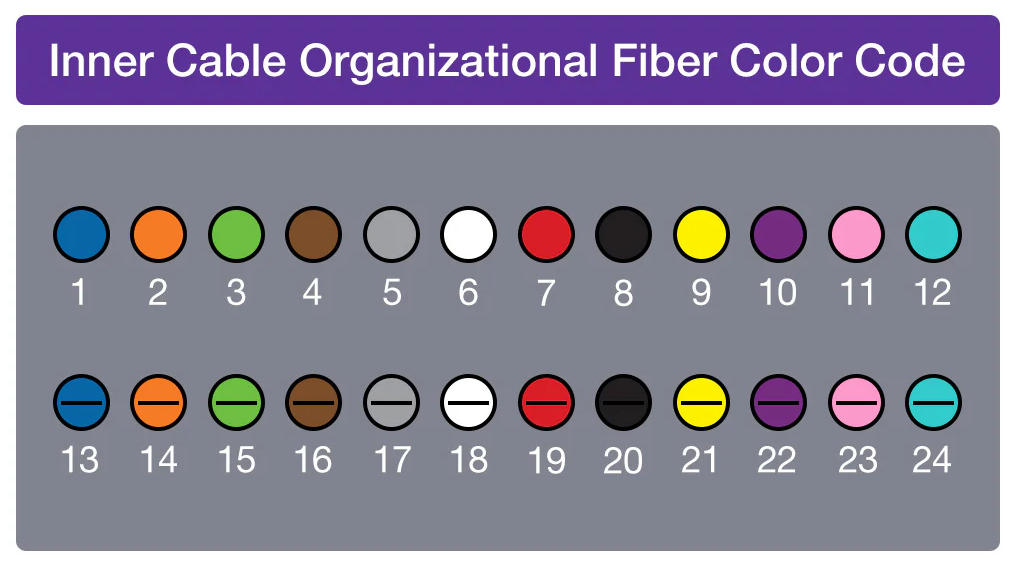
- High-density racks: Ribbon fiber cable (12–24 fibers per ribbon, saves space vs. loose tube).
4.3 Industrial & Harsh Environments
Factories, mines, and oil fields need rugged cables:
- Industrial Ethernet: Tight-buffered, armored multimode (resists vibration, chemicals).
- Smart grid: ADSS single-mode (avoids interference with power lines).
- Underwater sensors: Submarine-grade SMF with titanium armor.
4.4 Military & Aerospace
- Tactical fiber cable: Lightweight, reelable, and EMP-resistant (used in field deployments).
- Aircraft/spacecraft: Radiation-hardened, ultra-thin SMF (minimizes weight).
5. Critical Factors to Consider Before You Buy Fiber Optic Cable
Avoid overspending or under-specifying with these checks:
5.1 Total Cost of Ownership (TCO)
Don’t just compare sticker prices—factor in:
- Installation costs: Armored cable costs 20–30% more but reduces repair risks.
- Termination fees: Pre-terminated cables (with connectors like LC/SC/MTP) save labor but cost more upfront.
- Future scalability: Overbuild by 20–30% (e.g., buy 48-fiber instead of 24-fiber) to avoid reinstallation.
5.2 Compliance & Certifications
Ensure cables meet global standards:
- UL/ETL listed: For fire safety (plenum-rated CMP, riser-rated CMR).
- RoHS/REACH: Free of hazardous materials (critical for EU/NA markets).
- Telcordia GR-20: For telecom-grade reliability.
5.3 Supplier Reputation
Work with vendors that offer:
- 25-year warranties (industry standard for premium cables).
- Test reports (OTDR traces, insertion loss data).
- Customization (e.g., colored jackets, length cuts).
6. Common Mistakes to Avoid When Buying Fiber Optic Cable
Even experienced buyers slip up—here’s what to watch for:
- Mixing OM3 and OM4 in the same link: Causes signal mismatch (use consistent grades).
- Ignoring bend radius: Kinking a G.657 cable beyond its limit still degrades performance.
- Skipping environmental testing: A “waterproof” cable may fail in freezing temps if not rated for -40°C.
7. Conclusion: Making the Smart Choice to Buy Fiber Optic Cable
Buying fiber optic cable isn’t just about specs—it’s about matching technology to your project’s current needsand future growth. Whether you’re deploying a small office LAN or a continental 5G network, start by asking:
- What’s my maximum transmission distance?
- How much bandwidth do I need now (and in 5 years)?
- What environmental hazards (moisture, rodents, EMI) will the cable face?
By aligning these answers with the classifications above, you’ll buy fiber optic cable that delivers reliable, high-speed connectivity for decades. For personalized recommendations, consult a certified OUFU with expertise in your industry.
Fiber Optic Cable Buying FAQs
1. What is the best type of fiber optic cable to buy for home internet (FTTH)?
If you are planning to buy fiber optic cable for home use, the most common and cost‑effective option is G.657.A2 single‑mode fiber. It is bend‑insensitive, easy to route around corners, and fully compatible with ISP GPON/EPON networks. Avoid multimode fiber unless your home lab specifically requires short‑range 10G+ connections.
2. Should I buy single‑mode or multimode fiber optic cable?
Choose single‑mode fiber if:
- Transmission distance exceeds 300 meters
- You need future‑proof bandwidth (10G/40G/100G+)
- The application is telecom, 5G, or long‑haul networking
Choose multimode fiber if:
- Runs are under 300 meters
- Budget is limited and equipment uses VCSEL transceivers
- You are cabling a data center or enterprise LAN
3. What is the difference between OS2 and OM4 fiber optic cables?
- OS2 is a single‑mode fiber (9/125 µm) used for long distances (up to 10–40 km without amplification).
- OM4 is a laser‑optimized multimode fiber (50/125 µm) designed for high‑speed, short‑reach data center links (up to 550 m at 10 Gbps).
4. How much does fiber optic cable cost per meter?
Prices vary by type and construction:
- OM3/OM4 indoor tight‑buffered: $0.15 – $0.50/meter
- OS2 loose‑tube outdoor: $0.20 – $0.80/meter
- Armored or ADSS cable: $0.60 – $2.00/meter
Bulk purchases and standard lengths reduce unit cost significantly.
5. Can I install fiber optic cable myself?
You can install pre‑terminated fiber patch cords or tight‑buffered cables yourself with basic tools. However, fusion splicing, outdoor direct burial, or aerial deployments should be handled by certified fiber technicians to ensure performance and warranty compliance.
6. What is the lifespan of fiber optic cable?
Most telecom‑grade fiber optic cables last 25–30 years when installed correctly. The glass fiber itself is virtually immune to aging; failures usually occur due to jacket damage, water ingress, or mechanical stress.
7. Which fiber optic cable is best for outdoor use?
For outdoor environments, choose:
- Loose‑tube gel‑filled OS2 for ducts and direct burial
- Armored fiber cable for rodent‑prone or industrial sites
- ADSS cable for pole‑line installations near power lines
8. Do I need plenum‑rated fiber optic cable indoors?
Yes, if the cable runs through air handling spaces (ceilings, raised floors). Plenum‑rated (CMP) cables meet strict fire safety codes and are mandatory in commercial buildings in the US and many other countries.
9. What connectors should I choose when buying fiber optic cable?
The most common connector types are:
- LC: Small form factor, standard in data centers
- SC: Durable and widely used in FTTH
- MTP/MPO: High‑density trunk cables for 40G/100G links
Match connector type to your transceivers and equipment ports.
10. Where can I buy high‑quality fiber optic cable online?
You can buy fiber optic cable from:
- Global distributors (specializing in bulk OS2/OM3/OM4/OM5)
- Local telecom suppliers (for faster delivery and support)
- Certified manufacturers offering custom lengths and OEM services
Always verify test reports (OTDR, IL/RL) before purchase.