As global demand for high-speed communication continues to grow, optical fiber has become the backbone of modern telecommunications, data centers, industrial automation, FTTH deployments, and emerging technologies such as 5G and AI computing. However, selecting the right optical fiber is not always straightforward.
Different network environments require different fiber types, and choosing the wrong optical fiber can lead to unnecessary costs, reduced performance, future scalability issues, and increased maintenance expenses.
This comprehensive guide explains how to choose optical fiber based on application scenarios, transmission distance, bandwidth requirements, installation conditions, and future network expansion plans. Whether you are a network engineer, ISP operator, telecom contractor, or enterprise IT manager, this article will help you make informed decisions.

What Is Optical Fiber?
Optical fiber is a transmission medium that carries information using pulses of light instead of electrical signals.
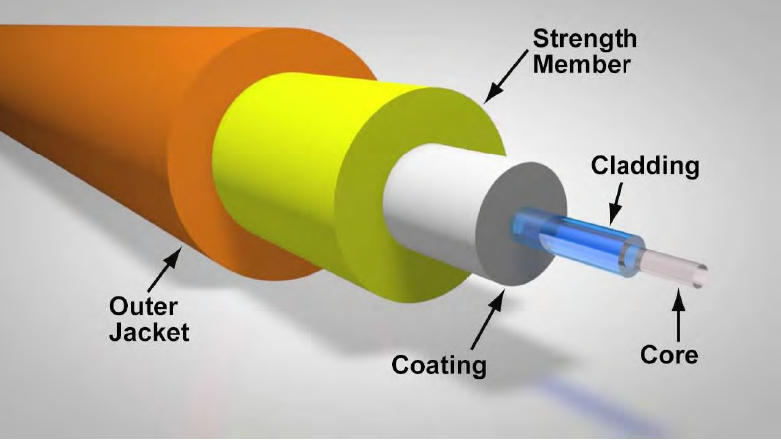
A standard optical fiber consists of:
- Core
- Cladding
- Coating
- Strength member
- Outer jacket
The core is the central part where light travels, while the cladding reflects light back into the core through total internal reflection.
Compared with traditional copper cables, optical fiber offers:
- Higher bandwidth
- Longer transmission distance
- Lower attenuation
- Better EMI resistance
- Enhanced security
- Smaller cable size
- Greater reliability
These advantages make optical fiber the preferred solution for modern communication networks.
Why Choosing the Right Optical Fiber Matters
Many organizations focus on equipment selection while overlooking fiber selection.
However, the optical fiber itself determines:
- Network capacity
- Upgrade capability
- Signal quality
- Maintenance costs
- System lifespan
A well-designed fiber infrastructure can remain operational for 20–30 years, making it one of the most important long-term investments in any communication network.
Understanding the Main Types of Optical Fiber
Before selecting optical fiber, it is essential to understand the primary categories.
Single Mode Fiber (SMF)
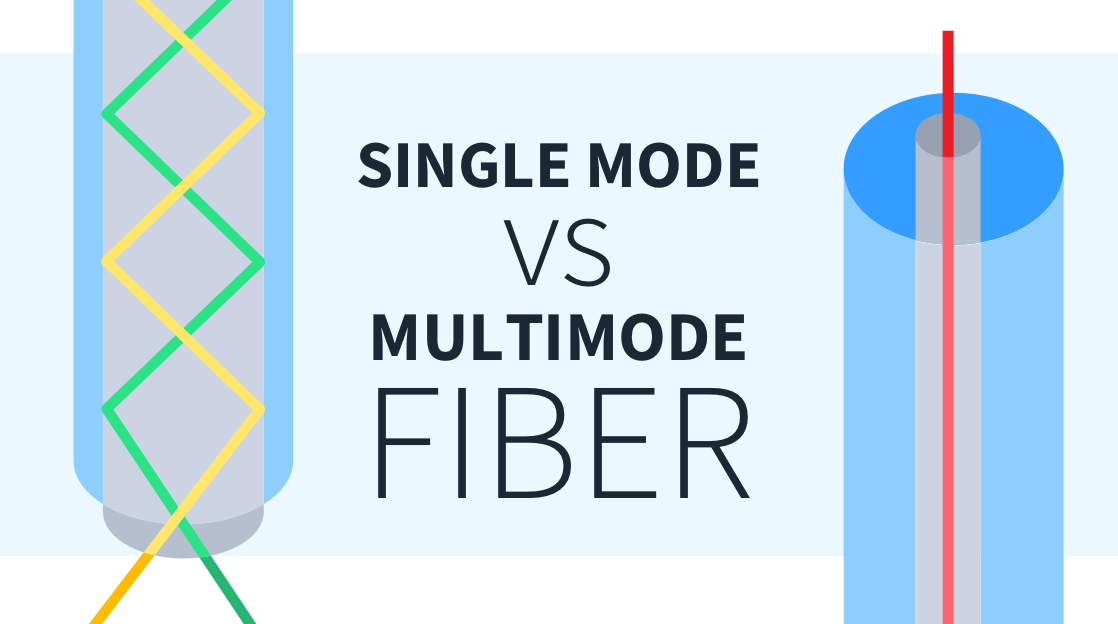
Single mode fiber has a small core diameter of approximately 8–10 μm.
Characteristics:
- One light propagation path
- Minimal modal dispersion
- Extremely long transmission distance
- Highest bandwidth
Typical standards include:
- OS1
- OS2
Applications:
- Telecom backbone networks
- Metro networks
- Long-haul transmission
- Data centers
- 5G fronthaul and backhaul
- FTTH networks
Advantages:
- Supports transmission over hundreds of kilometers
- Future-proof infrastructure
- Low attenuation
Disadvantages:
- Higher transceiver costs
- More precise installation requirements
Multimode Fiber (MMF)
Multimode fiber has larger core sizes:
- 50/125 μm
- 62.5/125 μm
Light travels through multiple paths simultaneously.
Common categories include:
- OM1
- OM2
- OM3
- OM4
- OM5
Applications:
- Enterprise LANs
- Campus networks
- Data centers
- Industrial facilities
Advantages:
- Lower equipment cost
- Easier connector alignment
- Cost-effective for short distances
Disadvantages:
- Limited transmission distance
- Greater modal dispersion
Key Factors to Consider When Choosing Optical Fiber
1. Transmission Distance
Distance is often the first consideration.
Short Distance (<300m)
Recommended:
- OM3
- OM4
- OM5 multimode fiber
Common applications:
- Server rooms
- Data centers
- Enterprise buildings
Medium Distance (300m–10km)
Recommended:
- Single mode OS2
Applications:
- Campus networks
- Business parks
- Industrial facilities
Long Distance (>10km)
Recommended:
- OS2 single mode fiber
Applications:
- Telecom backbone
- Metropolitan area networks
- Rural broadband deployment
2. Bandwidth Requirements
Different applications demand different bandwidth levels.
Standard Enterprise Networks
Bandwidth:
- 1G
- 10G
Recommended:
- OM3
- OM4
High-Speed Data Centers
Bandwidth:
- 40G
- 100G
- 200G
- 400G
Recommended:
- OM4
- OM5
- OS2
AI and Cloud Computing
Bandwidth:
- 400G
- 800G
- Future 1.6T
Recommended:
- Single mode OS2
Many hyperscale data centers are increasingly adopting single mode fiber to support future upgrades.
3. Installation Environment
Environmental conditions significantly influence fiber selection.
Indoor Applications
Recommended cable types:
- Tight-buffered fiber
- Distribution cable
- Breakout cable
Features:
- Flexible installation
- Flame-retardant jackets
- Easy termination
Outdoor Applications
Recommended cable types:
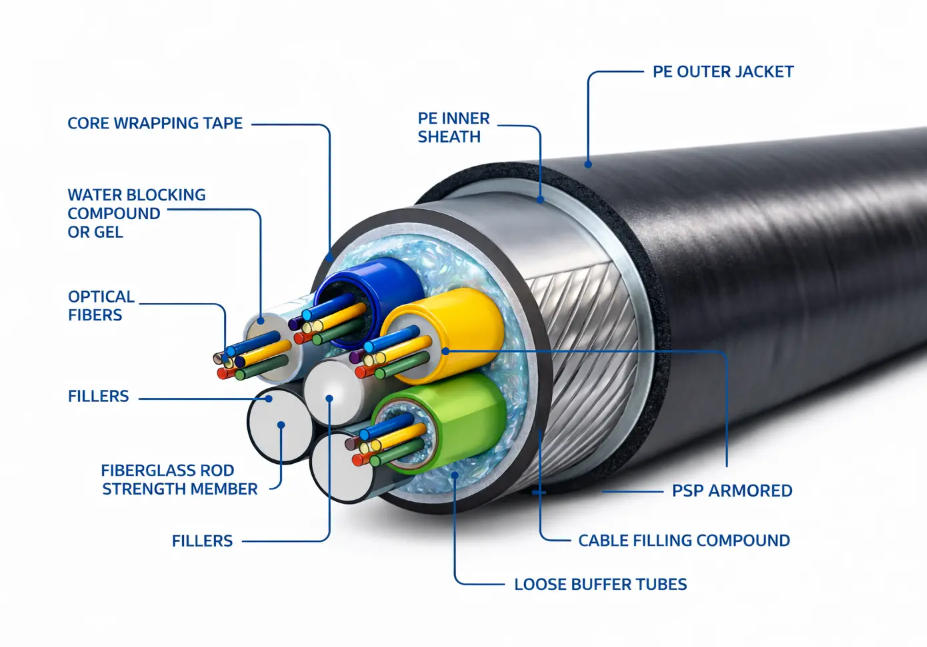
- Loose tube fiber cable
- Armored fiber cable
- ADSS cable
- Underground fiber cable
Features:
- UV resistance
- Moisture protection
- Temperature stability
Harsh Industrial Environments
Recommended:
- Armored fiber optic cable
Protection against:
- Rodents
- Mechanical impact
- Chemical exposure
- Vibration
Choosing Fiber Based on Network Applications
Fiber for FTTH Networks
Fiber-to-the-Home networks require reliable and scalable infrastructure.
Recommended:
- G.652.D fiber
- G.657.A1 fiber
- G.657.A2 fiber
Benefits:
- Low attenuation
- Excellent bending performance
- Easy installation
G.657 fiber is particularly suitable for indoor drop cable installations.
Fiber for Data Centers
Modern data centers demand ultra-high bandwidth and low latency.
Recommended options:
Small Data Centers
- OM4 multimode
Large Cloud Data Centers
- OS2 single mode
AI Data Centers
- OS2
- Parallel optics solutions
Benefits:
- Supports future network growth
- Reduced migration costs
Fiber for 5G Networks
5G infrastructure requires extensive fiber deployment.
Recommended:
- G.652.D
- G.657.A1
- G.657.A2
Applications:
- Fronthaul
- Midhaul
- Backhaul
Key requirements:
- Low latency
- High bandwidth
- Reliability
Fiber for Long-Haul Networks
Long-distance telecom networks require minimal signal loss.
Recommended:
- G.652.D
- G.654.E
Advantages:
- Ultra-low attenuation
- High transmission capacity
- Compatibility with DWDM systems
Understanding ITU-T Fiber Standards
International standards help users select the correct fiber type.
G.652 Fiber
The world’s most widely used single mode fiber.
Advantages:
- Low attenuation
- Cost-effective
- Broad compatibility
Applications:
- Backbone networks
- FTTH
- Enterprise networks
G.657 Fiber
Enhanced bend-insensitive fiber.
Advantages:
- Better flexibility
- Easier installation
- Reduced signal loss in tight bends
Applications:
- FTTH
- Indoor cabling
- Smart buildings
G.655 Fiber
Non-zero dispersion shifted fiber.
Applications:
- DWDM systems
- Long-haul networks
Benefits:
- Improved wavelength performance
G.654 Fiber
Designed for ultra-long-distance transmission.
Applications:
- Submarine cables
- National backbone networks
Benefits:
- Extremely low attenuation
Fiber Core Count Selection
Another important factor is the number of fibers.
2-Core Fiber
Suitable for:
- Point-to-point links
- FTTH drops
4-Core to 12-Core Fiber
Suitable for:
- Small business networks
- Surveillance systems
24-Core to 96-Core Fiber
Suitable for:
- Campus networks
- Enterprise infrastructure
144-Core to 288-Core Fiber
Suitable for:
- Telecom operators
- Metropolitan networks
432-Core to 1728-Core Fiber
Suitable for:
- Hyperscale data centers
- National broadband projects
High-density fiber cables reduce installation costs while maximizing capacity.
Future-Proofing Your Fiber Investment
One of the biggest mistakes organizations make is choosing fiber only for current needs.
Consider future trends:
- 5G expansion
- AI computing
- Edge data centers
- Smart cities
- IoT growth
- 800G Ethernet
- 1.6T optical networking
Future-proof recommendations:
- Choose OS2 whenever possible
- Reserve spare fibers
- Use high-density cable designs
- Plan for network scalability
The initial investment may be slightly higher, but long-term savings are substantial.
Common Mistakes When Choosing Optical Fiber
Choosing Based Only on Cost
The cheapest solution often becomes the most expensive over time.
Ignoring Future Upgrades
Bandwidth demands continue to increase rapidly.
Selecting Incorrect Fiber Standards
Different standards serve different applications.
Underestimating Environmental Conditions
Outdoor and industrial environments require specialized protection.
Insufficient Fiber Count
Lack of spare fibers often leads to costly network expansions later.
Optical Fiber Selection Checklist
Before purchasing optical fiber, ask the following questions:
✓ What transmission distance is required?
✓ What bandwidth is needed today?
✓ What bandwidth will be needed in five years?
✓ Indoor or outdoor installation?
✓ Is bend resistance important?
✓ Will the fiber support 5G or AI infrastructure?
✓ How many spare fibers are required?
✓ What environmental conditions exist?
✓ Is DWDM deployment planned?
✓ What is the total lifecycle cost?
Answering these questions will significantly improve fiber selection accuracy.
Conclusion
Choosing optical fiber is far more than selecting a cable type. It involves evaluating transmission distance, bandwidth requirements, installation environment, future scalability, industry standards, and long-term operational goals.
For short-distance enterprise networks, multimode fiber such as OM3 or OM4 remains a practical solution. For most modern telecommunications, data centers, FTTH deployments, and 5G infrastructure, OS2 single mode fiber offers the best balance of performance, scalability, and investment protection.
As AI, cloud computing, and ultra-high-speed networking continue to evolve, organizations that invest in the right optical fiber today will enjoy lower operational costs, simplified upgrades, and stronger network performance for decades to come.
By understanding the characteristics of different fiber types and aligning them with application requirements, businesses can build reliable, future-ready communication infrastructure that supports continued digital transformation.
Frequently Asked Questions (FAQ)
1. What is the difference between single mode fiber and multimode fiber?
Single mode fiber (SMF) uses a small core, typically 8–10 μm, allowing light to travel through a single path. It supports longer transmission distances and higher bandwidth. Multimode fiber (MMF) has a larger core, usually 50 μm or 62.5 μm, allowing multiple light paths and making it suitable for shorter distances.
Single mode fiber is ideal for:
- Telecommunications networks
- FTTH deployments
- Long-distance transmission
- 5G infrastructure
- Cloud data centers
Multimode fiber is ideal for:
- Enterprise LANs
- Campus networks
- Small and medium-sized data centers
2. Which optical fiber is best for FTTH networks?
For Fiber-to-the-Home (FTTH) applications, G.657.A1 and G.657.A2 bend-insensitive fibers are generally considered the best options.
Advantages include:
- Excellent bending performance
- Easy installation in buildings
- Low signal attenuation
- High compatibility with existing FTTH infrastructure
Many FTTH drop cables use G.657 fiber because it performs well in tight installation spaces.
3. How do I choose the right fiber optic cable for long-distance communication?
For long-distance transmission, OS2 single mode fiber is typically the preferred choice.
Consider:
- Transmission distance
- Network bandwidth
- Future scalability
- DWDM compatibility
For distances exceeding 10 km, single mode fiber provides lower attenuation and better performance than multimode fiber.
4. What is OS2 fiber and why is it recommended?
OS2 is a low-water-peak single mode fiber designed for outdoor and long-distance applications.
Benefits include:
- Supports distances up to hundreds of kilometers
- Low attenuation
- Excellent compatibility with modern optical equipment
- Future-ready for 100G, 400G, and 800G networks
OS2 has become the industry standard for most new fiber deployments.
5. Is multimode fiber still a good choice in 2026?
Yes. Multimode fiber remains a cost-effective solution for short-distance applications.
It is commonly used in:
- Enterprise buildings
- Server rooms
- Campus environments
- Short-reach data center links
However, many large-scale data centers are increasingly adopting single mode fiber due to its superior scalability.
6. What fiber optic cable is best for data centers?
The answer depends on the size and growth requirements of the data center.
Recommended options:
- OM4 fiber for 10G, 40G, and 100G short-distance connections
- OM5 fiber for advanced multimode applications
- OS2 fiber for hyperscale and cloud data centers
For long-term infrastructure planning, many operators choose OS2 fiber because it supports future bandwidth upgrades more easily.
7. How many fiber cores should I choose?
Fiber count depends on network size and future expansion plans.
Typical recommendations:
| Application | Recommended Fiber Count |
|---|---|
| FTTH Drop Cable | 1–2 Fibers |
| CCTV Systems | 2–12 Fibers |
| Enterprise Networks | 12–48 Fibers |
| Campus Networks | 24–96 Fibers |
| Telecom Networks | 96–288 Fibers |
| Data Centers | 144–1728 Fibers |
It is usually advisable to install spare fibers for future growth.
8. What is bend-insensitive fiber?
Bend-insensitive fiber is designed to minimize signal loss when the cable is bent.
Key advantages:
- Easier installation
- Reduced attenuation
- Better performance in confined spaces
- Increased reliability
G.657 fiber is the most common bend-insensitive optical fiber used today.
9. Which optical fiber is best for 5G networks?
Most 5G networks use single mode fiber, especially:
- G.652.D
- G.657.A1
- G.657.A2
These fibers support:
- High bandwidth
- Low latency
- Long transmission distances
- Fronthaul, midhaul, and backhaul applications
Fiber is a critical component of modern 5G infrastructure.
10. How long does optical fiber last?
High-quality optical fiber can remain operational for 20 to 30 years or longer when installed correctly.
Factors affecting lifespan include:
- Environmental conditions
- Installation quality
- Cable protection
- Maintenance practices
Many backbone fiber networks installed decades ago continue to operate reliably today.
11. Should I choose G.652 or G.657 fiber?
Choose G.652.D fiber if:
- Long-distance transmission is the priority
- Standard telecom applications are involved
- Cost efficiency is important
Choose G.657 fiber if:
- Tight bends are expected
- FTTH deployment is planned
- Indoor installations are required
Many modern networks use both fiber types depending on the installation environment.
12. What factors should be considered when selecting optical fiber?
The most important factors include:
- Transmission distance
- Required bandwidth
- Installation environment
- Fiber type (single mode or multimode)
- Fiber core count
- Future network expansion
- Industry standards compliance
- Budget and lifecycle costs
Selecting fiber based on long-term network requirements rather than current demand alone can significantly reduce future upgrade expenses.
13. Is single mode fiber more future-proof than multimode fiber?
In most cases, yes.
Single mode fiber offers:
- Virtually unlimited bandwidth potential
- Longer transmission distances
- Better support for emerging technologies
- Compatibility with future optical networking standards
For organizations planning for AI data centers, 5G expansion, cloud computing, and smart city infrastructure, single mode fiber is often considered the most future-proof investment.
14. Can optical fiber support 400G and 800G networks?
Yes.
Modern optical fiber, especially OS2 single mode fiber, is widely used for:
- 100G Ethernet
- 200G Ethernet
- 400G Ethernet
- 800G Ethernet
As network speeds continue to increase, single mode fiber remains the preferred medium for high-capacity transmission.
15. What is the biggest mistake when choosing optical fiber?
The most common mistake is choosing fiber solely based on initial cost.
Other mistakes include:
- Ignoring future bandwidth requirements
- Selecting insufficient fiber counts
- Using the wrong fiber standard
- Underestimating environmental conditions
A properly planned fiber infrastructure delivers better performance and lower total ownership costs over its entire lifecycle.