In today’s digital era, high-speed data transmission has become the backbone of global communication networks. Whether supporting cloud computing, data centers, 5G infrastructure, FTTH deployments, or enterprise networking, fiber optic technology plays a critical role in ensuring reliable and ultra-fast connectivity.
Among all fiber optic components, the Fiber Patch Cord is one of the most essential yet often overlooked elements. It serves as the final connection link between optical devices, enabling seamless signal transmission with minimal loss.
As network bandwidth demands continue to grow, understanding fiber patch cords—their types, applications, advantages, and selection criteria—has become increasingly important for network engineers, telecom operators, data center managers, and IT professionals.
This comprehensive guide explores everything you need to know about fiber patch cords and why they remain indispensable in modern optical communication systems.
What Is a Fiber Patch Cord?
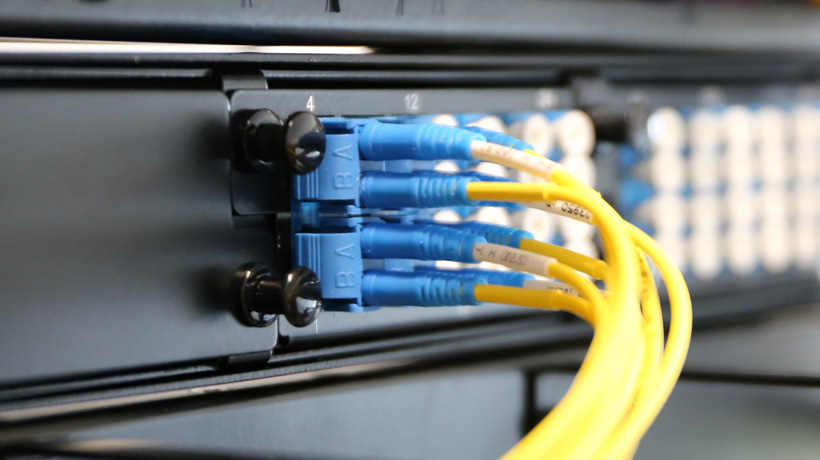
A Fiber Patch Cord, also known as a fiber optic patch cable, fiber jumper, or optical patch cord, is a length of optical fiber terminated with connectors at one or both ends.
Its primary purpose is to connect optical devices such as:
- Optical transceivers
- Fiber optic switches
- Routers
- Optical distribution frames (ODF)
- Fiber patch panels
- Media converters
- Network servers
Fiber patch cords transmit data through light signals rather than electrical currents, allowing significantly higher bandwidth, lower latency, and longer transmission distances compared to traditional copper cables.
How Does a Fiber Patch Cord Work?
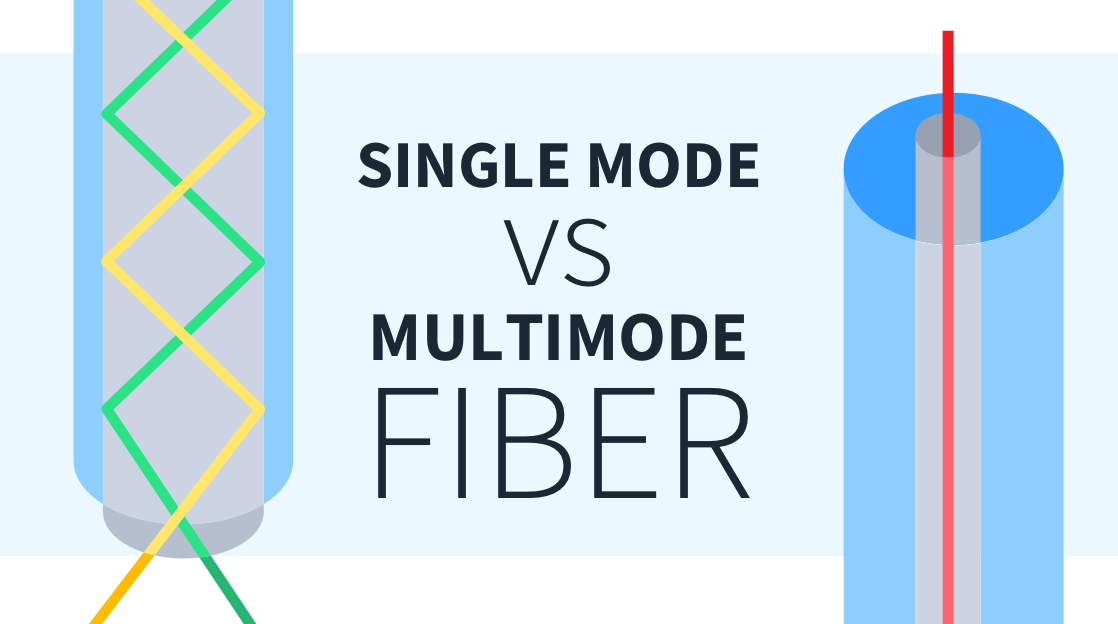
Fiber patch cords utilize optical fibers made from glass or plastic to carry light pulses generated by lasers or LEDs.
The transmission process includes:
- Data is converted into light signals.
- Light travels through the fiber core.
- The cladding reflects light internally.
- Signals reach the receiving device with minimal attenuation.
- The receiving equipment converts light back into electrical signals.
This process enables transmission speeds ranging from 1Gbps to 800Gbps and beyond.
Main Components of a Fiber Patch Cord
A fiber patch cord typically consists of the following parts:
Fiber Core
The central region through which light travels.
Common core sizes include:
- 9/125μm (Single Mode)
- 50/125μm (OM2, OM3, OM4, OM5)
- 62.5/125μm (OM1)
Cladding
The layer surrounding the core that reflects light back into the fiber.
Buffer Coating
Provides mechanical protection for the optical fiber.
Strength Member
Usually made from:
- Aramid Yarn (Kevlar)
- Fiberglass Reinforced Plastic (FRP)
This component improves tensile strength.
Outer Jacket
Protects the cable from environmental damage.
Common jacket materials:
- PVC
- LSZH (Low Smoke Zero Halogen)
- OFNR
- OFNP
Connectors
Installed at both ends to facilitate connections.
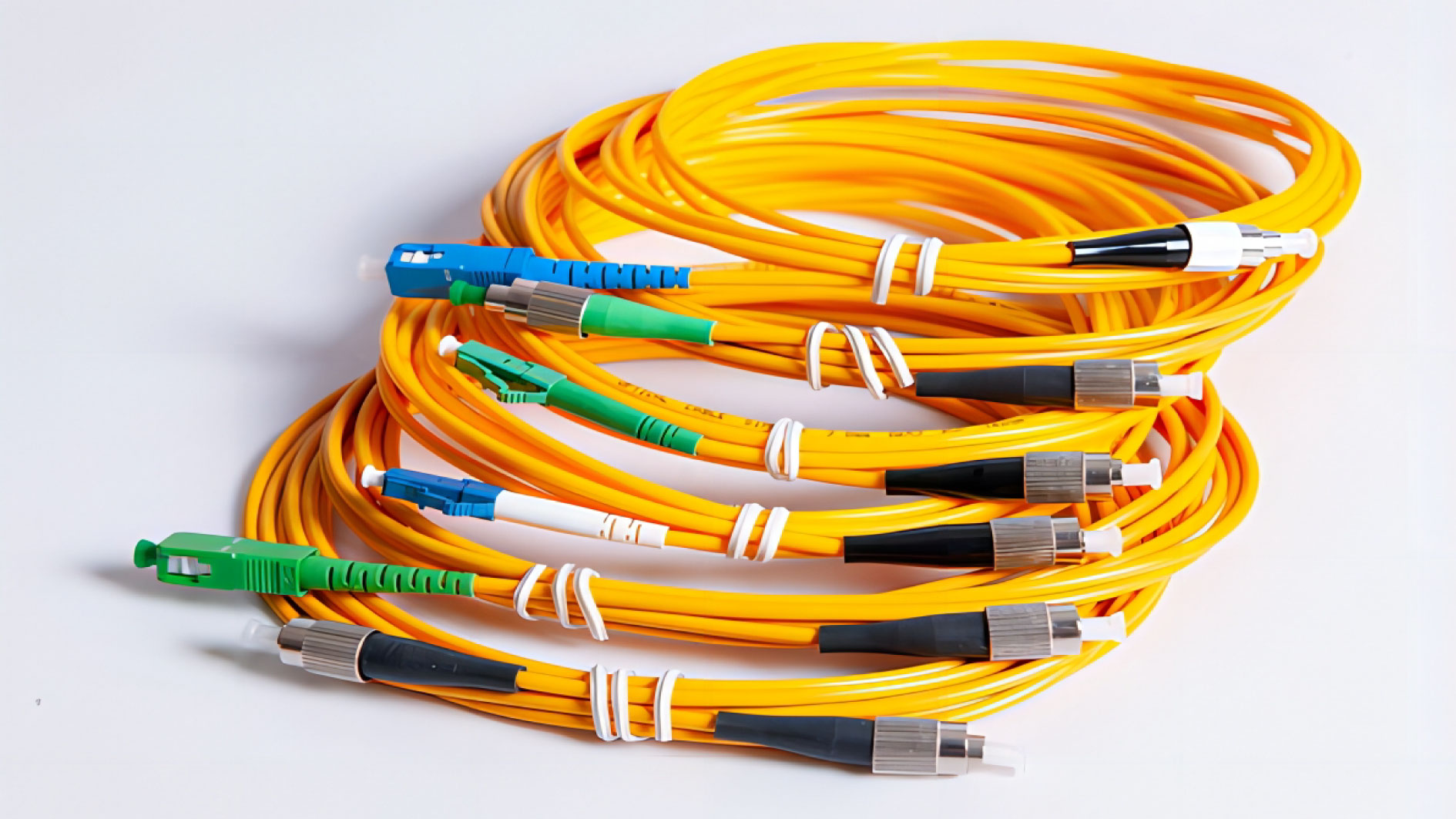
Types of Fiber Patch Cords
Single Mode Fiber Patch Cord
Single Mode Fiber (SMF) uses a 9μm core diameter.
Characteristics:
- Long-distance transmission
- Low attenuation
- High bandwidth
- Suitable for telecom and backbone networks
Typical wavelength:
- 1310nm
- 1550nm
Applications:
- Metropolitan networks
- Long-haul transmission
- Data centers
- FTTH networks
Multimode Fiber Patch Cord
Multimode Fiber (MMF) features larger core diameters.
Common standards:
- OM1
- OM2
- OM3
- OM4
- OM5
Advantages:
- Lower transceiver costs
- Easier alignment
- Ideal for short-distance applications
Applications:
- Enterprise LANs
- Campus networks
- Data centers
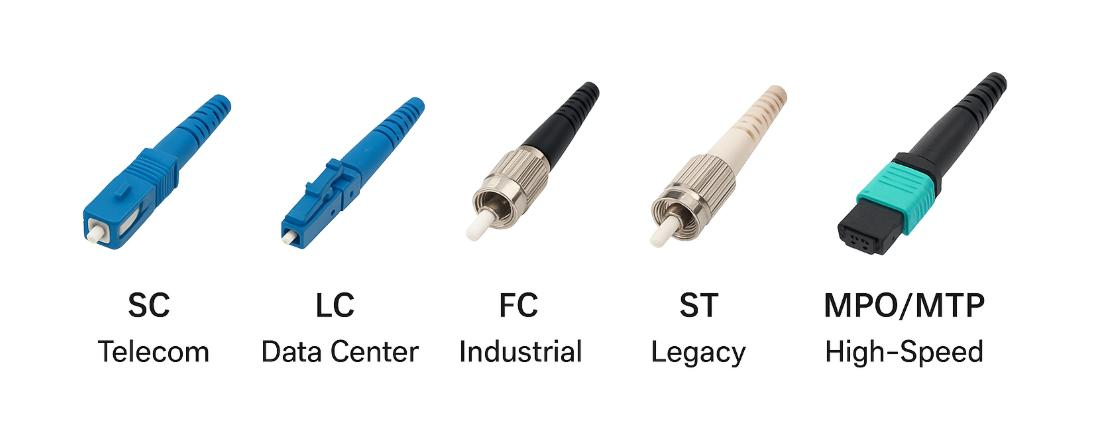
Fiber Patch Cord Connector Types
Choosing the correct connector is essential for network performance.
LC Connector
Features:
- Small Form Factor (SFF)
- Push-pull design
- High-density applications
Widely used in:
- Data centers
- SFP modules
- High-speed networks
SC Connector
Features:
- Square design
- Easy installation
- Excellent stability
Commonly used in:
- FTTH
- Telecom networks
- CATV systems
ST Connector
Features:
- Bayonet locking mechanism
- Durable construction
Often found in legacy installations.
FC Connector
Features:
- Threaded design
- Excellent vibration resistance
Ideal for:
- Industrial environments
- Test equipment
MPO/MTP Connector
Features:
- Multi-fiber connectivity
- Supports 8, 12, 24, 48, or more fibers
Applications:
- Hyperscale data centers
- 40G Ethernet
- 100G Ethernet
- 400G Ethernet
- AI computing clusters
Fiber Patch Cord Polishing Types
Connector end-face polishing significantly impacts performance.
PC (Physical Contact)
Provides reduced back reflection compared to flat connectors.
UPC (Ultra Physical Contact)
Features:
- Better surface finish
- Lower insertion loss
- Higher return loss
Widely used in Ethernet networks.
APC (Angled Physical Contact)
Connector end faces are polished at an 8° angle.
Advantages:
- Extremely low reflection
- Improved signal quality
Ideal for:
- FTTH
- CATV
- Passive Optical Networks (PON)
Fiber Patch Cord Cable Structures
Simplex Fiber Patch Cord
Contains a single fiber.
Applications:
- One-way communication
- Sensor systems
Duplex Fiber Patch Cord
Contains two fibers.
Applications:
- Bidirectional transmission
- Ethernet networking
Most common in modern installations.
Multi-Fiber Patch Cord
Includes multiple fibers in one cable.
Applications:
- Data centers
- Backbone systems
- High-density cabling
Key Benefits of Fiber Patch Cords
High Bandwidth
Supports modern applications including:
- AI workloads
- Cloud computing
- Video streaming
- Big data analytics
Low Signal Loss
Fiber optics exhibit much lower attenuation than copper cables.
Benefits:
- Longer transmission distances
- Improved network stability
Electromagnetic Immunity
Fiber patch cords are immune to:
- EMI
- RFI
- Lightning interference
Ideal for industrial and medical environments.
Enhanced Security
Fiber cables do not radiate electromagnetic signals.
This makes data interception significantly more difficult.
Future-Proof Infrastructure
Fiber optics support:
- 10G
- 25G
- 40G
- 100G
- 200G
- 400G
- 800G
and future terabit networking technologies.
Applications of Fiber Patch Cords
Data Centers
Modern data centers rely heavily on fiber patch cords for:
- Server interconnection
- Storage networks
- Spine-leaf architectures
- AI clusters
Telecommunications
Telecom operators use fiber patch cords in:
- Central offices
- Base stations
- Backbone networks
- FTTH systems
Enterprise Networks
Businesses deploy fiber patch cords to connect:
- Core switches
- Distribution switches
- Network cabinets
Cloud Computing Facilities
Cloud providers require ultra-reliable optical connectivity to support:
- Virtual machines
- Edge computing
- AI training platforms
Smart Cities
Fiber patch cords support:
- Traffic systems
- Surveillance networks
- IoT infrastructure
- Public Wi-Fi
Industrial Automation
Used in:
- Factory automation
- SCADA systems
- Manufacturing networks
where interference-free communication is critical.

How to Choose the Right Fiber Patch Cord
When selecting a fiber patch cord, consider the following factors.
Fiber Type
Choose:
- Single Mode for long distances
- Multimode for short distances
Connector Type
Ensure compatibility with network equipment.
Common combinations:
- LC-LC
- LC-SC
- SC-SC
- MPO-MPO
Cable Length
Avoid excessive cable lengths that create management challenges.
Typical lengths:
- 1m
- 2m
- 3m
- 5m
- 10m
Custom lengths are also available.
Jacket Material
For indoor use:
- PVC
- LSZH
For plenum spaces:
- OFNP
For riser applications:
- OFNR
Performance Requirements
Evaluate:
- Insertion loss
- Return loss
- Bend radius
- Environmental durability
Fiber Patch Cord vs Copper Patch Cord
| Feature | Fiber Patch Cord | Copper Patch Cord |
|---|---|---|
| Bandwidth | Extremely High | Limited |
| Distance | Long | Short |
| EMI Immunity | Yes | No |
| Security | High | Moderate |
| Weight | Lightweight | Heavier |
| Future Scalability | Excellent | Limited |
As network speeds continue to increase, fiber patch cords increasingly replace copper solutions in high-performance environments.
Emerging Trends in Fiber Patch Cord Technology
High-Density MPO/MTP Solutions
Driven by:
- AI computing
- Cloud infrastructure
- Hyperscale data centers
800G and 1.6T Networks
Next-generation networks require advanced fiber assemblies with lower insertion loss and higher precision.
Bend-Insensitive Fibers
Modern patch cords use bend-insensitive technology that minimizes signal degradation in tight installation spaces.
Green Data Centers
LSZH and eco-friendly cable materials are becoming industry standards for sustainable infrastructure.
AI and Edge Computing Expansion
As AI applications grow, demand for ultra-high-speed optical interconnections continues to rise, making fiber patch cords even more essential.
Frequently Asked Questions (FAQ)
What is the difference between a fiber patch cord and a fiber pigtail?
A fiber patch cord has connectors on both ends, while a fiber pigtail typically has a connector on only one end.
Which connector is most common in data centers?
LC connectors are currently the most widely used due to their compact size and high-density capability.
Can single-mode and multimode patch cords be connected?
Technically possible with special equipment, but generally not recommended because it may cause significant signal loss and compatibility issues.
What is insertion loss?
Insertion loss measures signal power reduction when a patch cord is inserted into a network.
Lower insertion loss indicates better performance.
Why are MPO patch cords important?
MPO patch cords enable high-density connections required for 40G, 100G, 400G, and future 800G networking environments.
Conclusion
Fiber patch cords are fundamental components of modern optical communication networks. From data centers and telecom infrastructures to cloud computing platforms and smart city deployments, these versatile cables ensure fast, reliable, and secure data transmission.
As bandwidth requirements continue to accelerate due to artificial intelligence, 5G, IoT, and hyperscale cloud computing, the importance of high-quality fiber patch cords will only increase. By understanding the various fiber types, connector options, polishing methods, and application scenarios, organizations can build scalable, future-ready networks capable of meeting tomorrow’s connectivity demands.
Whether you are deploying a new FTTH network, upgrading a data center, or expanding enterprise infrastructure, selecting the right fiber patch cord is a critical investment in long-term network performance and reliability.