FTTH drop cable installation refers to the process of connecting the optical distribution network to the end user’s premises using fiber optic drop cables.
The installation usually covers the “last mile” section of the fiber network, linking:
- Optical Distribution Point (ODP)
- Fiber Distribution Hub (FDH)
- Terminal box
- Subscriber home or office
The primary goal is to establish a stable, low-loss, high-speed fiber connection between the telecom provider and the user.
Importance of Proper FTTH Drop Cable Installation
Correct installation is essential because fiber optic cables are sensitive to excessive pulling force, bending, and environmental damage.
A professional installation helps ensure:
- Stable signal transmission
- Low optical attenuation
- Long cable lifespan
- Reduced maintenance costs
- Reliable internet connectivity
- Better network scalability
Improper installation may lead to:
- Fiber breakage
- Signal loss
- Connector damage
- Network downtime
- Increased repair expenses
Main Types of FTTH Drop Cable Installation
Different environments require different installation methods.
Aerial Installation
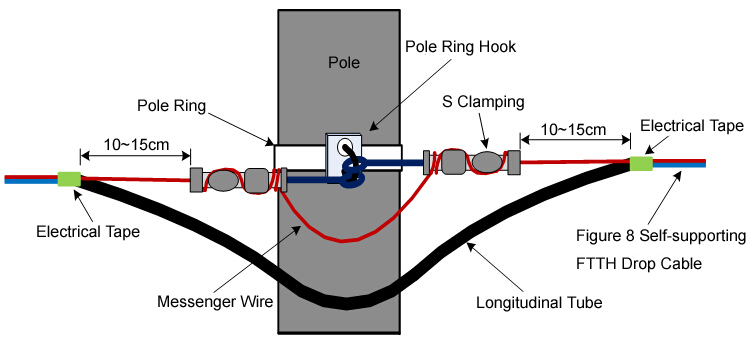
Aerial installation is widely used in suburban and rural FTTH deployments.
In this method, the drop cable is suspended between utility poles or buildings.
Advantages
- Lower construction cost
- Faster deployment
- Easy maintenance access
Common Cable Type
- Self-supporting FTTH drop cable
- Figure-8 fiber cable
Key Installation Considerations
- Maintain proper cable tension
- Ensure adequate ground clearance
- Avoid excessive cable sag
- Use UV-resistant cables
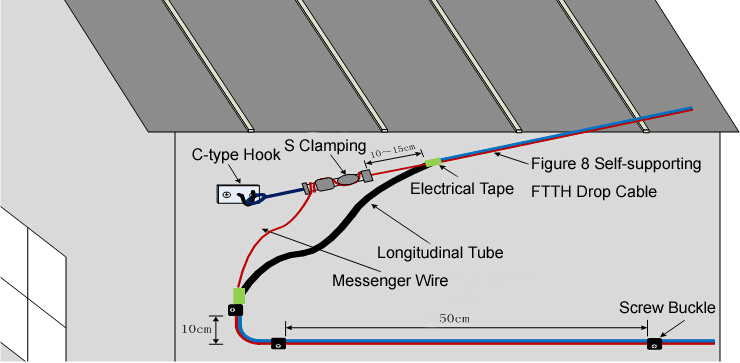
Wall-Mounted Installation
Wall-mounted installation attaches the FTTH drop cable directly to exterior building walls.
Common Applications
- Residential houses
- Apartment buildings
- Commercial buildings
Installation Materials
- Cable clips
- Fastening brackets
- Anchoring hooks
Benefits
- Simple installation
- Neat cable routing
- Good cable protection
Underground Installation
Underground installation protects the fiber cable inside ducts or conduits.
Advantages
- Better environmental protection
- Improved aesthetics
- Reduced weather exposure
Challenges
- Higher installation cost
- More complex maintenance
- Requires conduit planning
Common Installation Methods
- Direct burial
- Microduct systems
- Conduit pulling
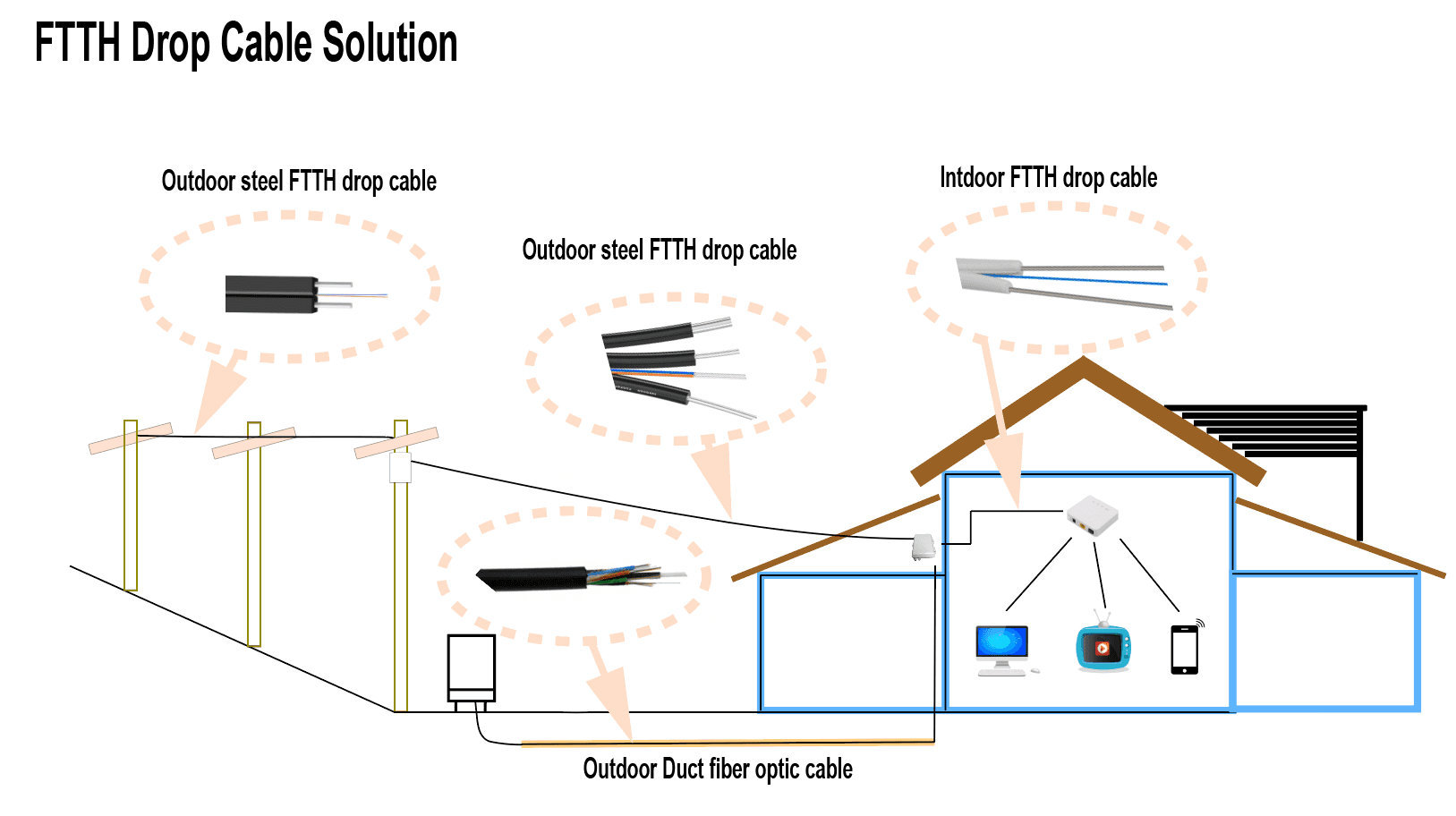
Indoor FTTH Cable Installation
Indoor installation connects the outdoor network to indoor optical terminals.
Typical Routing Areas
- Ceilings
- Walls
- Cable trays
- Floor ducts
Important Requirements
- Avoid sharp bends
- Use flame-retardant cables
- Secure cables properly
- Minimize mechanical stress
Tools Required for FTTH Drop Cable Installation
Professional fiber installation requires specialized tools.
Fiber Cleaver
Used for precise fiber cutting before splicing.
Fusion Splicer
Joins optical fibers with minimal signal loss.
Optical Power Meter
Measures signal strength and attenuation.
Visual Fault Locator (VFL)
Detects fiber breaks and faults.
Cable Stripper
Removes cable jackets safely.
Cable Tension Tools
Help control pulling force during installation.
OTDR (Optical Time Domain Reflectometer)
Tests fiber integrity and identifies faults.
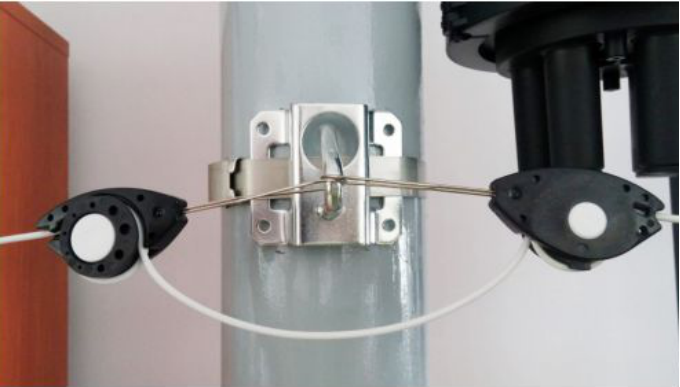
FTTH Drop Cable Installation Process
A standardized installation process ensures consistent network quality.
Step 1: Site Survey
Before installation begins, technicians perform a detailed site survey.
Survey Objectives
- Determine cable routing
- Identify obstacles
- Measure installation distance
- Evaluate environmental conditions
- Plan cable protection methods
A proper survey minimizes future installation problems.
Step 2: Cable Route Planning
Installers design the most efficient cable path.
Planning Considerations
- Shortest practical route
- Minimal bending points
- Environmental exposure
- Accessibility for maintenance
- Safety compliance
Good route planning improves long-term reliability.
Step 3: Cable Preparation
The FTTH drop cable is prepared for deployment.
Preparation Includes
- Measuring cable length
- Inspecting cable integrity
- Preparing connectors
- Organizing installation materials
Technicians must avoid damaging the optical fiber during handling.
Step 4: Cable Deployment
The cable is installed according to the selected method.
For Aerial Deployment
- Secure messenger wire
- Control cable tension
- Maintain proper sag
For Underground Deployment
- Pull cable through conduit
- Use lubrication if necessary
- Avoid excessive pulling force
For Wall-Mounted Deployment
- Install clips evenly
- Prevent cable twisting
- Keep routing neat
Step 5: Fiber Splicing and Connectorization
Once the cable reaches its destination, fibers are connected.
Common Methods
- Fusion splicing
- Mechanical splicing
- Pre-terminated connectors
Fusion splicing is preferred because it provides:
- Lower insertion loss
- Better reliability
- Stronger connections
Step 6: Testing and Verification
Testing ensures the installation meets performance standards.
Common Tests
- Optical attenuation testing
- OTDR testing
- Connector inspection
- Signal continuity verification
Technicians must confirm stable optical performance before activation.
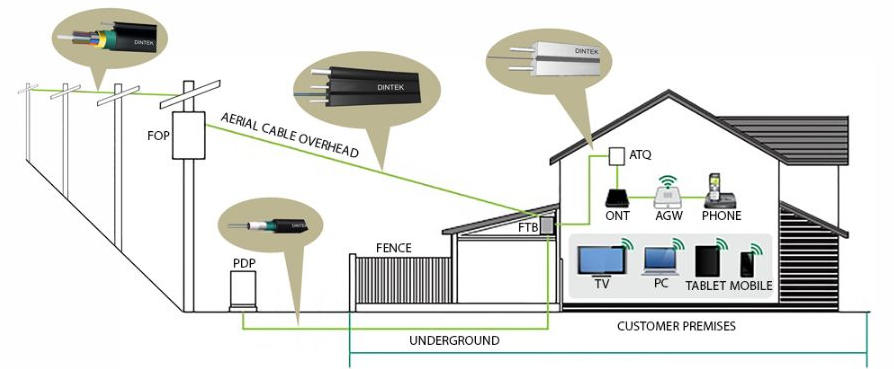
FTTH Drop Cable Installation Standards
Professional installations follow international standards.
Common Standards Organizations
- ITU-T
- IEC
- ANSI/TIA
- ISO/IEC
These standards define:
- Fiber specifications
- Installation procedures
- Safety requirements
- Performance limits
Compliance improves network reliability and interoperability.
Best Practices for FTTH Drop Cable Installation
Following best practices helps maximize fiber network lifespan.
Avoid Excessive Bending
Fiber cables have minimum bend radius requirements.
Excessive bending can cause:
- Signal attenuation
- Fiber cracking
- Performance degradation
Control Pulling Tension
Excessive tension may damage fibers or strength members.
Always follow manufacturer tensile limits.
Protect Connectors from Contamination
Dust and dirt can severely affect optical performance.
Use:
- Protective caps
- Fiber cleaning tools
- Inspection microscopes
Secure Cables Properly
Loose cables are vulnerable to damage.
Use approved cable management accessories.
Label Fiber Connections Clearly
Proper labeling simplifies maintenance and troubleshooting.
Common FTTH Installation Problems
Several issues may occur during deployment.
Fiber Breakage
Usually caused by:
- Excessive tension
- Sharp bending
- Improper handling
High Optical Loss
Possible causes include:
- Poor splicing
- Dirty connectors
- Damaged fiber
Cable Sagging
Improper aerial tension may create excessive sag.
Environmental Damage
Outdoor cables may suffer from:
- UV exposure
- Water ingress
- Rodent damage
Safety Considerations During Installation
Fiber optic installation involves several safety risks.
Laser Safety
Active optical fibers may emit invisible laser radiation.
Never look directly into a fiber connector.
Handling Fiber Scraps
Broken fiber fragments are extremely sharp.
Dispose of scraps safely.
Electrical Hazards
Aerial installations near power lines require special precautions.
Ladder and Height Safety
Use proper fall protection equipment during elevated installations.
FTTH Drop Cable Installation in Smart Cities
Modern smart city infrastructure increasingly depends on FTTH connectivity.
Applications include:
- Smart surveillance systems
- Intelligent transportation
- Smart homes
- IoT sensors
- Public Wi-Fi networks
Reliable fiber installation forms the backbone of digital urban infrastructure.
Future Trends in FTTH Installation
The FTTH industry continues evolving rapidly.
Faster Installation Technologies
Pre-connectorized solutions reduce installation time.
Micro Fiber Deployment
Smaller cables allow higher-density installations.
AI-Assisted Network Planning
Artificial intelligence improves route optimization and maintenance prediction.
10G and Next-Generation PON Networks
Future networks require higher-performance fiber infrastructure.
How to Choose the Right FTTH Drop Cable for Installation
Selecting the proper cable depends on several factors.
Indoor vs Outdoor Environment
Choose the appropriate jacket material.
Installation Method
Aerial installations require stronger tensile support.
Fiber Type
G.657 fibers offer superior bending performance.
Fire Safety Requirements
Indoor public areas often require LSZH cables.
Environmental Conditions
Consider temperature, moisture, and UV exposure.
Advantages of Professional FTTH Installation
Professional installation provides long-term operational benefits.
Better Network Reliability
Proper installation minimizes signal issues.
Lower Maintenance Costs
Well-installed cables require fewer repairs.
Improved User Experience
Stable internet improves customer satisfaction.
Longer Service Life
Correct installation protects fiber integrity.
Conclusion
FTTH drop cable installation is one of the most important aspects of modern fiber optic network deployment. Proper installation techniques ensure reliable broadband connectivity, minimal signal loss, and long-term infrastructure stability.
Whether deploying aerial, underground, wall-mounted, or indoor fiber systems, technicians must follow standardized procedures, use appropriate tools, and apply best practices to protect cable performance.
As fiber broadband adoption continues accelerating worldwide, high-quality FTTH installation will remain essential for supporting smart homes, smart cities, cloud computing, 5G networks, and future digital infrastructure.
A professionally installed FTTH drop cable system provides the foundation for faster, more stable, and future-ready communication networks.
FAQs About FTTH Drop Cable Installation
What is the purpose of FTTH drop cable installation?
It connects the optical distribution network directly to homes or businesses in FTTH systems.
What is the most common FTTH installation method?
Aerial and wall-mounted installations are the most common due to their lower cost and easier deployment.
What fiber type is best for FTTH drop cables?
G.657A1 and G.657A2 fibers are widely preferred because of their bend resistance.
Why is bend radius important in fiber installation?
Excessive bending can increase signal loss or damage the optical fiber.
How is FTTH cable tested after installation?
Technicians use OTDRs, optical power meters, and continuity tests to verify network quality.
Can FTTH drop cable be installed underground?
Yes. Underground installation provides additional environmental protection.
What are common causes of FTTH installation failure?
Improper bending, excessive pulling tension, poor splicing, and connector contamination are common issues.