1. Fiber Optic Cable Types By Transmission Mode (Core Classification)
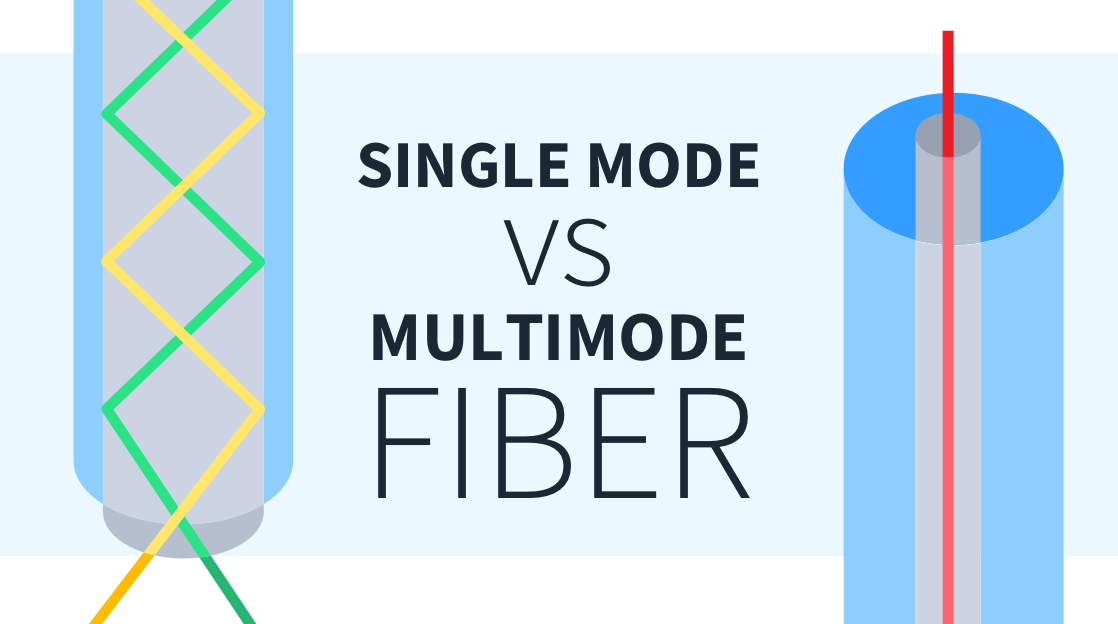
1.1 Single Mode Fiber Optic Cable (SMF)
- Operating wavelength: 1310nm & 1550nm (low-loss window)
- Maximum transmission distance: ≥10km, up to 200km+ for OS2 grade
- Bandwidth: Support 10G/40G/100G/400G/800G high-speed long-haul transmission
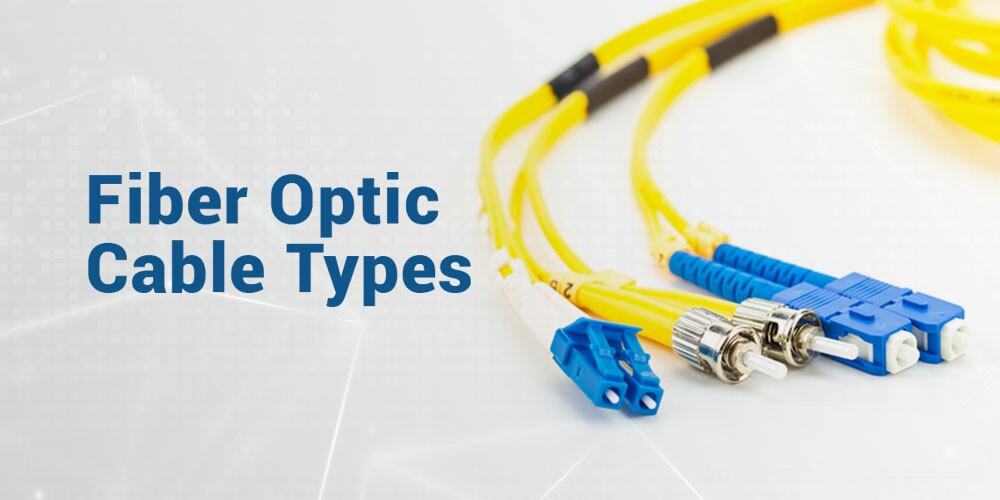
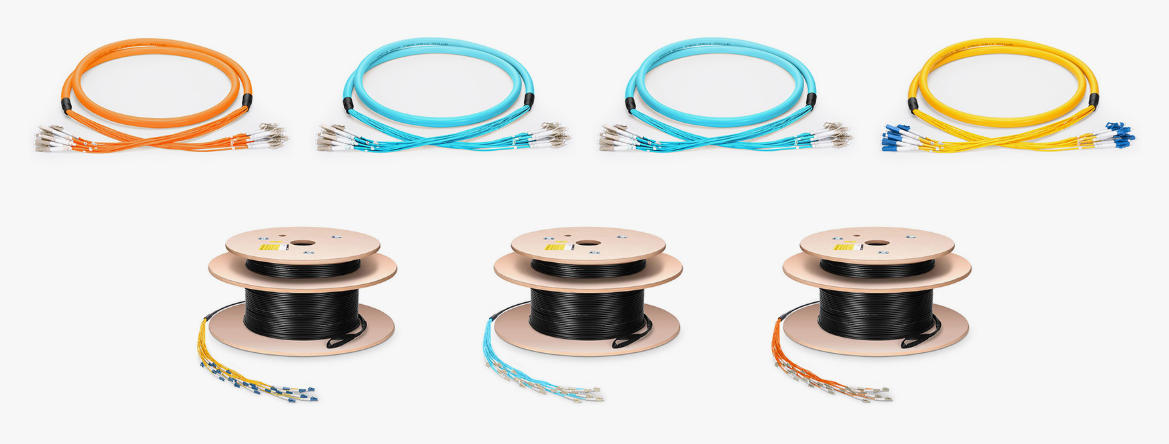
- Color jacket: Yellow (industry standard identification)
- Sub-standard types: OS1 indoor single-mode fiber, OS2 outdoor long-haul single-mode fiber (G.652D/G.655/G.657 bending insensitive fiber)
- Advantages: Ultra-low loss, anti-interference, ultra-long distance, large bandwidth
- Disadvantages: High cost, matching laser transceiver, high construction alignment requirements
- Main applications: Telecom backbone network, 5G backhaul, aerial/underground trunk line, submarine fiber cable, long-distance transmission, OPGW composite ground wire fiber, ADSS self-supporting aerial fiber
1.2 Multimode Fiber Optic Cable (MMF)
- Operating wavelength: 850nm & 1300nm
- Maximum transmission distance: ≤2km, mostly within 500m
- Color jacket: Orange (OM1/OM2), aqua blue (OM3/OM4), lime green (OM5)
- International standard grades (ISO/IEC 11801): OM1, OM2, OM3, OM4, OM5
- Advantages: Low cost, matching VCSEL/LED light source, easy coupling and construction
- Disadvantages: Large dispersion, signal degradation over distance, not for long haul
- Main applications: Data center internal wiring, office LAN, campus network, indoor horizontal cabling, short-distance equipment interconnection
1.3 Comparison Table: Single Mode vs Multimode Fiber Optic Cable Types
| Parameters | Single Mode Fiber (SMF) | Multimode Fiber (MMF) |
|---|---|---|
| Core diameter | 8–10μm | 50/62.5μm |
| Light mode | Single fundamental mode | Multiple modes |
| Attenuation | Ultra-low (0.2dB/km@1550nm) | High |
| Max distance | 10–200km | ≤2km |
| Bandwidth | Ultra-high | Medium |
| Light source | Laser DFB/EML | VCSEL/LED |
| Jacket color | Yellow | Orange/Aqua/Lime |
| Typical use | Long-haul trunk | Short-distance indoor/data center |
2. Fiber Optic Cable Types By International Standard Grade
2.1 Multimode Standard Grades (OM1–OM5)
- OM1: 62.5μm core, legacy multimode, low bandwidth, old building wiring only
- OM2: 50μm core, standard multimode, 1G Ethernet short distance
- OM3: Laser optimized multimode, support 10G/40G data center, 300m transmission
- OM4: Enhanced laser optimized, higher bandwidth, 550m@10G, mainstream data center fiber
- OM5: Wideband multimode, wavelength multiplexing optimized, for 100G/400G next-gen data center
2.2 Single Mode Standard Grades (OS1–OS2)
- OS1: Indoor tight buffer single-mode, attenuation ≤1.0dB/km, indoor backbone & cabinet wiring
- OS2: Outdoor low-loss single-mode, attenuation ≤0.4dB/km, long-distance outdoor trunk, anti-bending G.657 fiber included
3. Fiber Optic Cable Types By Internal Cable Structure
3.1 Tight Buffered Fiber Optic Cable
- Types: Indoor breakout cable, indoor distribution cable, patch cord, pigtail cable
- Applications: Building indoor wiring, data center cabinet wiring, FTTH indoor wiring
3.2 Loose Tube Fiber Optic Cable
- Types: Outdoor central loose tube cable, layer stranded loose tube cable
- Applications: Outdoor aerial, direct burial, duct trunk line, long-distance transmission
3.3 Other Structural Fiber Types
- Ribbon fiber cable: Fibers arranged in flat ribbon units, ultra-high density (144/288/572 cores), for large-capacity trunk and data center convergence
- Breakout fiber cable: Each fiber independent protection, easy terminal, for indoor complex wiring
- Hybrid fiber cable: Optical fiber + copper conductor integrated, power + communication simultaneous transmission
4. Fiber Optic Cable Types By Installation Environment (Indoor & Outdoor)
4.1 Indoor Fiber Optic Cable Types
- Indoor distribution tight buffer cable
- Indoor low smoke zero halogen (LSZH) cable
- FTTH drop cable / flat butterfly cable (last mile home access)
- Data center MPO ribbon fiber cable
- Indoor armored anti-rodent cable
Main features: Flame retardant, flexible, small diameter, easy wiring; applications: office buildings, MDU residential buildings, data centers, FTTH indoor wiring.
4.2 Outdoor Fiber Optic Cable Types
Aerial fiber optic cable types
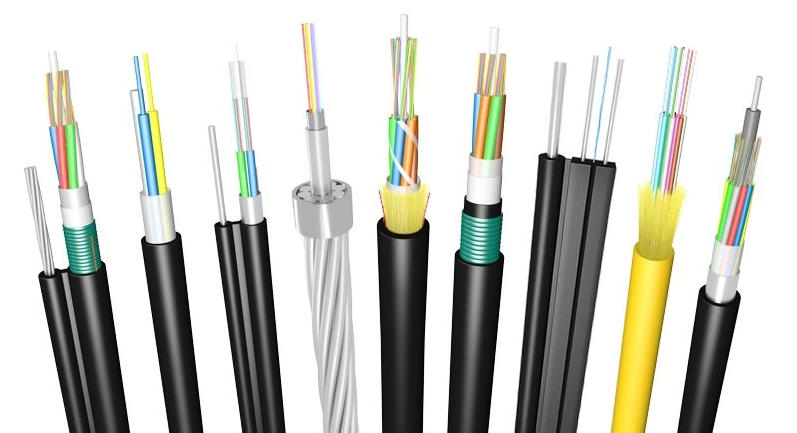
ADSS fiber optic cable: No metal, non-conductive, hung on power tower/pole, most widely used aerial fiber
Figure 8 fiber optic cable: With integrated messenger wire, easy installation
OPGW optical fiber composite overhead ground wire: Integrated in power ground wire, power grid communication dedicated
Direct buried fiber optic cable types
Double armored double sheath loose tube cable, anti-pressure, anti-rodent, anti-corrosion, directly buried underground
Non-armored light loose tube cable, smooth sheath, for underground pipeline threading
5. Fiber Optic Cable Types By Protective Armored Design
- Non-armored fiber cable: Light, flexible, indoor/duct use only
- Metal armored fiber cable: Steel tape armored, steel wire armored, anti-pressure, anti-rodent, anti-damage, direct burial/outdoor harsh environment
- All-dielectric armored fiber: Aramid yarn reinforcement, non-conductive, anti-lightning, ADSS aerial dedicated
6. Fiber Optic Cable Types By Application Scenario & Industry
- Telecom operator trunk network: OS2 single-mode loose tube, ADSS, OPGW, direct burial armored fiber
- Data center wiring: OM3/OM4/OM5 multimode tight buffer, ribbon MPO fiber, breakout fiber
- FTTH fiber to the home: Indoor drop butterfly cable + outdoor single-mode trunk
- 5G communication: 5G backhaul ADSS fiber, micro duct fiber
- Industrial automation: Industrial rugged armored fiber, anti-high temperature anti-interference
- CATV broadcasting & monitoring: Single-mode long-distance transmission fiber
- Subsea communication: Special submarine armored single-mode fiber cable
7. Fiber Optic Cable Selection Guide & Industry Summary
- Long-distance trunk ≥10km: Choose OS2 single-mode loose tube outdoor cable (ADSS/OPGW/direct burial)
- Short-distance indoor/data center ≤500m: Choose OM3/OM4 multimode tight buffer cable
- Building indoor wiring: Choose LSZH flame retardant tight buffer indoor cable
- Aerial pole/tower: Choose ADSS all-dielectric self-supporting cable
- Underground direct burial: Choose double armored loose tube cable
- FTTH last mile: Choose flat drop butterfly indoor cable
Frequently Asked Questions
Q1: What are the main categories of fiber optic cable types?
Q2: What is the difference between single mode and multimode fiber optic cable types?
A2: Single mode fiber (SMF) has a small 9μm core, transmits light in one mode, ultra-low attenuation, used for long distance above 10km, jacket color is yellow, standard OS1/OS2.
Multimode fiber (MMF) has 50/62.5μm large core, multiple light modes, short distance within 2km, jacket color orange/aqua/lime, standard OM1/OM2/OM3/OM4/OM5, mainly used for data center and indoor LAN.
Q3: What are OM1 OM2 OM3 OM4 OM5 fiber optic cable types?
Q4: What are OS1 and OS2 single mode fiber optic cable types?
Q5: What is the difference between tight buffer and loose tube fiber optic cable types?
A5: Tight buffer fiber has compact structure, flexible, easy termination, mainly indoor data center, building wiring and patch cords.
Loose tube fiber contains water blocking gel, waterproof, anti-stress, anti-temperature change, it is the main type for outdoor aerial, direct burial and long distance trunk communication networks.