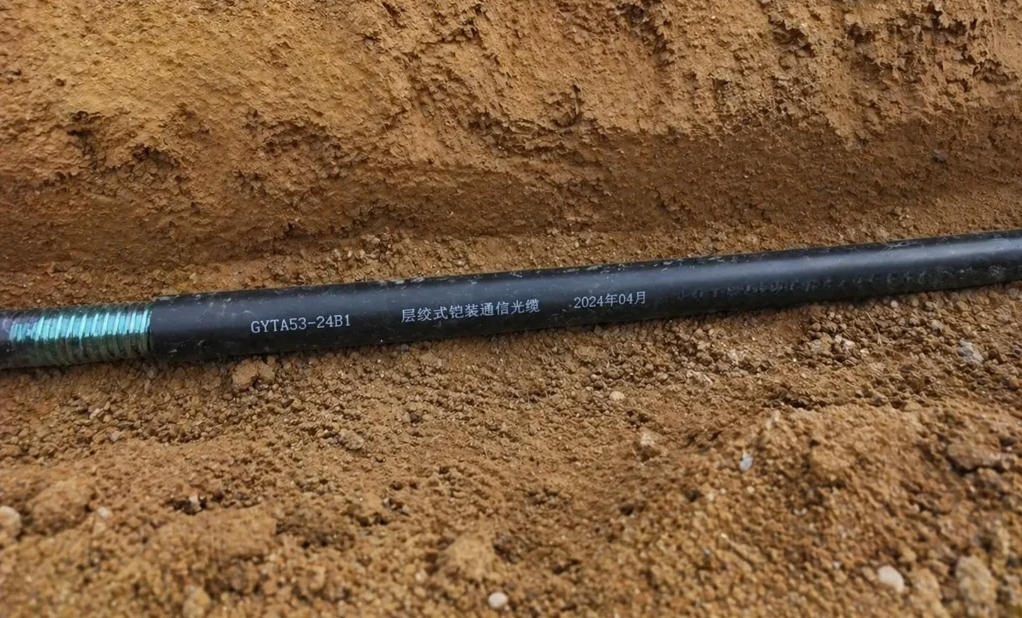
Direct Buried Fiber Optic Cable is a specialized type of outdoor fiber cable designed to be placed directly into the soil without the protection of an underground conduit or duct. Unlike standard fiber, which is fragile and susceptible to moisture, direct burial cable features heavy-duty armoring, robust water-blocking mechanisms, and thick polyethylene jackets.
The core purpose of this design is to withstand the harsh realities of the underground environment:
- Soil Pressure: The weight of the earth above.
- Moisture: Constant exposure to groundwater and humidity.
- Rodents: Protection against gophers, rats, and other burrowing animals.
- Physical Stress: Tension during installation and potential shifting of the earth.
Anatomy of a Direct Buried Fiber Cable
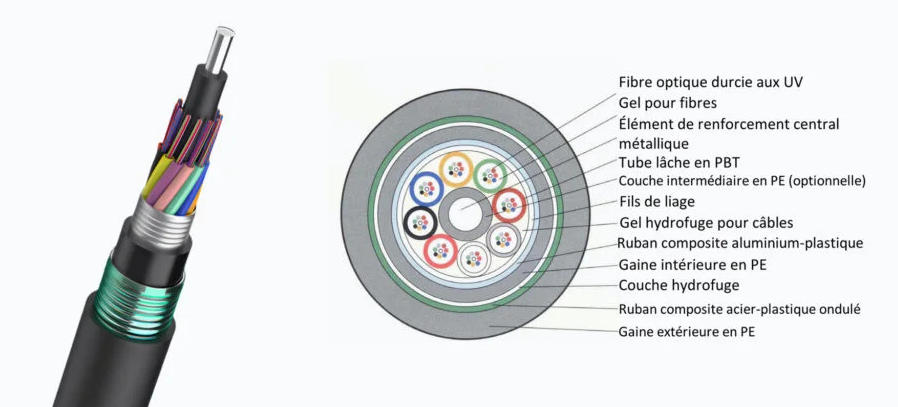
To understand why these cables are expensive yet necessary, let’s dissect their structure layer by layer, from the center out.
1. Central Strength Member
At the heart of the cable is the Central Strength Member. This is typically a Fiber Reinforced Plastic (FRP) rod or a steel wire. Its job is to bear the majority of the tensile load during installation (pulling) and provide structural stability. In metallic cables, steel provides extra strength; in all-dielectric cables, FRP prevents conductivity.
2. Loose Tubes (Fiber Housing)
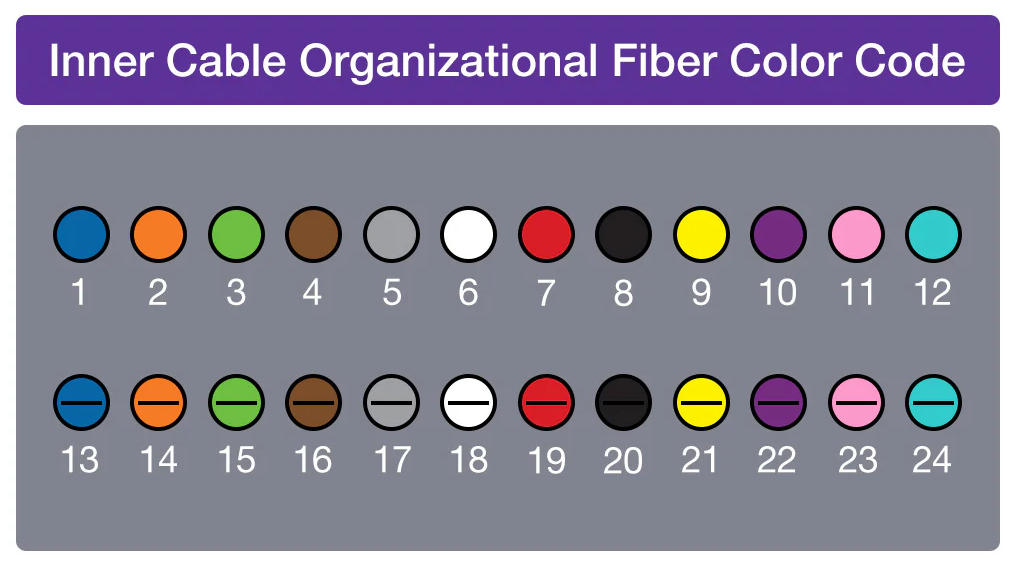
Surrounding the central member are loose tubes. These are small, color-coded plastic tubes that contain the actual optical fibers. They are “loose” because the fibers inside are not tight-buffered; they have room to move. This design protects the glass from mechanical stress.
3. Water-Blocking Gel or Dry Water-Block
This is a critical distinction. Direct buried cables are either filled with thixotropic jelly (gel-filled) or wrapped with water-swellable yarn/tape. If the outer jacket is punctured, these materials expand or block the flow of water, preventing it from traveling along the length of the cable (longitudinal water migration).
4. Armor Layer (The Shield)
This is what separates direct burial cable from standard outdoor cable.
- Steel Tape Armor (STA): Usually corrugated steel tape. It protects against crushing forces and rodents.
- Steel Wire Armor (SWA): Used in areas with high risk of digging or extreme tension.
- Glass Yarn (Dielectric): For all-dielectric cables, multiple layers of glass yarn provide rodent resistance without conducting electricity.
5. Inner and Outer Sheath (Double Jacket)
Most direct buried cables feature a double sheath (PE + PE). The outer jacket is made of HDPE (High-Density Polyethylene), which is extremely resistant to abrasion, chemicals, and UV radiation.
Decoding the Naming Conventions (GYTA53 vs GYFTY53)
If you are sourcing cable, you will encounter alphanumeric codes. Understanding these helps you select the right product.
| Code | Meaning | Best Application |
|---|---|---|
| GY | Outdoor Optical Cable | General outdoor use. |
| T | Filled with jelly / Gel-filled | Moisture protection. |
| A | Aluminum Tape Armor | Provides moisture barrier and some crush resistance. |
| S | Steel Tape Armor | Higher crush resistance than Aluminum. |
| F | Non-metallic (FRP) | Lightning-prone areas; avoids electromagnetic interference (EMI). |
| 5 | PE Outer Sheath | Standard black polyethylene jacket. |
| 3 | Steel Wire Armor | Heavy duty, often used for river crossings or direct burial under roads. |
Common Examples:
- GYTA53: The most common direct buried cable. Aluminum tape + Steel tape + Double PE. Balanced cost and performance.
- GYFTY53: All-dielectric (no metal). Ideal for power lines or areas with high lightning risk.
- GYTA33: Steel wire armored. Used when the cable needs to withstand significant pulling tension or is laid in shallow water/rivers.
Direct Buried vs. Duct vs. Aerial: Which One Do You Need?
Choosing the wrong cable type is a costly mistake. Here is a comparison table to guide your decision:
| Feature | Direct Buried (DB) | Duct (Innerduct) | Aerial |
|---|---|---|---|
| Installation Method | Directly in soil/trench | Pulled through existing conduit | Hung on poles |
| Armor | Heavy (Steel Tape/Wire) | Light or none | None (Self-supporting usually) |
| Water Resistance | Maximum (Gel/Double Jacket) | High | Moderate |
| Cost | High (Material) | Medium | Low (Cable) but High (Poles) |
| Lifespan | 25+ years | 20+ years | 15-20 years (Weather dependent) |
| Maintenance | Difficult (requires excavation) | Easy (blown/pulled replacement) | Moderate (Accessibility) |
Rule of Thumb: If you have an existing conduit system, use Duct Cable. If you have no conduit and are digging a new trench, use Direct Buried Cable. If you are going pole-to-pole, use Aerial Cable.
Critical Installation Best Practices
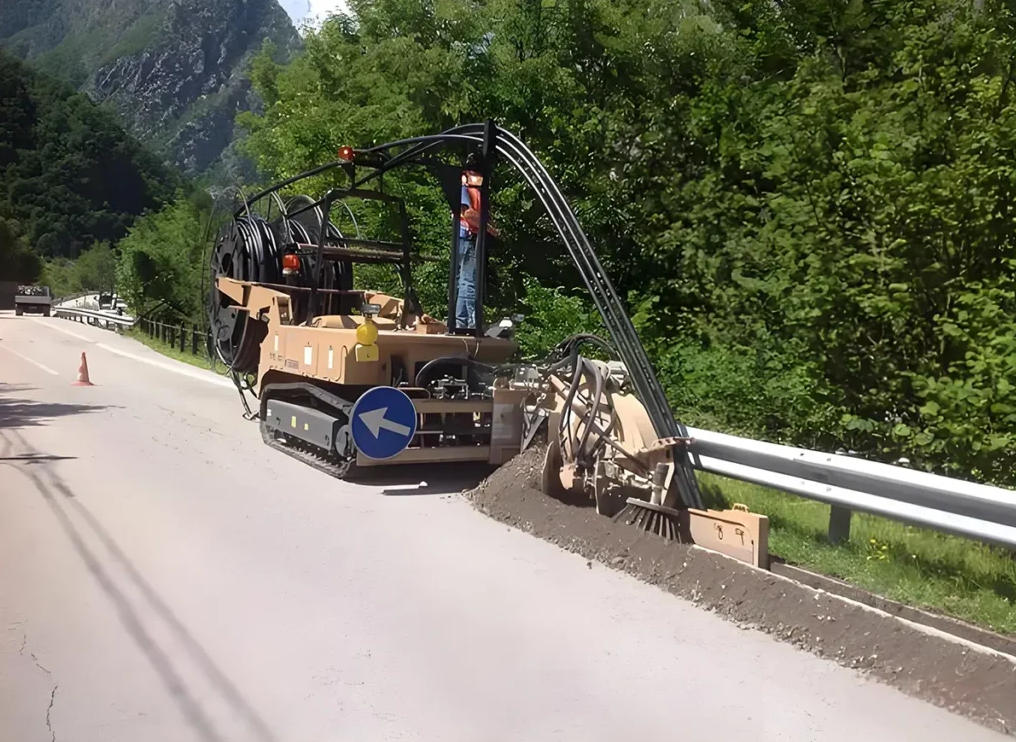
Even the best cable will fail if installed incorrectly. Follow these engineering guidelines:
1. Trench Depth and Width
- Depth: According to most international standards (like ANSI/TIA-758 and local codes), the minimum depth for direct burial is 60 cm (24 inches) in non-traffic areas and 90 cm (36 inches) under roads or driveways.
- Width: Keep the trench narrow (approx. 30cm) to minimize soil displacement, but wide enough to lay the cable without kinking.
2. Bedding Material
Never lay the cable directly on hard-packed soil or rocks. Place a 10 cm (4 inch) layer of sand or fine soil at the bottom of the trench. This acts as a cushion, protecting the HDPE jacket from punctures.
3. Warning Tape
Place a Detectable Warning Tape approximately 30 cm (12 inches) above the cable. This tape contains a metallic tracer wire that allows utility locators to find the cable before digging. It usually reads: “CAUTION: OPTICAL FIBER CABLE BELOW.”
4. Bending Radius
During installation, never exceed the maximum allowable bend radius. For most DB cables, this is 20 times the cable diameter during installation and 10 times during operation. Kinking the cable will break the fibers inside.
5. Rodent Protection
While steel-armored cables resist chewing, in areas with severe rodent populations (e.g., rural farms), consider adding extra measures like rodent-repellent additives in the bedding or using concrete slabs over the cable route.
Environmental and Safety Considerations
Lightning Protection
In regions prone to thunderstorms, metallic direct buried cables (GYTA53) can conduct electrical surges from lightning strikes into your equipment. In these cases, All-Dielectric Self-Supporting (ADSS) or GYFTY53 cables are mandatory.
Chemical Exposure
If the cable is buried near industrial sites, chemical plants, or agricultural fields (fertilizers/pesticides), verify that the HDPE jacket is rated for chemical resistance. Standard PE may degrade over time when exposed to certain hydrocarbons.
Future Trends: Micro-Ducts and Air Blowing
While traditional direct buried cable involves laying a single heavy cable, a newer trend is Micro-Duct Direct Burial. Instead of installing a pre-terminated fiber cable, you install a bundle of tiny, empty micro-ducts (like 7mm tubes). Later, you use compressed air to “blow” micro-fibers into these ducts.
Advantages:
- Future-Proofing: You can add more fibers later without digging.
- Repair: If a fiber breaks, you blow a new one; you don’t replace the whole cable.
- Scalability: Pay for capacity as you grow.
Conclusion
Direct Buried Fiber Optic Cable is the workhorse of terrestrial telecommunications. It is a rugged, reliable solution for connecting distant locations where conduit infrastructure does not exist. By understanding the difference between GYTA53, GYFTY53, and other variants, and by adhering to strict installation depths and bedding requirements, network operators can build a physical layer that stands the test of time—delivering gigabit speeds reliably for 25 years or more.
Whether you are planning a rural FTTH rollout or a private campus network, investing in the right direct burial cable and installation technique is not just a cost—it’s an insurance policy for your digital future.
Frequently Asked Questions (FAQ)
Q: Can I use direct buried cable indoors?
A: No. Direct buried cables often contain gel and metals that are not compliant with indoor fire safety codes (riser or plenum ratings). They must terminate at an outdoor splice enclosure or transition to indoor-rated cable.
Q: How deep should I bury fiber optic cable in my yard?
A: At least 24 inches (60 cm) is recommended to protect it from gardening tools and landscaping activities.
Q: What is the difference between GYTA53 and GYTS?
A: GYTS typically has a single steel tape armor and a single sheath, making it lighter but less protected than the double-sheathed GYTA53. GYTA53 is preferred for direct burial; GYTS is often used in ducts.